I was too harsh on John De Hart

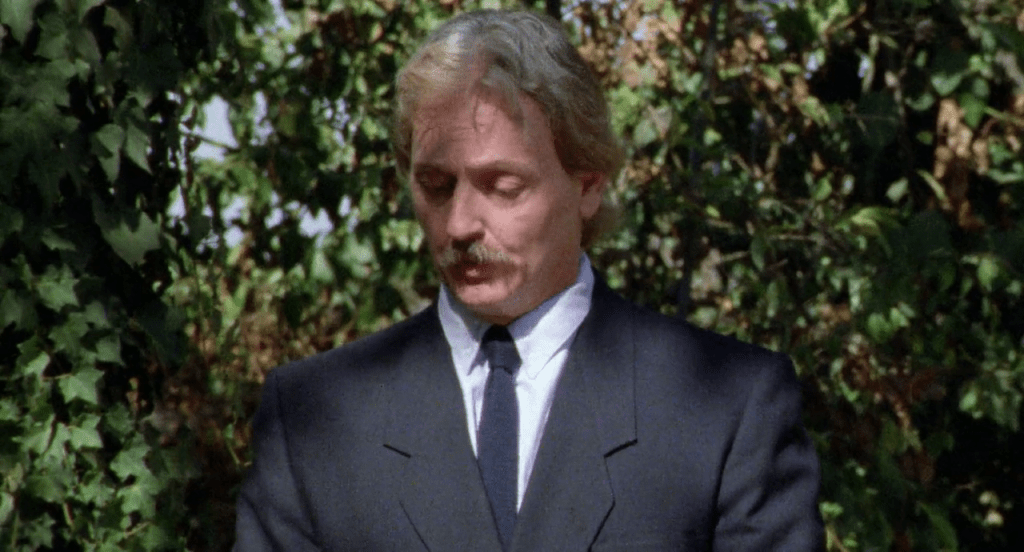
A couple of years ago, I wrote a scathing (but accurate) article about the 1993 B-Movie ‘Champagne and Bullets’ – starring the amazing John De Hart.

For those not aware of this brilliant film, ‘Champagne and Bullets’ is an action/romance/revenge flick that was fully funded by Mr De Hart out of his own pocket. Not only was John the director, but he cast himself as the main star, and also sang most of the songs on the soundtrack. Needless to say, the end product was a masterpiece of poor cinema, and is regarded by fans of bad movies to be one of the all-time greats – with Wikipedia describing De Hart’s performance as “amateur and inexplicable.”

Anyway, I’m not sure what the reasons are, but my John De Hart write-up from 2023 has seen an increase in views over the past few days. With this in mind, perhaps it is time to share a few more thoughts about this one-time action star; focusing more on the man himself and being a little ‘nicer’ this time around.

So, let’s break down the indomitable screen presence of John De Hart – action star, romantic leading man and overall legend – beginning with how smooth this guy is with the ladies.

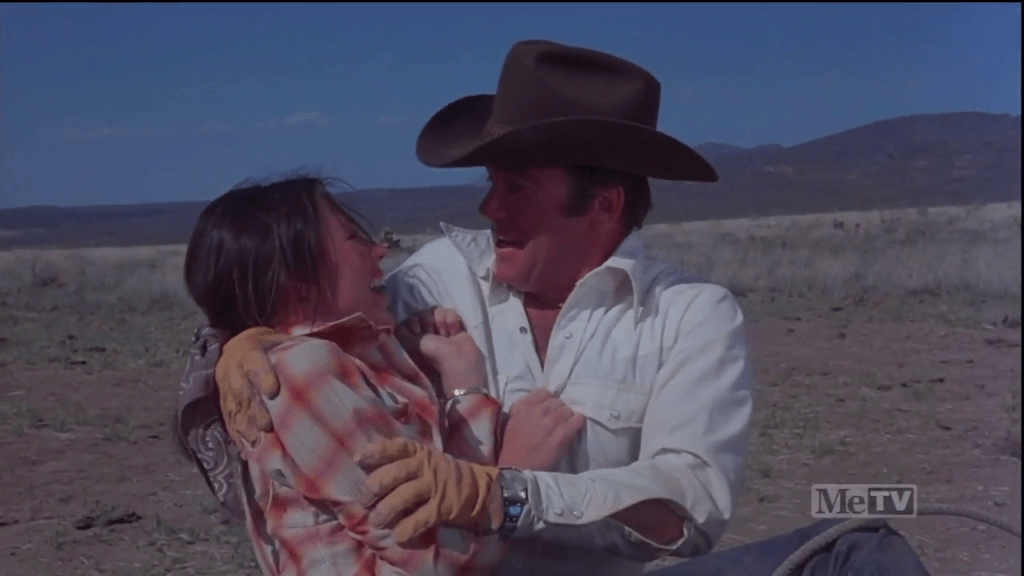
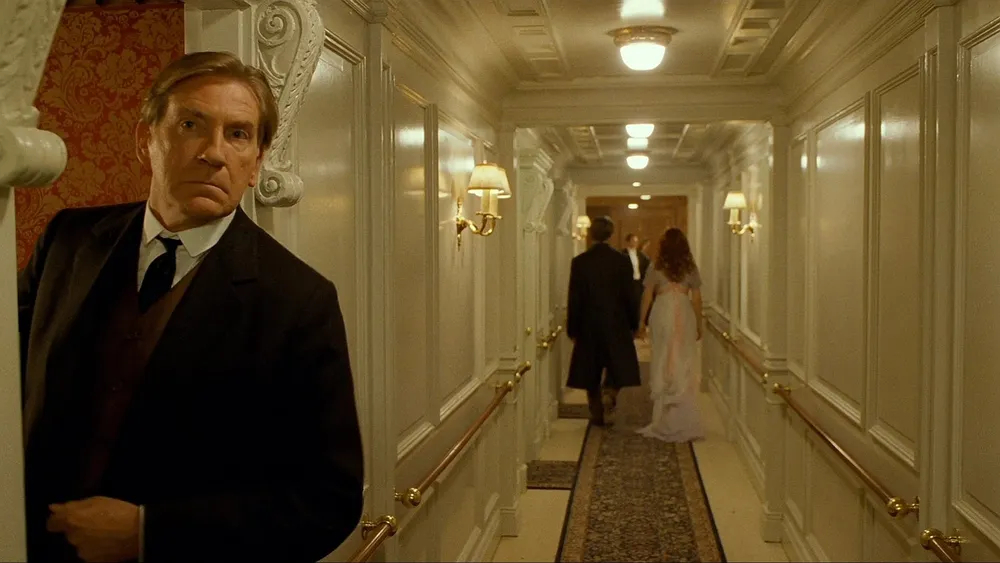
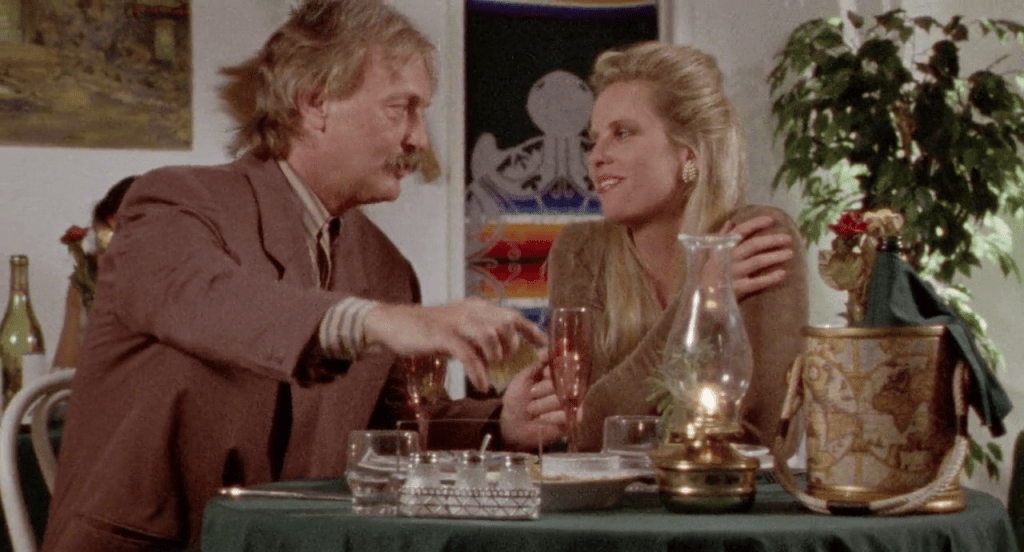
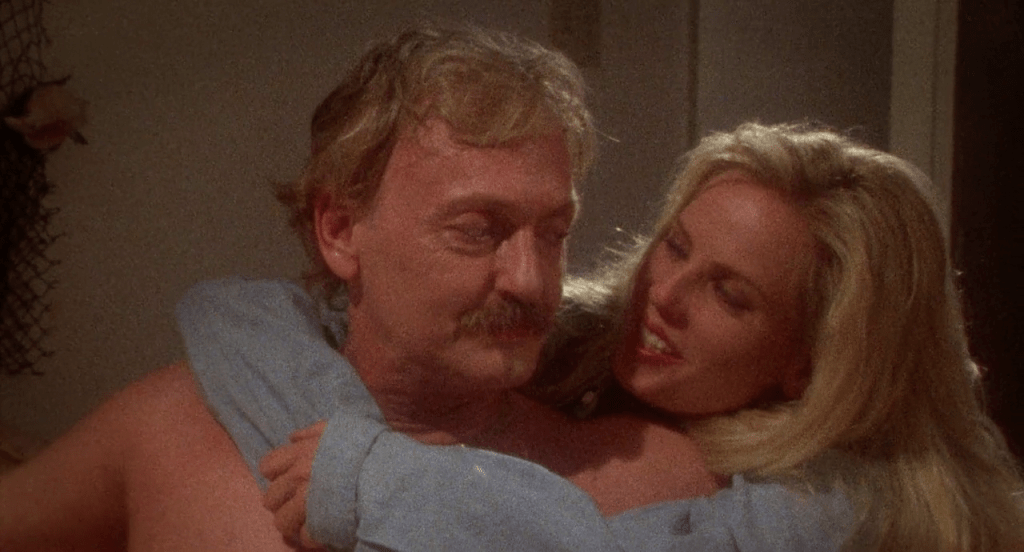
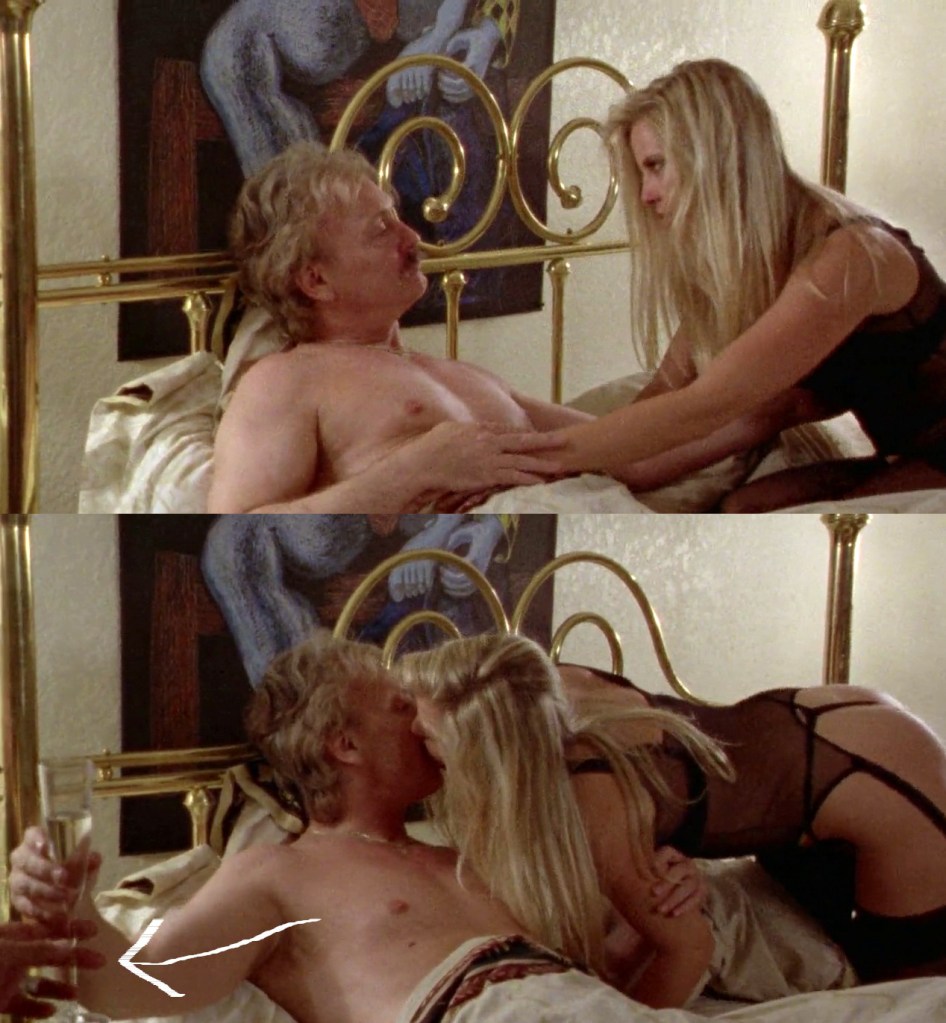
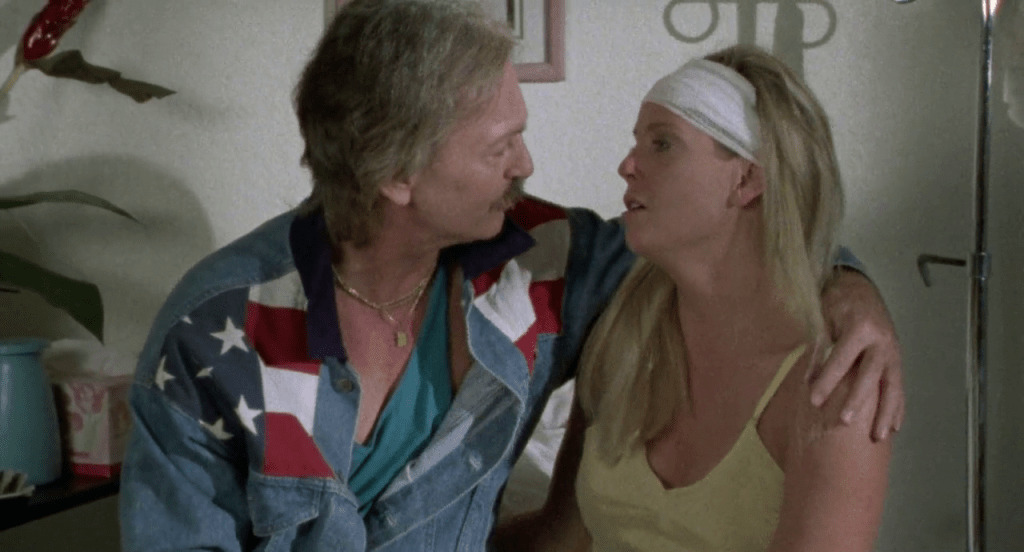
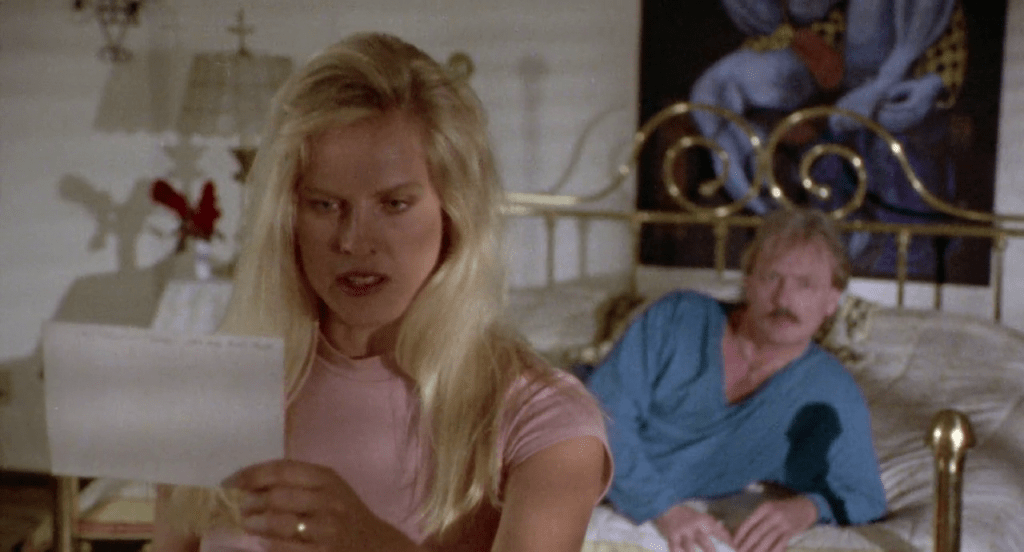
Romance is clearly one of John’s strongest suits, and he is well-known for punching above his weight. De Hart always follows the same successful routine; kicking things off with a classy dinner – as seen in the photo above – before moving on to more ‘comfortable surroundings.’

It’s all too easy for a man of such talents…

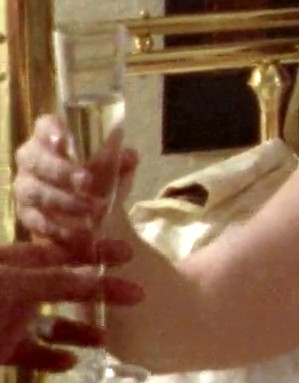
But even a superstar like John De Hart needs a little help sometimes – and it’s great to have a friend close by to hold your champagne flute just as things start to heat up!

I love your work, John – but that extra hand is creepy!

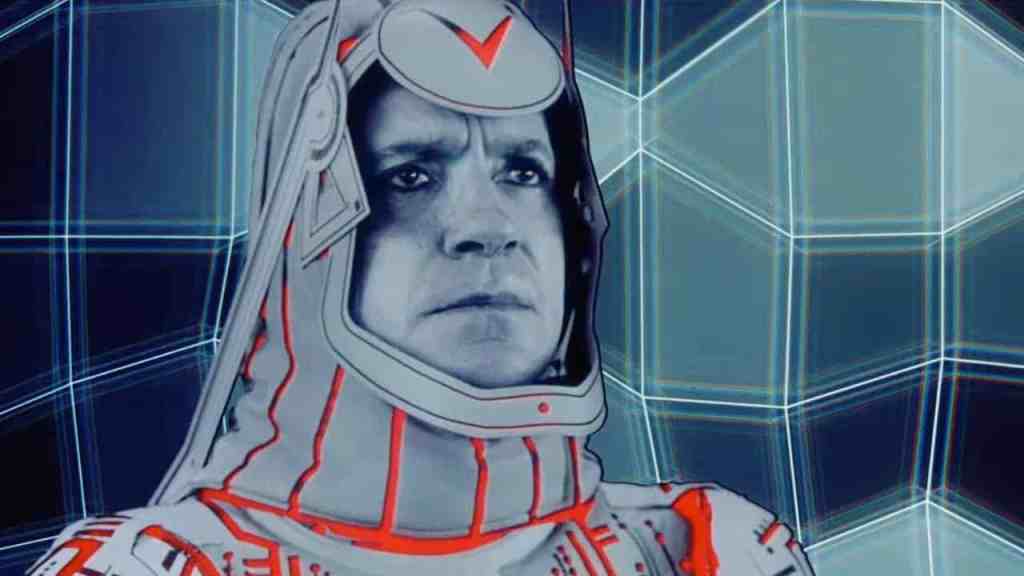
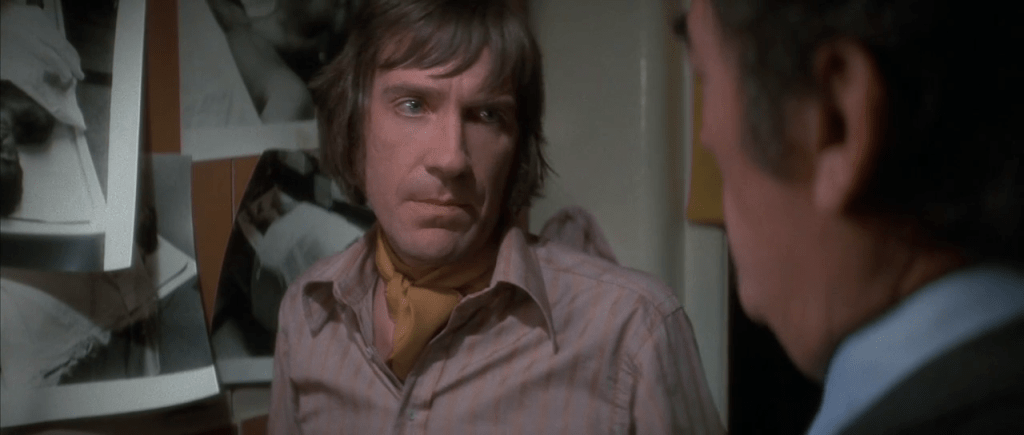
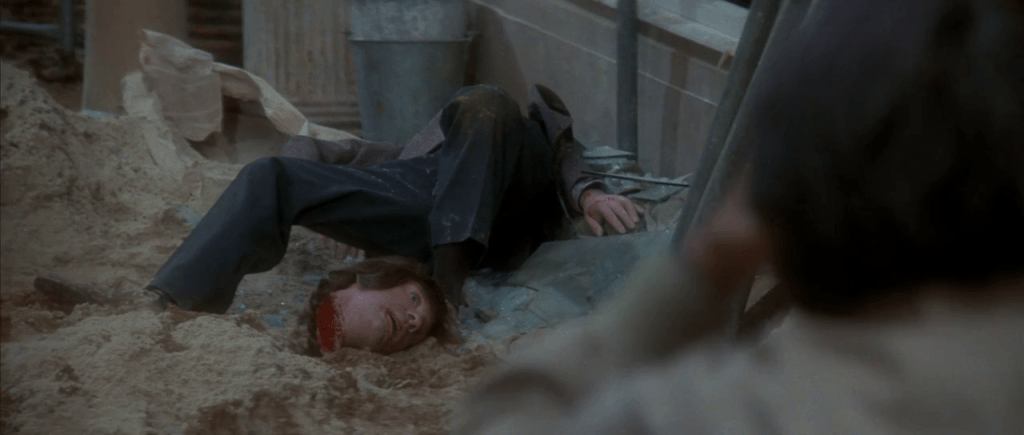
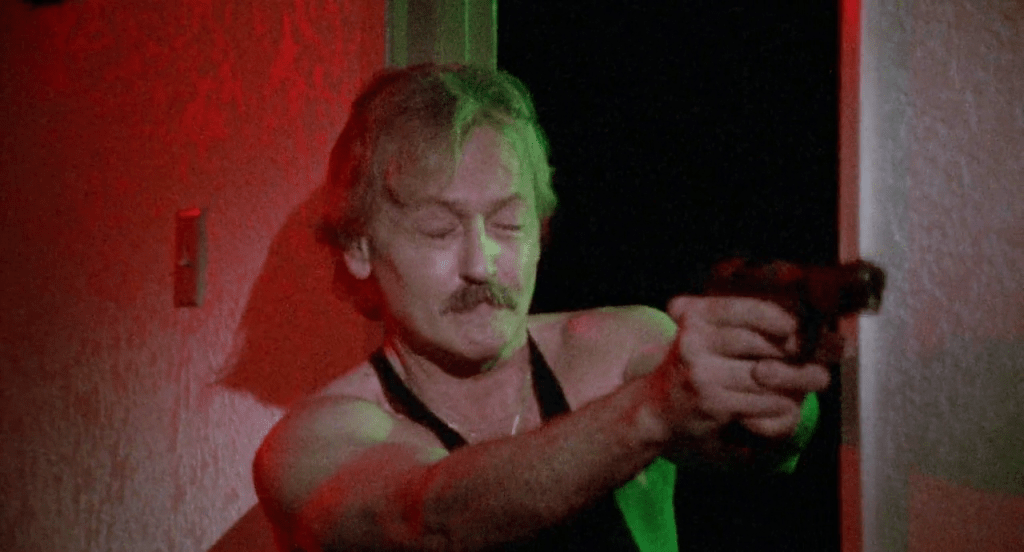
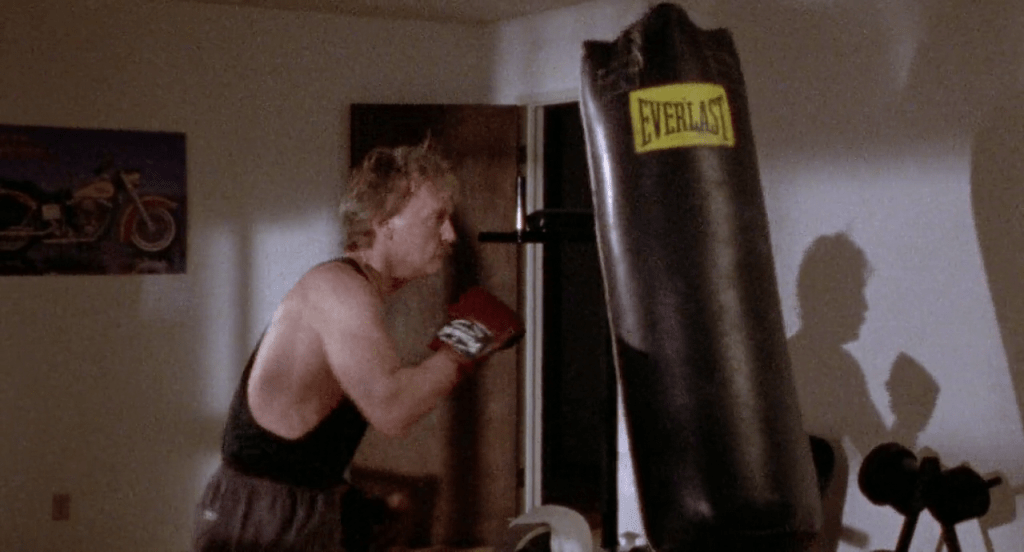
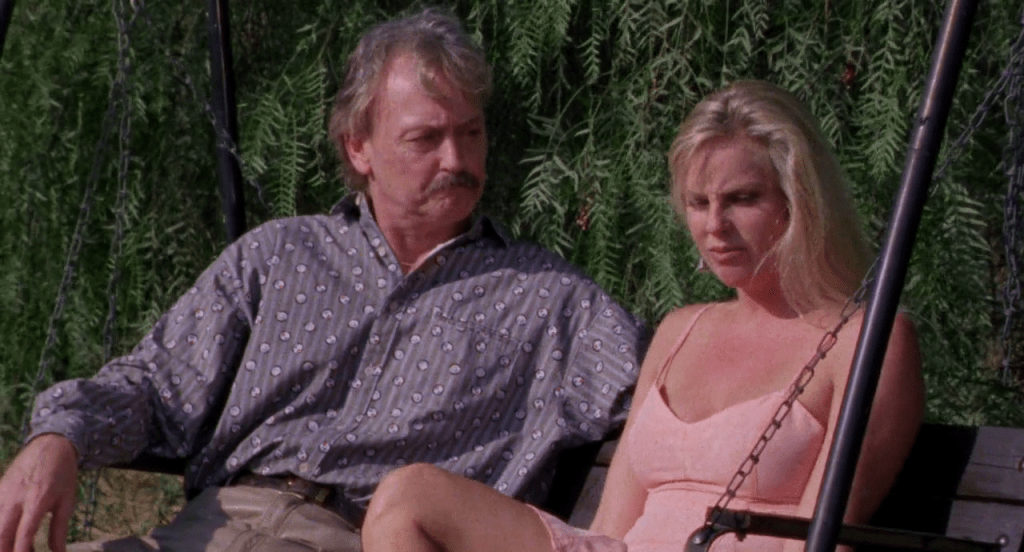
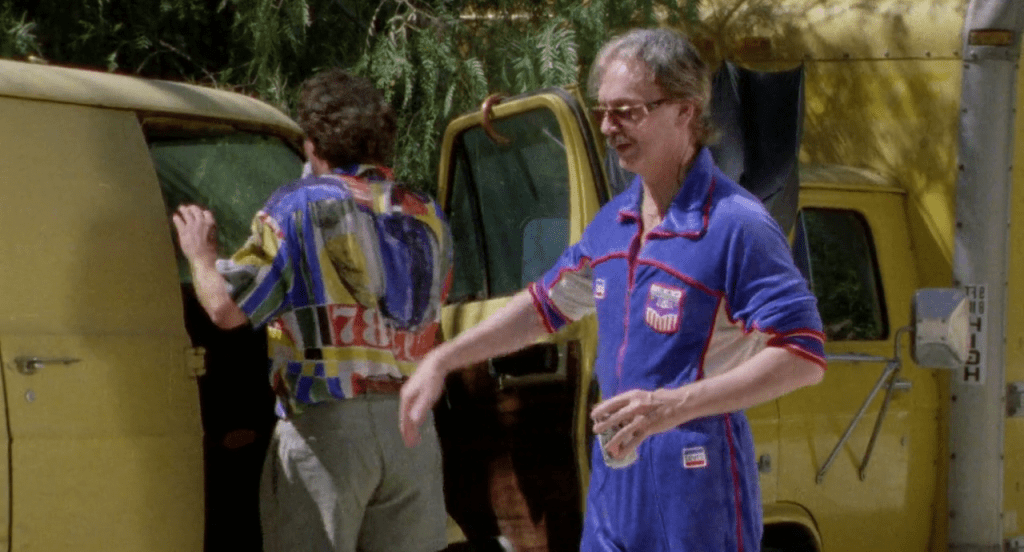
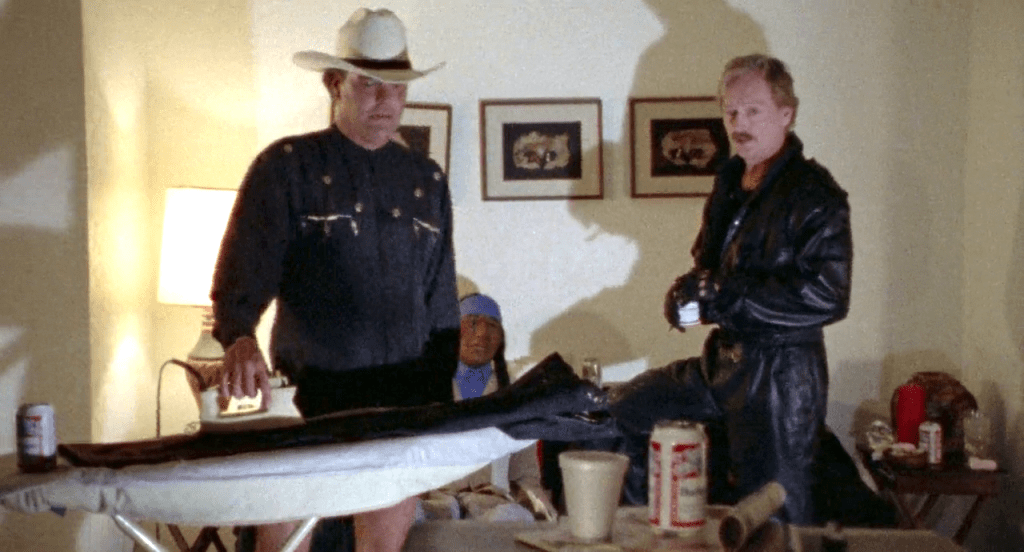
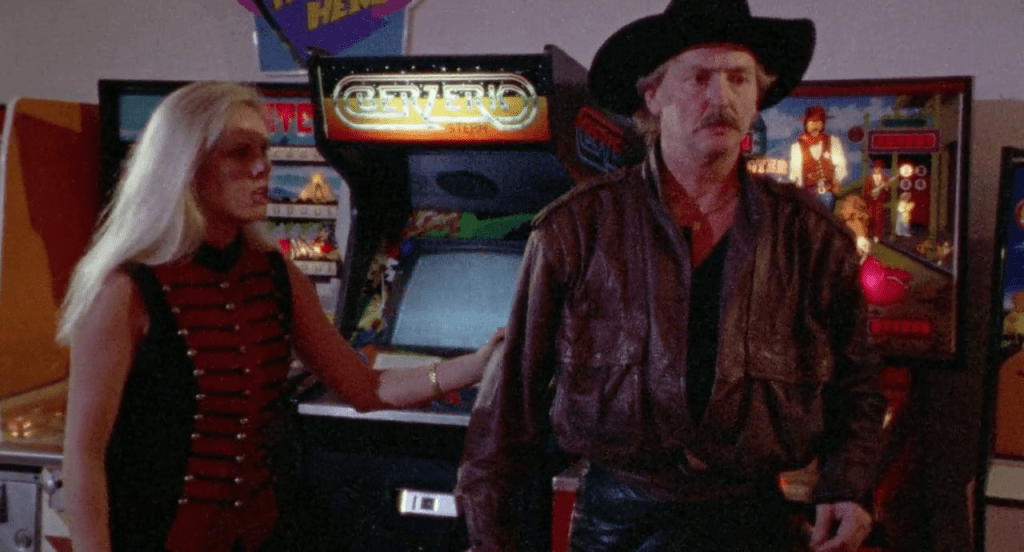
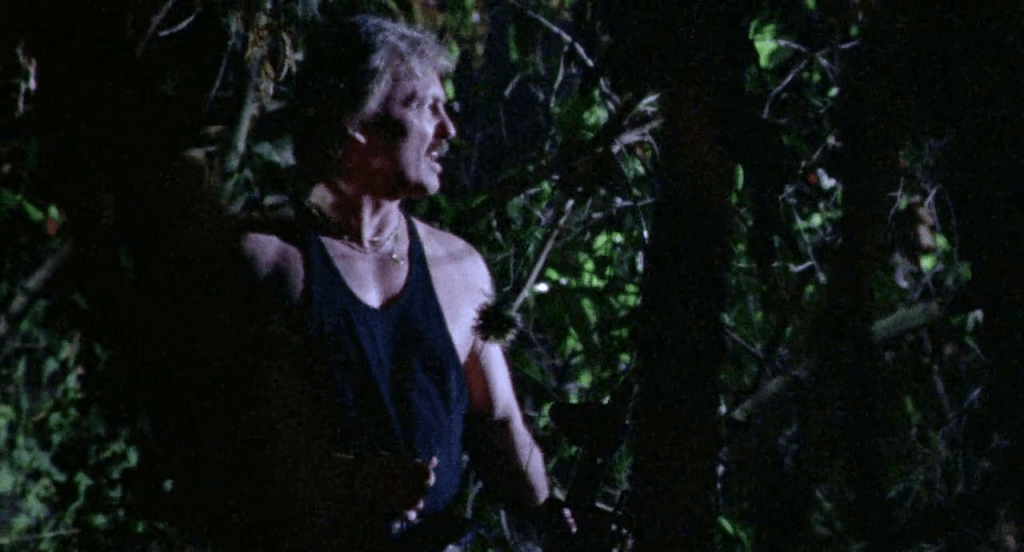
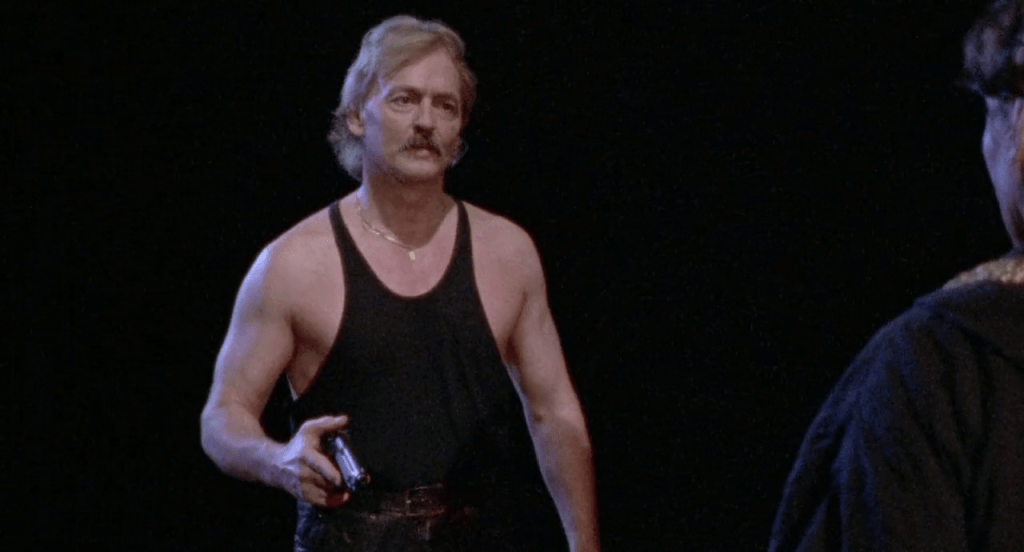
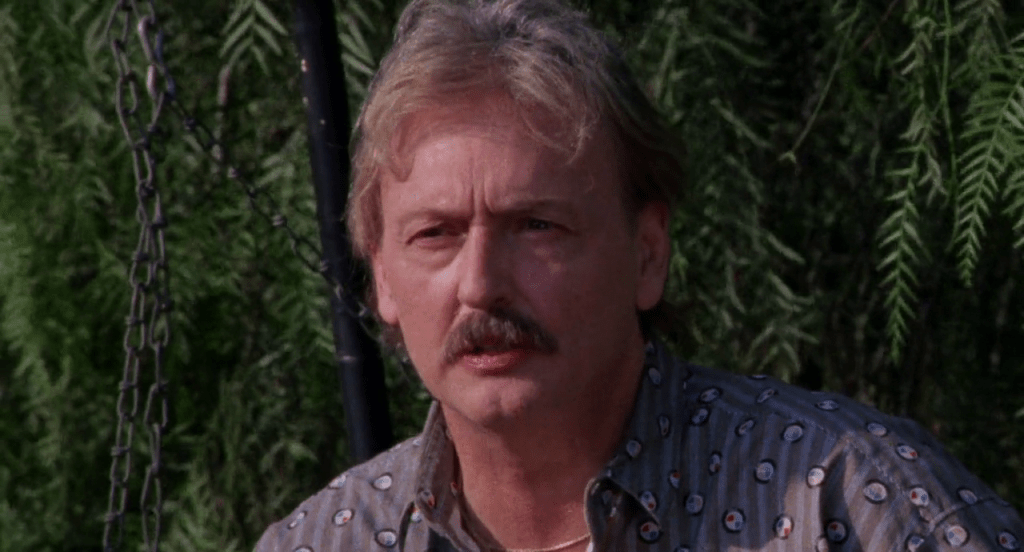
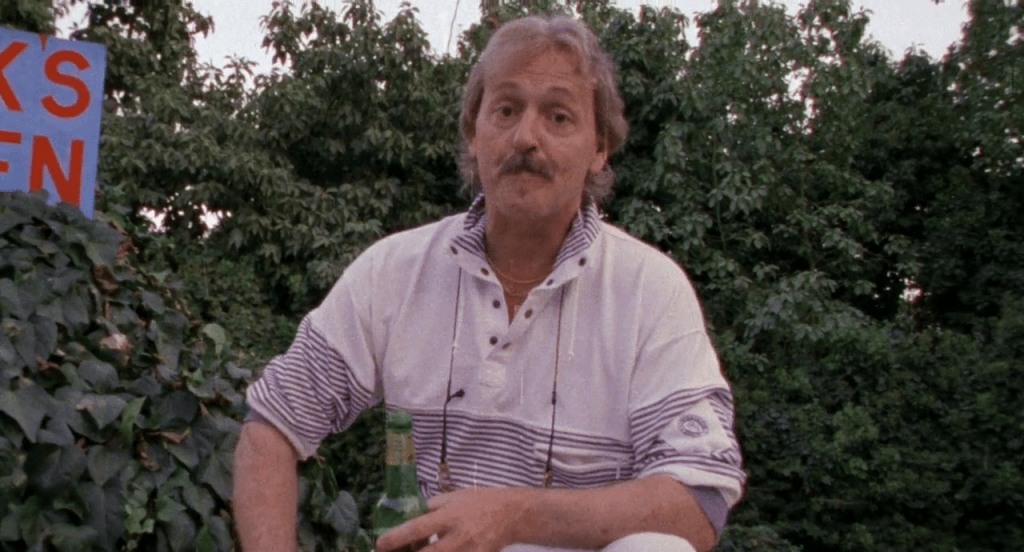
John De Hart is also a certified fashion icon, and throughout ‘Champagne and Bullets’ he graces our screens with some remarkable outfits. It’s best to simply let the pictures below do the talking, but I must say that his black leather costume – as seen in the second photo – is out of this world!

But perhaps the most impressive combination John wears in the movie would be his white and navy blue-striped wedding tracksuit.

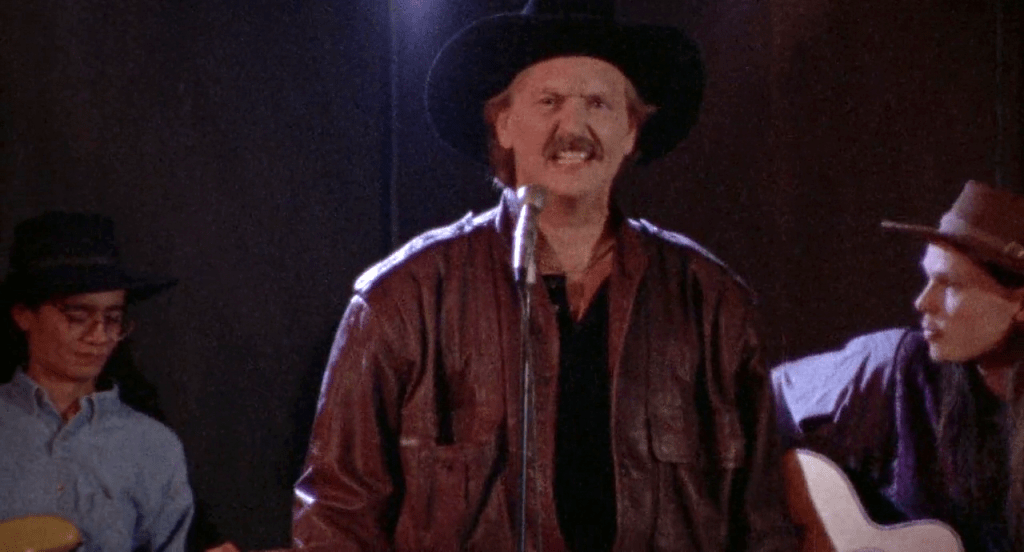
Despite his many talents, John De Hart is first and foremost an action man – whether it be fighting the forces of evil or taking to the stage to perform his signature hit song – ‘The Shimmy Slide.’ This man can do it all – hot damn!

When it comes to eliminating the villains, De Hart has a ‘particular set of skills’ at his disposal to get the job done. Be it a crossbow, a gun, or simply his lethal martial arts powers – John De Hart excels in all disciplines and the bad guys should know better than to mess with him!

I will finish off this glowing tribute to one of Hollywood’s quiet achievers by touching on his remarkable acting ability. With a range on par with Pacino or Brando, John De Hart delivers a broad spectrum of emotions – and has been known to recite Shakespeare so flawlessly that even Sir Laurence Olivier would feel belittled by such raw power.

If you haven’t seen ‘Champagne and Bullets’ – which sadly turned out to be the only film John De Hart ever made* – then I strongly recommend that you do. It’s bad – really bad – yet has a magnetic appeal that makes it almost impossible to stop watching. De Hart himself is front-and-centre throughout most of this insanity, yet strangely enough comes across as a likeable guy who just seems to be ‘having a go’ – an attribute that we Aussies appreciate.

I happened to find the full movie on YouTube that has all the nudity blurred out, and trust me – that’s not a bad thing. I have added the link below, courtesy of DDF: Movie Day – but as it is age restricted, you might have to sign in to view it.

*Note: John De Hart made a cameo appearance in the 2006 film ‘The Champagne Gang.’

How accurate is The Louvre in Tomb Raider: The Angel of Darkness?

One of the more interesting capers in ‘Tomb Raider – The Angel of Darkness’ would have to be Lara Croft’s break-and-enter into the world’s most famous art gallery.

Having just completed the Paris levels in the 2025 remastered version of this game – and been lucky enough to visit The Louvre a couple of times in person – I thought it would be interesting to check the accuracy and attention-to-detail within this replica of such an iconic location.

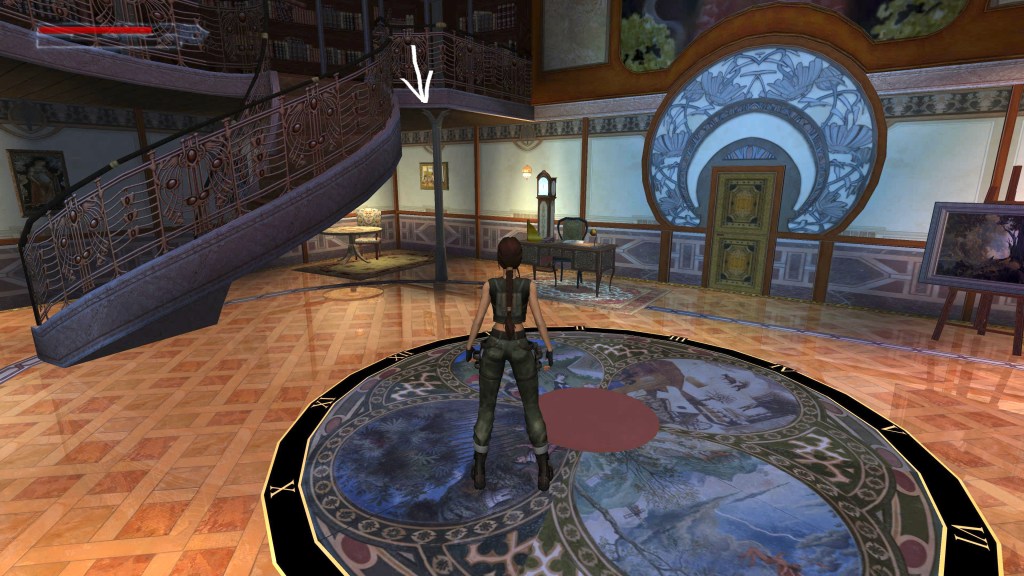
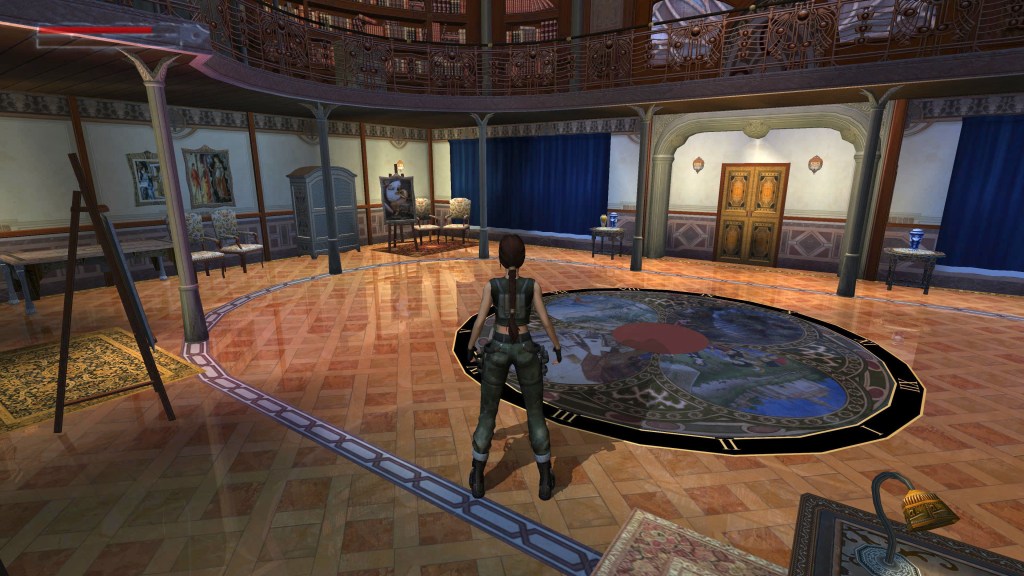
I can say right away that a pretty good job was done here, keeping in mind that there is only a small area of the galleries to explore in the game. Whilst the fictional layout of the museum is not correct, the designers have certainly captured the vibe of the place, and in some areas have really nailed it!

A good example would be The Louvre’s medieval-looking basement that appears more like a castle or barricade, and in the story this is where Lara breaks into the building. Below is a comparison shot between the game’s depiction of this area and a photo that I took back in 2018 – and I think you will agree that the creators have got this just about right.

The architecture has been faithfully recreated for the game as well, and a good example of this is the curved glass ceilings that run along the lengths of the corridors, although the hallways in the game are considerably shorter than those at the real location.

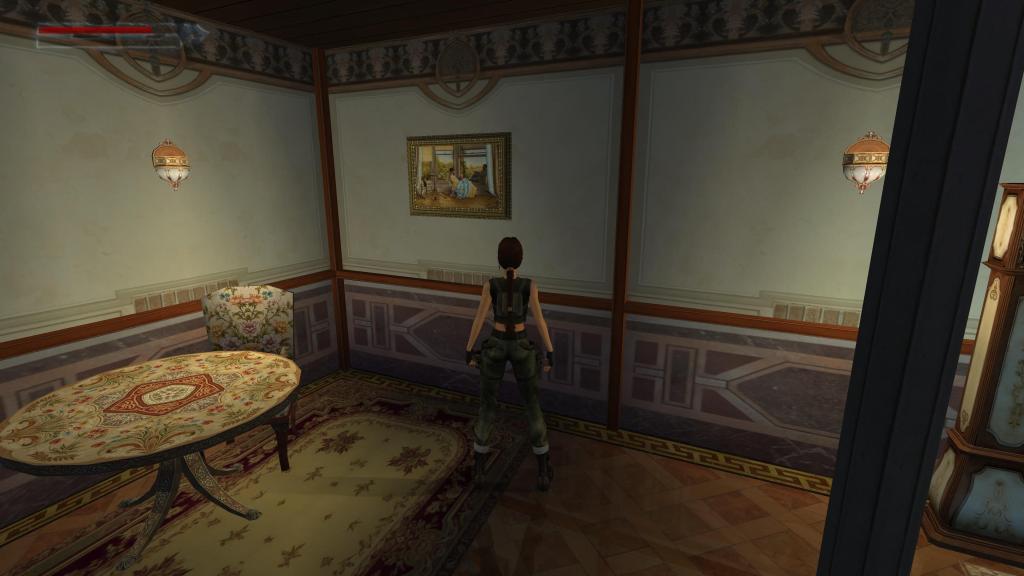
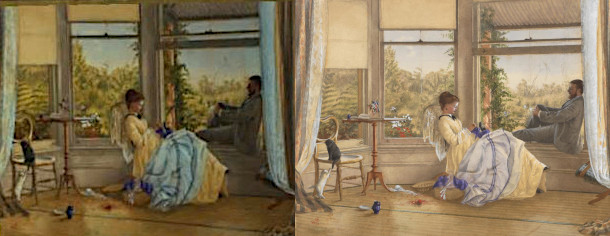
Perhaps the most accurate representation inside the museum would be of this painting below – despite the artwork being inverted or reversed for the game – as the designers have got both its size and positioning close to the mark.

This masterpiece is known as ‘The Wedding Feast at Cana’ by Paolo Veronese and in real life is hanging on the wall opposite the ‘Mona Lisa’ across a very wide gallery.

As for the main attraction itself, the Tomb Raider version of the world’s most famous work of art is very different from how it really appears. Whilst the game shows the ‘Mona Lisa’ hanging on a side wall, in reality it is the only painting on display at the farthest end of the gallery – and is protected by bomb-proof glass and sliding wall panels.

I have put together a few more comparison photos, just so you can see how well – or not so well, depending on your opinion – the creative minds behind this game have fared in bringing The Louvre to life.

Now it’s time to dive a little deeper into the individual artworks that are seen on the walls throughout the game, and I shall identify each painting and reveal to you which works are actually on display at The Louvre, and those that are housed elsewhere around the world. I should also point out that the game has reverse-imaged much of the artwork they have replicated, but nevertheless they are fairly easy to identify.

Painting #1 is ‘The Rape of Europa’ by Peter Paul Rubens. (Museo del Prado – Madrid, Spain.)

Painting #2 is ‘Jupiter and Antiope’ aka ‘Pardo Venus’ – Titian. (The Louvre, Paris.)

Painting #3 is ‘The School of Athens’ – Raphael. (Vatican Museums.)

We now move onto the next section in the gallery…

Painting #4 is ‘Virgin of The Rocks’ by Leonardo Da Vinci. (Two versions: One at The Louvre and another at The National Gallery, London.)

Painting #5 is ‘The Last Supper’ by Leonardo Da Vinci. (Santa Maria delle Grazie – Milan, Italy.)

Painting #6 is ‘The Battle between the Israelites and the Amalekites, Aaron and Hur supporting Moses’ arms on a hilltop beyond.’ by Luca Giordano. (Museum of Fine Arts – Houston, USA.)

Painting #7 is ‘The Death of the Virgin’ by Caravaggio. (The Louvre, Paris.)

Painting #8 is ‘The Fall of the Rebel Angels’ by Luca Giordano. (Kunsthistorisches Museum – Vienna, Austria.)

Here are the next four paintings…

Painting #9 is ‘Pieta’ by Rosso Fiorentino. (The Louvre, Paris.)

Painting #10 is ‘Medusa’ by Caravaggio. (Uffizi Museum, Florence.)

Painting #11 is ‘Supper at Emmaus’ by Caravaggio. (National Gallery, London.)

Painting #12 is ‘Transfiguration’ by Raphael. (Vatican Museums.)

These are all of the paintings on show in the main gallery area in the game, but there are three more large works on the corridor walls that can also be identified.

This one was a little hard to find, as I don’t believe it was officially given a name. As far as I know, it is on display at Palazzo Blu in Pisa – and might be called ‘Sunset on the River Arno.’

This painting is titled ‘The Birth of Venus’ by Botticelli and can be found at the Uffizi Gallery in Florence, Italy. 

And finally, this piece is titled ‘Loth and his Daughters’ by Albrecht Altdorfer. It is on display at the Kunsthistorisches Museum – Vienna, Austria.

I must say that the great detail undertaken in recreating this artwork was noteworthy, but there were a couple of other moments during this adventure at The Louvre that are also worth pointing out.

Firstly, there is a brief scene when Lara makes her way onto the museum roof. This setting comes across as another honest reproduction of a real-life location – by this I mean the accurate design of the architecture and building exteriors. Being able to look down through the glass and identify corridors where you have previously explored was a nice touch as well.

However, a not-so-great moment is when Lara can be positioned close to a large window, where you can use the viewing angles to see what is outside. I was hoping to catch a glimpse of the glass pyramid all lit up, but sadly all that was on offer is a lame blurry skyline – as seen in the image below. This was a missed opportunity in my opinion.

Overall, The Louvre adventure in ‘Tomb Raider – The Angel of Darkness’ was a bit of a treat, and faithfully recreated the essence of this famous museum. Investigating the artwork that was on display was interesting, as well as learning that most of the paintings in the game don’t actually belong in The Louvre – but this is only a trivial side note and takes nothing away from how good this looked.

Despite the many flaws of this game, I have enjoyed the Paris levels and would recommend any Tomb Raider fan to put aside any reservations you might have about this title and give the new remastered version a chance.

Tomb Raider Remastered – Vol II is available at the PlayStation store.

All screenshots are courtesy of PlayStation, Aspyr, Crystal Dynamics and various online museum sites.

Bob Simpson – an Australian legend

Australia lost one of its greats yesterday, with the passing of cricketing icon Bob Simpson.

Simpson played in 62 test matches and compiled 4,869 runs at an average of 46.81 – which are incredible figures, even by today’s standards. His highest score was an epic 311 against England at Old Trafford in 1964, which incidentally was his first test century.

Bob Simpson would form a famous opening partnership with Bill Lawry throughout the nineteen-sixties, and would go on to captain his country in the 1963/64 series vs South Africa in the absence of Richie Benaud. Following Benaud’s retirement at the end of the season, Simpson was appointed the captaincy permanently ahead of the 1964 Ashes tour.

Simpson retired from test cricket after the 1967/68 home series against India, but would make a famous comeback at the age of 41 to captain his country following the World Series Cricket rebellion in 1977.

In 1986, Simpson was appointed coach of the struggling national team under Allan Border, and together both men would turn the fortunes of Australian cricket around; to such an effect that the groundwork laid would reap the rewards for decades to come.

Bringing a new level of professionalism and mental toughness to the job, Simpson’s influence on the young team brought about immediate results; with winning the 1987 World Cup and destroying England 4-0 in the 1989 Ashes perhaps the two greatest examples. He would remain in the job – despite a few health issues – until the 1996 World Cup where Australia were beaten by Sri Lanka in the final.

On a personal note, I was fortunate enough to meet Bob Simpson around ten years ago. I was on my lunch break from work and noticed an old fellow sitting on a bench outside a newsagency at the Newington shops in Western Sydney. I knew it was Simpson, but politely had to ask the man as this was a once-in-a-lifetime chance to meet an Aussie legend – and quite frankly, I could not believe my luck!

What an absolute gentleman he turned out to be, and the pair of us chatted candidly about cricket for around ten minutes. We could have continued our conversation for a little longer, but sadly I had to return to work. This was an encounter that has stayed with me until this day, and I was saddened to hear of this great man’s passing yesterday.

Vale Bob Simpson (1936-2025)

Tomb Raider and the Parisian Ghetto

Yes, ‘Parisian Ghetto’ is the name of an actual Tomb Raider level; or rather a series of interconnecting areas in the 2003 game ‘Tomb Raider – The Angel of Darkness.’

I am currently working through the new remastered edition – having not played it since taking on the PlayStation 2 version twenty years ago – and despite being polished up, it still remains the worst Tomb Raider release of all time. But that being said, there is still a lot to like about this often-criticised game, particularly the moody and atmospheric notes that it constantly hits; especially in the above-mentioned level set in Paris.

A lot of the negativity surrounding this game centred on the clunky controls, which was immediately apparent as soon as you started playing. The first few minutes of gameplay served as a tutorial of sorts, but the running, jumping and turning were made difficult by the camera angles that were all over the place; looking more like a Resident Evil game at times – with the screenshots below being prime examples.

The good news is that by the time you reach the Ghetto area, most of the issues with the controls should be ironed out as you have become accustomed to them, but unfortunately some camera-panning problems do remain.

I suppose the only other major grievance is that this appears to be a Tomb Raider game without any tombs or ancient sites to explore. Instead of jumping into an awe-inspiring setting, we are given the seedy and near-deserted back streets of Paris to work with. In fact, you have to play almost half the game before you come across any underground temple action, which I imagine would have annoyed many fans.

Added to this are the numerous dialogue scenes that play into the murder-mystery elements of the story, where Lara speaks with the locals in order to gain clues and be pointed in the right direction. These discussions are quite interesting, although some of Lara’s ‘tough talk’ doesn’t work for me, as she threatens most people she comes across with cheesy girl boss lines.

Now that the glaring criticisms are out of the way, I can focus on the more enjoyable aspects of the Parisian chapters of this adventure – and there is a lot to appreciate here. This includes the utterly bizarre and bat shit crazy things that have been added to this game; some of which are beyond comprehension.

So, with that being said, I think the best place to start would be the nightclub!

Pumping disco beats and pulsating lights are not usually associated with Tomb Raider games, so the Serpent Rouge nightclub is perhaps top of the list when it comes to the oddities experienced in this title. Lara’s reasons for breaking into the club during daytime hours depends on whom she speaks to in the neighbourhood and which local she agrees to run an errand for.

In my case, I decided to help out Pierre – the owner of the nearby cafe – who asks Lara to retrieve some items he hid inside one of the light boxes. I believe the alternate mission involves entering the club via the auto workshop nextdoor, at the request of an old man feeding the pigeons at the park. If I remember correctly, there was also a creepy guy loitering around the church that asks Lara to perform a task for her, so I might have my wires crossed here.

I told you this was a weird game!

Next up is the boxing match taking place in St Aicard’s Church. Not only can Lara work out on the heavy bags, but she can place a bet with the head coach on which boxer will win the fight. If you happen to pick the winner, the trainer will hand over his expensive watch.

Then there is Lara’s odd foray into burglary, where she visits a woman named Francine at her apartment to obtain some important information. Having received the clues she needs, Lara can then rustle through the cabinet drawers while her host stands frozen only a few feet away. The reward for such a brazen thieving spree is an expensive sports watch – and a PlayStation achievement trophy titled ‘Kleptomaniac.’

The deserted streets were also a bit odd, reminding me a little of the Rome levels in ‘Tomb Raider Chronicles’ – with no passing cars, no sounds of the city or even the odd stray dog running about. Despite this, the settings looked good and there was definitely a moody vibe to the rundown lanes and alleyways. I actually enjoyed exploring these parts and appreciated the detail and design that went into creating this location.

The overall objective of this level is to interact with the locals and receive clues as to the whereabouts of a character named Bouchard. Eventually you acquire the information you need and this leads into the sewers to find this elusive individual. Once you locate his hideout, the weird dial gets turned up even higher, as the first person you come across is a man lying on a bed suffering from some kind of metallic skin infection. Bizarre!

Following this crazy scene, Lara eventually meets Bouchard and is directed to the local pawnshop, where – surprise, surprise – the poor shop owner is discovered murdered, with symbols written in blood on the floor. I guess the prime suspect would be the creepy guy Lara passes in the hallway, but it would be a waste of time explaining this to the local Gendarmes.

These events lead into a timed explosion, where Lara is forced to move quickly to escape the building through the tunnels below. Having survived, the mission then moves onto The Louvre – which I will write about in greater detail at a later date.

Overall, as far as an adventure/mystery game goes, these levels set in the backstreets of Paris are engaging enough. The only question is: – should a Tomb Raider game be spending so much time in an urban area? To be fair, we’ve seen these types of settings before with Venice in ‘Tomb Raider II’ and Rome in ‘Tomb Raider Chronicles’, but there was a sense of history in those levels – as opposed to the sleazy surroundings featured in this game.

I’m ‘on the fence’ here – as I enjoyed the grimy Paris setting and appreciated the effort and detail that helped build this fictional world, and would recommend any fan of the series to be patient and give this game a chance. However, on the other hand I would prefer a Tomb Raider game to be more about exploring ancient temples and ruins.

More Indiana Jones and less Jason Bourne, if that makes sense.

Tomb Raider Trilogy Remastered – Vol II is available at the PlayStation store.

All screenshots are courtesy of PlayStation, Crystal Dynamics and Aspyr.

Tomb Raider Chronicles – The New York Levels

The whirlwind adventure that is ‘Tomb Raider Chronicles’ comes to a dramatic finale as Lara Croft dons a leather catsuit and infiltrates the high-security Von Croy Enterprises building in New York City, or rather Jersey City – if the positioning of the Manhattan skyline in the distance can be used as a marker.

I should explain the geography a little here, as I was quite keen to learn the exact location of where this adventure was taking place. With the World Trade Centre featuring prominently in the background whenever our heroine positioned herself close to a window overlooking the river, I thought it would be interesting to use this view to pinpoint where this fictional building was supposed to be.

Now, I’ve never been to New York City so correct me if I am wrong here. If you logically follow the three photos above – factoring in that the building Lara is standing in is a little further back from the river – then I think a reasonably accurate location for the Von Croy headquarters would be somewhere within the yellow circle on the map.

I was pleasantly surprised to find that not only did the developers keep the World Trade Centre in the remastered version of the game, but actually enhanced the view to a considerable degree. Whenever I entered a room with a window, I often stayed there for a while to admire the scenery; and sometimes would use the zoom to scan up and down the skyline.

But I should now move onto the story itself, where Lara’s mission is to break into the high-tech building and steal the powerful Iris artifact. Easier said than done!

Standing in Lara’s way are dozens of armed security guards, laser traps and machine gun turrets that are motion sensor activated. Fortunately, there are a few employees who are not as good at their jobs as some of their more trigger-happy colleagues – like old mate in the screenshot below.

Like every other level in this game, these chapters play out more along the lines of vignettes rather than expansive, complicated missions as seen in previous Tomb Raider titles. However, keeping the areas brief and the pace moving at a decent speed does have its advantages – and there were more than enough tricky puzzles, dangerous opponents and difficult stunts in these levels to satisfy most fans.

Having stolen the Iris at the end of the first chapter titled ‘The 13th Floor’, the next stage is the aptly-named ‘Escape With The Iris’ and begins with Lara having to disarm herself in order not to set off the deadly sensors in a scene reminiscent of ‘Total Recall‘ – see photo below.

Having to deal with armed guards without any weapons to fire back at them was a little testy at times, but some of the cloths and bottles of chloroform left lying around the place certainly came in handy. Exactly why these items would be found in the executive’s offices is a little beyond me, but I’ll take any help where I can get it!

I should also point out that the decor of the building reminded me of Nakatomi Plaza in ‘Die Hard’, and I suspect the game designers were heavily-inspired by this film – and that includes when Lara is crawling through the ventilation shafts.

The final level of the game is titled ‘Red Alert’ – and is all about Lara’s quest to gain access to the rooftop helipad in order to escape the building. This time around, there are some truly formidable foes – including a crazy helicopter that blasts machine gun rounds through the windows whenever Lara comes into view (see photo below).

There are two cyborgs hunting Lara down as well, and both are extremely difficult to kill. The first one needs to be electrocuted by flooding a room with water and then shot up a few times, with the second cyborg needing to be trapped and then gassed. Both mechanical men hold one half of the escape key, so Lara cannot get away until these villains have been dealt with.

Once you combine the key, it is a simple matter of backtracking to the exit and opening the door – where the game ends with a cut scene of Lara escaping on a hang glider.

Overall, I thought that some of the puzzles and jumping tricks featured in these levels – especially in the elevator shafts and broken stairwell – were some of the hardest to pass through in the entire game. In fact, I’m going out on a limb here and will say that the Von Croy Building was the most difficult of all the locations featured in ‘Tomb Raider Chronicles.’

For those old enough to remember the original PlayStation game from 2000, it was a shame that back then the final level was ruined by numerous bugs and glitches – where one false save in the wrong place meant you had to start the entire stage from the beginning. If I recall correctly, there were doors that wouldn’t open and missing grappling hook ammo – meaning that the ‘Red Alert’ level was impossible to pass. The good news is that all of these issues have been sorted out in the remastered edition.

I will now present a few comparison screenshots – with the 2025 version on top, and the original from all those years ago featured on the bottom. I will pick the ones that best highlight the improvements made for the newer game.

I would rate ‘Tomb Raider Chronicles’ as an enjoyable – but lightweight – entry into the series. To be honest, after the Rome and Russian Submarine stories, the chances of me rating this release highly were not looking good – but the second half of the game set in Ireland and New York were quite strong and got it over the line.

I still think this remains one of the weaker Tomb Raider games, and with the exception of the Hydra fight in Rome and a rope swinging trick in the Ireland levels, I did not come across too many frustrating hurdles during my progress. There was the odd timed-switch run and one-off challenges here and there, but it felt like there were a few extra seconds afforded to these sprints when compared to similar tests in earlier titles.

At times, the narrative did feel more like deleted scenes or excess adventures that had been slapped together hastily to create a full game and cash in at the height of Lara Croft’s popularity – which would have been at around the turn of the century. But as I mentioned above, the second half of the game featured some good storytelling and unique surroundings, and it’s always better to finish strongly than to fade away.

My final score for this game is a handy 6.5* out of 10.

*As with all the other remastered Tomb Raider titles, the work that has gone in to update and modernise this game has been brilliant to say the least – and this certainly adds marks to the final score.

All screenshots are courtesy of Aspyr, Crystal Dynamics, PlayStation and Google Maps.

I watched ‘Superman’ – and it was okay

James Gunn’s ‘Superman’ was released in cinemas last week to mixed – yet in some ways consistent – reviews and has been vigorously broken down and analysed on numerous online channels and podcasts over the past few days.

I managed to catch a session of this movie yesterday and approached it with an open mind – not wanting to be overly-critical, but also not setting my expectations too high.

This is not a great movie; nor is it a disaster. In fact, a lot of the praise that this film has received can be justified, and likewise so can the flaws and weaknesses pointed out in some of the negative reviews. But overall – and this is my own verdict here – I would describe this reboot of Superman as being all over the place and a bit of a mess, yet it turned out to be a fun movie that I found quite likeable.

Without giving any elements of the plot away, I will tread carefully and provide an honest appraisal of what I experienced from this movie. Toward the end of this article, I will put up a spoiler warning and then offer a few more detailed remarks.

I will start positively by saying that David Corenswet was excellent as Superman. He looked and acted the part, but I think the way the film was written meant that his charm and charisma took a little while to shine through. But eventually it did.

Rachel Brosnahan as Lois Lane was also well-cast, as was Nicholas Hoult as Lex Luthor – but I don’t think the super villain’s part was penned as sharply as it could have been. The ideas were alright and some of Luthor’s schemes were decent, but the fast-paced screenplay often didn’t allow his moments of evil genius to settle before moving on to the next scenes.

In fact, this a common criticism of James Gunn, mainly around moments of gravitas or emotionally-heavy exchanges in his films, in which he overuses levity – often in the form of a weak joke or some type of slapstick – to underline the scene. To be fair, this style can often work well in a film and it’s great to make the audience laugh – but it is not as effective as often as Gunn thinks it is and many times in this movie he fails to let these character-building scenes slow down a little and run their course.

You may have read similar criticisms in other reviews, and these are legitimate gripes. But to me these issues were a minor disappointment and fit nicely into my ‘it could have been better’ overview of this film. Whilst I think that Gunn overplayed the use of jokes in this movie, it was not a deal-breaker for me – for it was clear that his vision for Superman was aimed at a younger audience.

There has also been a lot of negative talk about how bloated and overflowing this film is with other meta human characters, such as the ‘Justice Gang’ and Luthor’s goon squad featuring Ultraman and The Engineer, not to mention the mysterious ‘Hammer of Boravia’ – but I’ll have more to say about this chap later. The main criticism that has been echoed around the internet is that it is hard for Superman to be the star of his own show with all these other powered-up folks running around, which is a fair call.

This all boils down to Gunn’s decision to start the movie right in the middle of a shit storm – which it is revealed was partly Superman’s fault – and simply pile all these characters into the story at breakneck speed and allow the audience to figure it out as it plays along. Sometimes jumping into the deep end works (note: ‘Pacific Rim’) and sometimes it doesn’t, but I am of the view that James Gunn set things up satisfactorily and there was ‘just’ enough continuity and reasoning to explain each rapidly-moving jump to the next.

Would I have preferred a little more time for the characters to develop, a touch of plot clarity, and perhaps some moments to build a solid platform in which to propel the film forward? Yes, of course – but I was somehow able to overlook these basic storytelling flaws and ended up enjoying the film. I guess if I was to offer up an explanation for my leniency, then it would be that the overall charm of this movie had somehow won me over.

The visuals and aesthetics were bright and colourful, the jokes – when on point – were good, the performances all around were convincing, and the overall story was serviceable.

Therefore, I’m going to be a little generous here and give ‘Superman’ a six out of ten. I found it to be a very likeable movie; a risky take on a well-known and established superhero – one that I don’t think James Gunn was able to pull off completely.

However, I can’t go any deeper into my assessment of this film and offer a more detailed critique without mentioning spoilers, so consider this a fair warning for those who are yet to watch ‘Superman.’

**** SPOILER ALERT ****

Judging by what I wrote above the warning notice, it is safe to assume that I enjoyed the movie and was quite fair towards James Gunn’s treatment of such an iconic IP such as Superman. But it’s important to note that I described my final score as being a ‘generous’ six out of ten – when in truth if I was marking this correctly should have given it a five.

Again, I must underline that I liked this film, but it lost some serious marks over a number of issues – with the treatment of Superman’s true parents Jor-El and Lara topping the list. That entire scene regarding their damaged message, and it being interpreted in such a diabolical manner may have worked as a plot mechanism, but to not be debunked as a Luthor hoax at the end of the film and allowed to stand as fact was a serious own goal and a betrayal of Superman’s origin story.

The ‘Justice Gang’ worked okay for me, and I liked Nathan Fillion as Guy Gardner. Mister Terrific was a cool superhero and I don’t think he was bigger than Superman in this movie as other critics suggest. I couldn’t get my head around Hawk Girl, though – and if one of these extra superheroes could have had a spell on the sidelines to help ease the clutter then I would have nominated her.

The ‘Hammer of Boravia’ came and went in an instant, yet was able to beat up Superman twice in the first ten minutes of the film before never seeing him again. I was hoping for a rematch at the end of the movie, but a scene inside Luthor’s control room clearly showed Ultraman being the man underneath this mysterious villain’s mask.

Now onto the humour, where – like much of the film’s content – it felt like it was thrown against a wall in the hope that some of it might stick. That does sound a little harsh, but that was exactly how hit and miss some of the gags were in this film. For example, I laughed aloud when Luthor’s guys released the baby Kaiju out of its box and made an offbeat remark as the tiny creature scurried away – along the lines of “Don’t worry. It will get bigger.” I thought Green Lantern knocking out the Boravian tanks with a giant middle finger was also pretty good. On the flip side, Superman’s robots were unfunny and the monkeys tapping away on the keyboards were a wide miss. I’m neither here nor there with Krypto, but the appearance of a drunken Supergirl at the end of the film to collect her dog was totally dumb.

Another scene that I would describe as ‘misplaced Gunn wit’ was the bizarre sequence where Superman and Lois are having a deep discussion in her apartment whilst the ‘Justice Gang’ are battling a giant alien outside the window. Seriously, would Superman sit there talking to his girlfriend instead of helping the other heroes fight the creature? I think you know the answer.

This film easily could have been a seven or an eight out of ten, had James Gunn toned down his style of movie-making and his trademark quirks – if only as a mark of respect for such a famous character as Superman. I think he could have satisfied both the younger and older demographics had he tightened things up a little and showed some more restraint with his liberal splashing of attempted comedy in almost every scene.

So, I’ve had my say – and I must admit that this was a very difficult film to review, but I hope that I have done so fairly and in an objective manner.

Again, ‘Superman’ gets a six out of ten from me – despite its flaws.

And as an end note, if I was to compare it to the other blockbuster film released this month – ‘Jurassic World Rebirth’, then James Gunn’s ‘Superman’ wins hands down!

All photos and screenshots are courtesy of DC, Warner Bros and various online sources.

Tomb Raider Chronicles takes a creepy turn!

I remember playing these levels twenty-five years ago when ‘Tomb Raider Chronicles’ was released on PlayStation One, but I don’t recall them being so macabre. I refer of course to the eerie adventure set on an island off the Irish coast, featuring a teenage Lara Croft.

Taking on this flashback story with a young Lara creates an interesting dynamic, and is different from the rest of the game – with no weapons available and the surrounds being very dark and gloomy; requiring a degree of stealth and cunning to pass through.

The opening chapter is titled ‘Gallows Tree’ and Lara is quickly introduced to a ghoul hanging from a branch with a hole in his chest where his heart had been cut out. Quite sinister for a Tomb Raider game, right?

The freak show doesn’t end there though, as Lara is forced to contend with deadly imp creatures who follow her around and will lash out if she allows them to get too close. I should mention that these little monsters are called ‘changelings’ in the official guide, but I shall refer to them as ‘imps’ – as I never witnessed them change into anything.

The next stage is named ‘Labyrinth’ and features some truly scary supernatural entities; from floating apparitions to sword-wielding skeletons. As I played along, I became convinced that there was a scene in this level where Lara is chased by a large monster, but this did not eventuate – proving that my memory remains a little foggy with regards to this game. Perhaps I got mixed up with a different Tomb Raider title?

However, like the ‘Gallows Tree’ chapter, the atmosphere and mystical settings here are fantastic – and the remastered edition adds a few extra macabre details to certain backgrounds, which I will point out when I post the side-by-side comparisons later.

The labyrinth that the level is named after is a series of rotating wooden bridges and it wasn’t too hard to find a way out – but to add a little more difficulty, a few fiends crawled out of crypts to attack Lara just when it felt like she was safe. Fun times for all!

The third and final level is ‘The Old Mill’ – featuring some challenging rope swings and tricky jump sequences – all of which my ageing reflexes struggled with. As far as bad guys go, we have a Demon Knight, an evil underwater mermaid-like creature and a cameo appearance from a group of deadly imps.
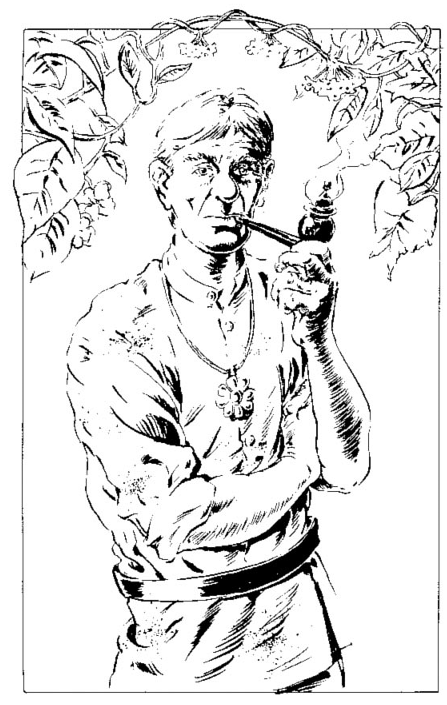
In the end, Lara defeats both foes by firstly tricking the sea hag into a cage, and then beating the Demon Knight by reading out a passage from an ancient bestiary.

Overall, the Ireland adventure in ‘Chronicles’ was a refreshing change from what we normally expect from a Tomb Raider game. Not only did the young and inexperienced – as well as unarmed – Lara Croft add an extra degree of intrigue to the story, but the disturbing surrounds really set this apart from the Rome and Russian Submarine levels featured previously.

As I mentioned earlier, the developers really went to town with the remastered version and added a number of well-placed additions to the scenery. I have selected some of the better comparison shots below – with the 2025 game featured on top and the original PS One displayed on the bottom. I think the first screenshot is the best and most imaginative, with that ‘thing’ under the sheet being an unnerving ‘improvement’ – luckily it was only there for show.

Having made it three-quarters of the way through ‘Tomb Raider Chronicles’, my honest assessment of what I have experienced so far is a game with very short levels that I have had little to no difficulty passing through. That being said, I enjoyed the Ireland adventure a lot more than the previous stages, and in a strange way got a kick out of the weird and wonderful things that were going on as the story progressed.

So, it is now onto the final stages – set in the Von Croy building in Manhattan – where the original game featured a bug that essentially made it impossible to progress. Apparently, this newer version has ironed out such problems, so we’ll find out soon enough.
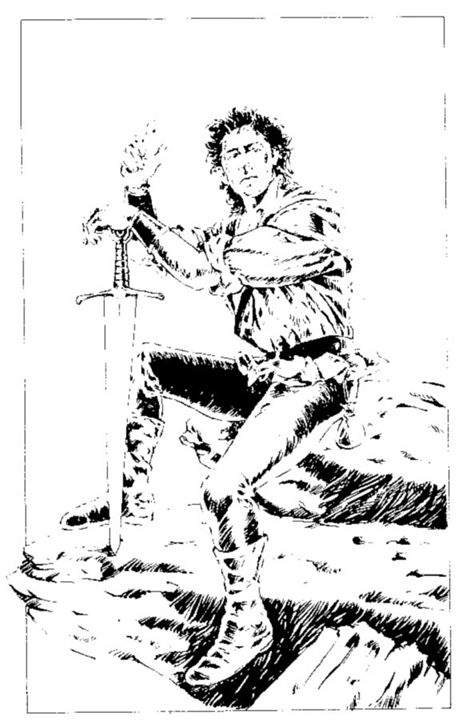
‘Tomb Raider Chronicles’ is part of the second remastered Tomb Raider Trilogy and is available at the PlayStation store.

All screenshots are courtesy of Aspyr, Crystal Dynamics and PlayStation.

Tomb Raider Chronicles – Rome levels

Released back in 2000, ‘Tomb Raider Chronicles’ is the fifth installment in the adventures of Lara Croft, and structurally is very different from the previous games. By this I mean that the story is set out as a series of flashbacks – or mini prequels – as told by associates of Lara during cut scenes that connect the overall game.
The first of these ‘trips down memory lane’ is of a caper that took place in The Eternal City, which appeared to be heavily inspired by the Venice levels in ‘Tomb Raider II’.

This story arc is broken into three chapters; the first of which is titled ‘Streets of Rome.’ So, let’s check it out…

Design-wise, the game looks good – and the 2025 remastered edition is a marked improvement on the original release from twenty-five years ago.

But one of the things that was ‘off’ about the Rome location was that there was no one else around – besides a couple of rogue dogs – and anyone who has visited this city would know this is impossible. It’s not only the desolate surrounds that are incorrect, but the audio as well; as Lara is exploring in the vicinity of the Colosseum – where there would be thousands of tourists and a ton of traffic – yet distant bells and the odd bird are the only sounds you can hear.

The opening level is a short one, and is little more than cobbled lanes and courtyards with the odd switch to be pulled. This area plays out as a maze, and you find yourself running around in circles until the pathway to another section is discovered.

This short chapter concludes when Lara encounters two old foes in Pierre and Larson – both of whom she would later kill in the original Tomb Raider game – before the story quickly moves on to the next stage.

‘Trajan Markets’ is where the story starts to get interesting; opening up a mysterious part of Rome where mechanical monsters, hordes of rats and deadly statues await!

Again, the layout is very maze-like, but there are a few ‘touristy’ highlights of note – without the tourists, of course.

‘Trajan Markets’ eventually turns the full circle and ends where it began, with Larson once again ambushing Lara outside of the temple door visited at the end of the previous stage. However, this time around there is one noticeable difference – that being, the mechanical hydra clunking into life to defend the entrance.

I couldn’t help but think Tomb Raider had ‘jumped the shark’ with these deadly robots – I mean, who built them and why? How did the hydra heads move from above the door to the ground below?

In any case, after an epic battle against this metallic, flame-throwing fiend – the temple door opens up to reveal the entrance to the next level.

‘The Colosseum’ is the third and final chapter in the Rome story – featuring some impressive torture chambers, underground caves and battles against ancient gladiators, lions and more lethal statues coming to life.

But I have to point out again that there is no way these types of shenanigans could be going on at the Colosseum in broad daylight without any tourists being around.

The Rome levels were a breeze to get through, with the only major delay being the fight with the hydra. On the whole, it was probably a little too easy and the areas to explore were quite limited – but on a positive note it was well-designed and the aesthetics were good.

As always, I like to present a few split screenshots to compare the difference between the original PlayStation game from 2000 to the remastered 2025 edition – with the new version on top and the old graphics being on the bottom.

The Rome levels of ‘Tomb Raider Chronicles’ were a little hit and miss for me, with the limited area on offer and ease to pass through being the biggest issues. I also can’t get my head around choosing a busy city like Rome as a setting and expecting us to believe that the place was deserted.

However, I do recall playing the original game all those years ago, and accept that there are far more difficult levels to come – so to have the opening story being light on challenges is perhaps not such a bad thing.

‘Tomb Raider Trilogy Remastered – IV, V and VI’ is available at the PlayStation Store.

All screenshots and images courtesy of Aspyr, Crystal Dynamics and PlayStation.

Wow! This was 35 years ago – and I was there!

The date was June 24th, 1990 – and the occasion was Tasmania vs Victoria in a State-of-Origin match played at North Hobart Oval. The only reason I found out about this anniversary was through social media posts from the Tasmania Devils AFL team – who were reminding everyone that today marks exactly thirty-five years since that famous day.

And it was such an emotional moment in Tasmanian history that the local television channel failed to spell ‘origin’ correctly when presenting the final scores!

But as I mentioned in the heading, my seventeen-year-old self was actually there at the game. In fact, I was standing behind the goals at the bowling club end – and I have indicated my approximate location in the screenshot below.

The television coverage is too blurry – being of VHS quality – to pinpoint me exactly, but I would have been hard to spot even if the footage was clear and sharp. This is because I would have blended in amongst those around me with my mullet hairstyle and Japara jacket – both being Tasmanian fashion statements at the time!

The game showcased a number of local footballers who had moved interstate to play for AFL clubs on the mainland. Some of these players included Doug Barwick, Paul Hudson and Shane Fell* – who are pictured above.

*Fell was not a born-and-raised Tasmanian, but met the eligibility requirements to represent the state – and just so happened to be one of my favourite players at the time.

The Victorian squad – whilst containing great players such as Gary Ayres, Chris Langford, John Longmire and Tony Liberatore – was in truth considered to be their B team. I believe their strongest side was playing a match against South Australia that same weekend, and featured superstars like Gary Ablett, Tony Lockett, Dermott Brereton and so forth.

However, the Victorians did consider the game against Tasmania to be serious enough to have the legendary Ted Whitten make the trip to Hobart. Seated next to him is David Parkin – who was no slouch himself – with another heavyweight of the game in Ron Barassi also present.

Below is a shot of both Whitten and Barassi reacting after being heckled by the crowd. On a side note, the kids who have snuck into the frame remind me of ‘Village Of The Damned‘ – creepy!

The ground was absolutely packed – and the atmosphere was incredible – with an ‘official’ attendance of 18,600. But I reckon a few thousand more strolled in when the gates were opened and free entry was allowed at three-quarter time.

Remember that I mentioned Japara jackets before? Well, I can count as many as five in the last photo, including the guy standing at the back.

The Tasmania Devils AFL club uploaded a highlights video to their YouTube channel, and it’s worth checking out. Watching it again really brought back some memories, and I’m sure it would be the same for others who were at North Hobart Oval on that famous day.

For those reading this article who aren’t from Australia and are unfamiliar with this football code and our sporting culture, it’s still worthwhile having a look at the video – if only for curiosity’s sake.

See link below.

Screenshots courtesy of ABC. Video courtesy of Tasmania Devils AFL YouTube channel.

The ‘Doomsday Plane’ – routine or conspiracy?

This Boeing 747-E4B that is operated by the US Air Force was the highest tracked plane on Flightradar24 today. The reason why is because this is the so-called ‘Doomsday Plane’ – rumoured to take off in times of war or potential danger, and keep safe various national security secrets and protocols while remaining in the air.

Right away, I would point out that it makes no sense for a plane on such a mission to be easily followed on a public flight tracking app. I mean, if I can see it – then so too could every enemy of the United States.

All that aside, perhaps we should look at what the aircraft actually did today – where it began its journey and where it ended up.

At around 5pm local time, the plane took off from Barksdale Air Force Base in Shreveport, Louisiana. You can determine this from the first screenshot – with Shreveport clearly named and the abbreviation of ‘BAD’ for Barksdale.

The flight then travelled east and performed two square-shaped laps of a large area covering parts of North Carolina and southern Virginia, before continuing its journey north toward Chesapeake Bay.

The plane dropped altitude in readiness to land, as seen by the colour change in the flight path. In the above screenshot, it is positioned over Baltimore and appears to turn west to perhaps then fly south – possibly on its way to Washington DC.

As soon as the plane landed, the destination then popped up on the screen – being Andrews Air Force Base (ADW) in Maryland, not far from Washington.

The ‘Doomsday Plane’ was airborne for four hours today – but what do we make of this? Was it ordered into the air and told to stay there until it was given permission to land? Does this explain the laps over Virginia and North Carolina – waiting for the threat to pass – or was it some type of exercise? Or is it a decoy plane for Air Force One?

In any case, for those interested in this kind of thing – it is easy to download Flightradar24 or any other flight tracking app, and then search for ‘ORDER01’ to see if it is on assignment. Personally, I think that if this really was a ‘Doomsday Plane’ then none of us would be allowed to know its location at any given time – so I lean toward this flight being some kind of routine mission or exercise.

But I could be wrong…