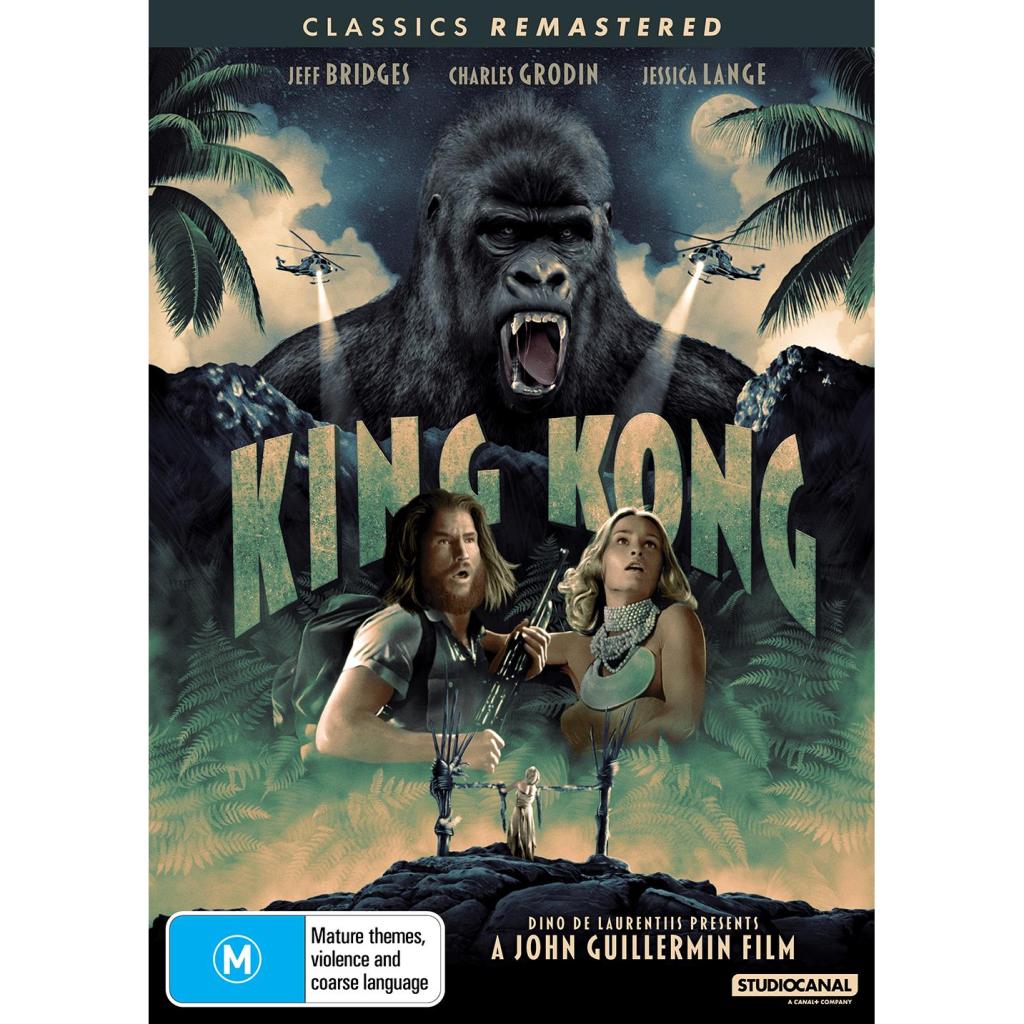
It’s fair to say that monster movies have been well-represented in recent times, with Warner Bros’ ‘Monsterverse’ leading the way; supported by notable projects such as Apple TV’s ‘Monarch: Legacy of Monsters’ and the Japanese-made ‘Godzilla: Minus One.’
But back in 1976 we were given a blockbuster version of ‘King Kong’ that didn’t quite hit the heights it was expected to, and is rarely mentioned in terms of classic monster flicks. However, the film was remastered and released on Blu-ray a couple of years ago, which is more than enough incentive for me to go back and re-watch it for the first time in over two decades.
There was a lot of money thrown at this project back in the day, with a budget of around $US 24 million – and ‘King Kong’ would at least prove to be a commercial success by grossing just over $US 90 million at the box office. With Dino De Laurentiis producing and ‘The Towering Inferno’ director John Guillermin at the helm, hopes were high for this movie to be well-received critically, but things did not quite work out that way.
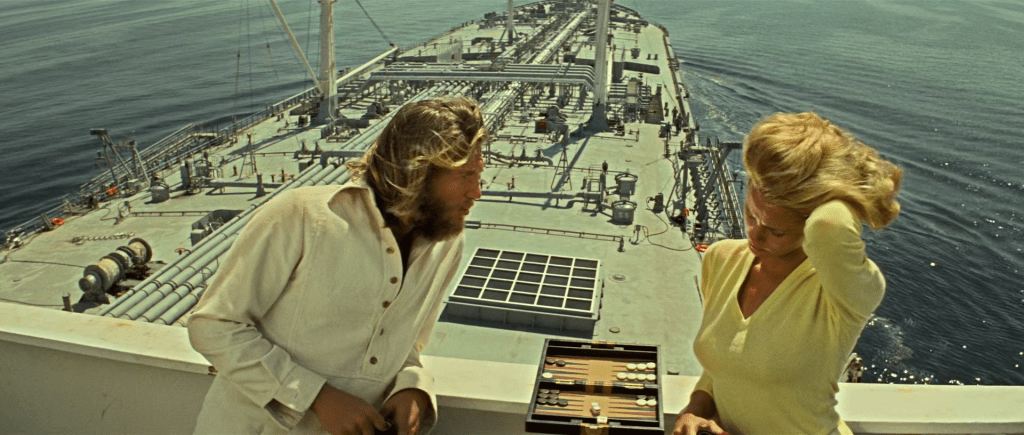
The cast was solid without featuring any major drawcards from that era, such as Charlton Heston or Robert Redford, preferring instead to have Charles Grodin, a young Jeff Bridges and Jessica Lange (in her film debut) playing the lead characters. Bridges and Lange would go on to become established and award-winning actors over the following decades, so those who made the casting decisions for ‘King Kong’ might have been onto something.
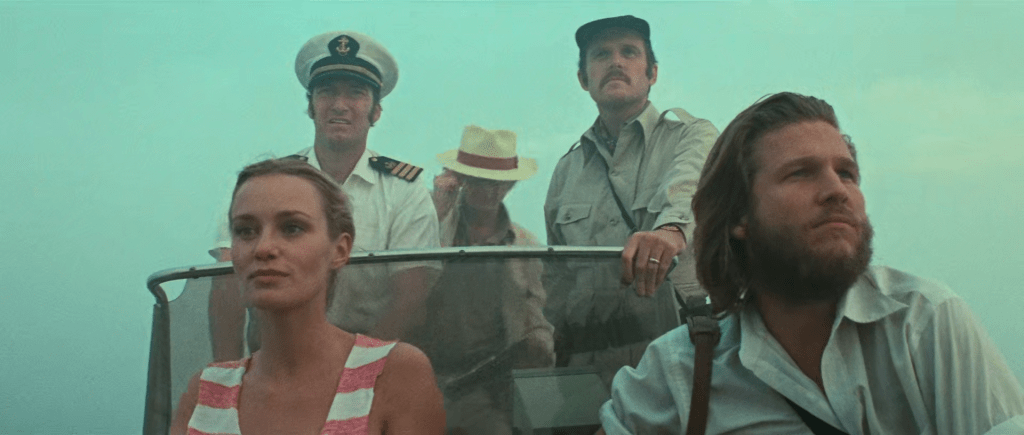
Interestingly, the actor standing behind Jeff Bridges in the photo above is none other than John Lone, who like Jessica Lange was also making his screen debut. Unfortunately, we don’t see a lot of Lone in this film as he plays a small role as the cook on the exploration vessel.
Before getting into the plot and themes of the movie, I should take a moment to mention the musical score composed by the legendary John Barry. This should have been a slam dunk, however Barry’s compositions in this film are little more than serviceable – and well below his usual high standards. Any movie wanting to reach classic status must have a memorable score and powerful theme music – but ‘King Kong’ falls short in these disciplines.
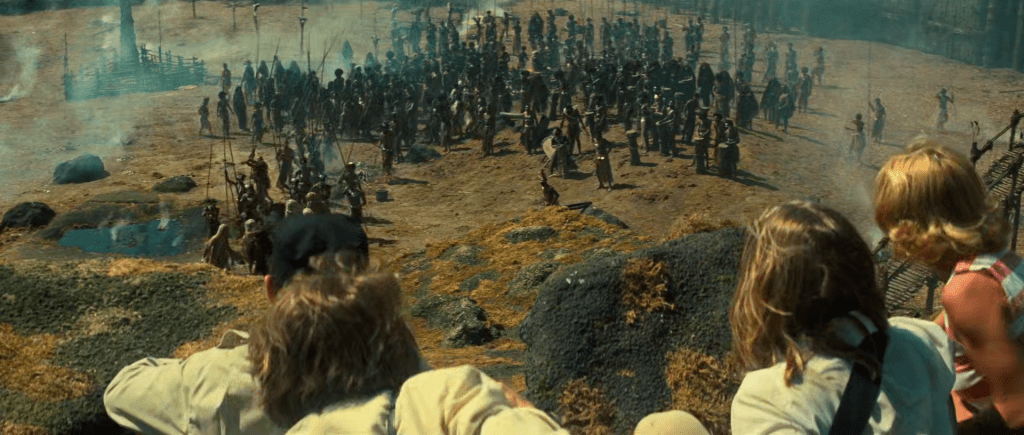
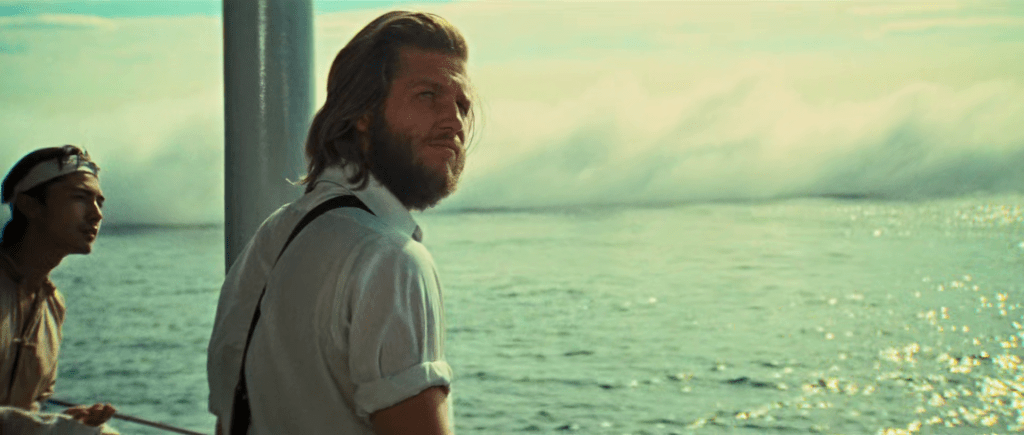
On a positive note, ‘King Kong’ remains fairly true to the storyline of the 1933 original, and is at its best during the scenes on Kong’s Island. In fact, the sets and scale of this spectacle are worthy of high praise, with the native village and defensive wall perhaps at the top of the list. The special effects used for the fog were also of a high standard, and looked quite convincing.
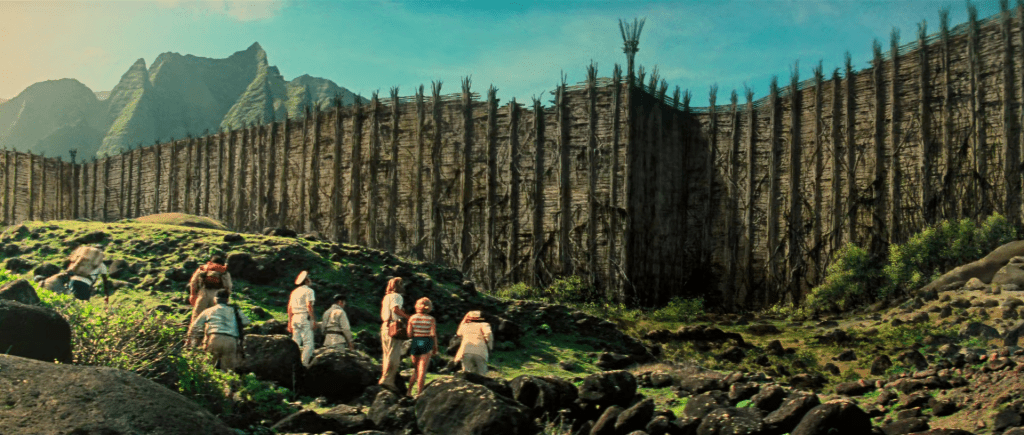

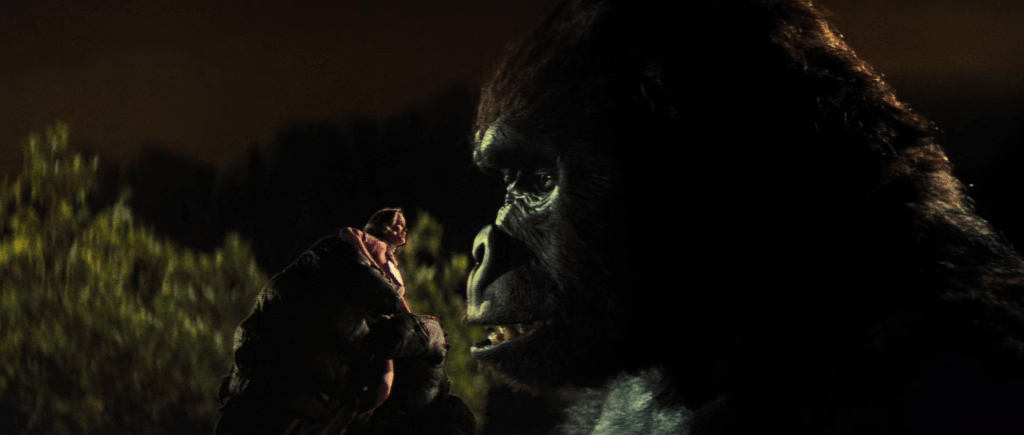
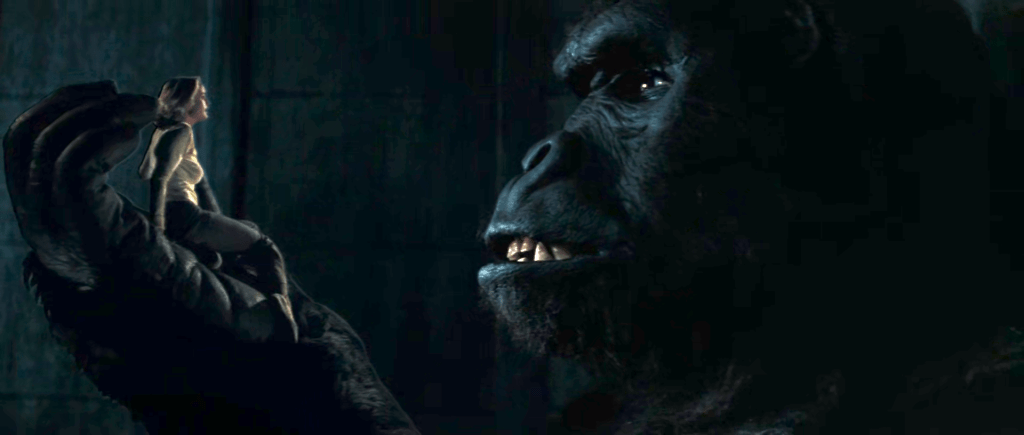
When Kong eventually turns up, some of the effects start to show signs of faltering, but I suppose they would have stood up to scrutiny back in the mid-seventies. Most of the action sequences still look alright though, but I wasn’t entirely sold on the Kong costume during facial close-ups – while the larger mechanical hand prop used to pick up Dwan (Yes – Jessica Lange’s character is named ‘Dwan’ and not ‘Dawn’) looked authentic more often than not.
Of course, there is the infamous scene where Kong gets a little frisky with his female captive…and the look on the big guy’s face says it all!
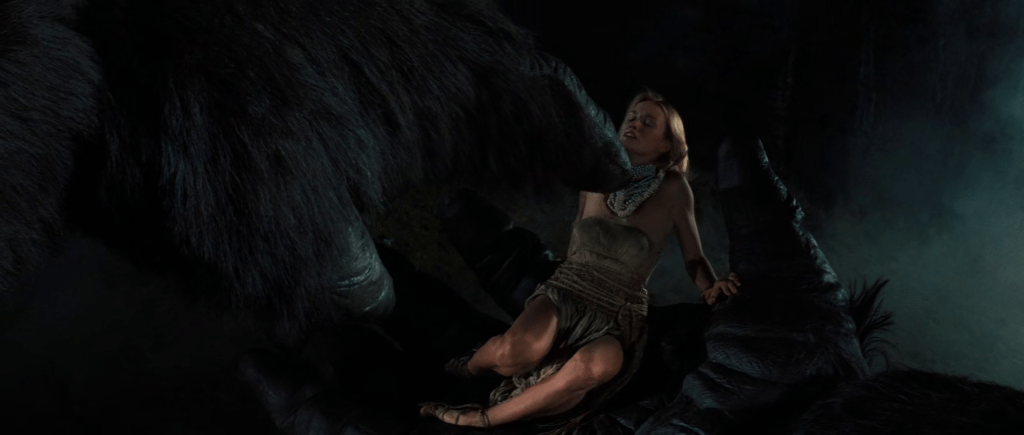
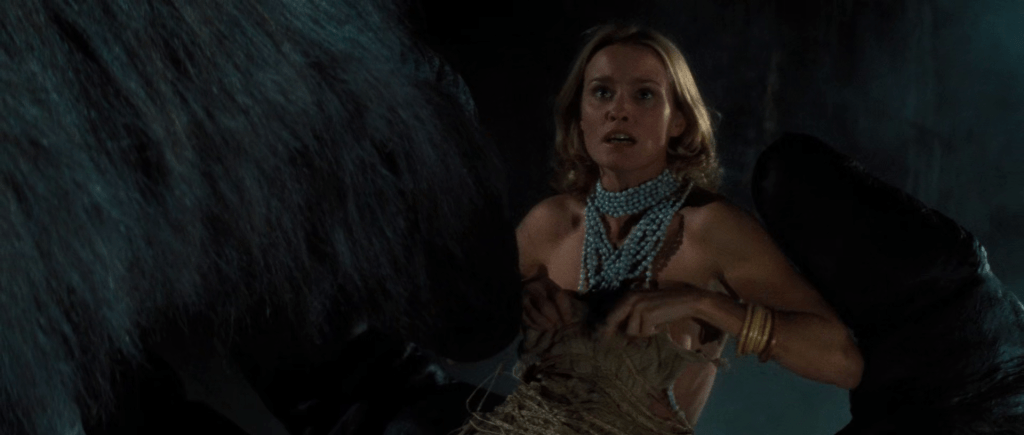
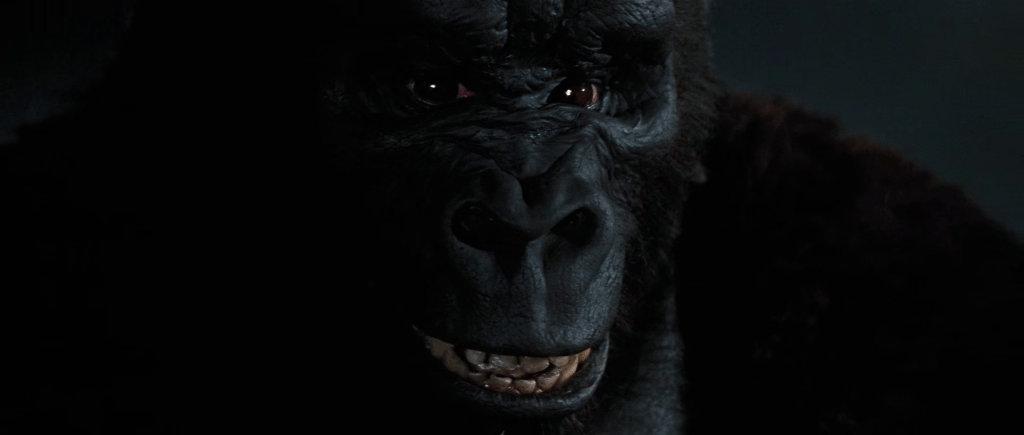
Two-thirds of the way through the film and it’s shaping up fairly well. The early scenes on the boat setting up the plot are solid, and the movie wastes little time arriving at the uncharted island and the introduction of Kong is neither too soon nor too late. Where the action falls short is not having enough monsters on the island for Kong to fight – except for a giant snake – and these elements were prominent in both the 1933 version and Peter Jackson’s 2005 movie.
Which brings us to the final act: – King Kong in New York City.
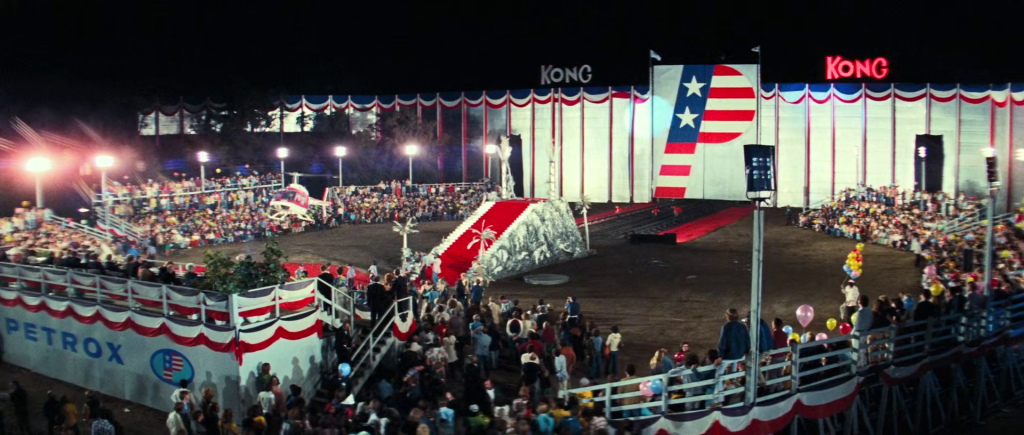
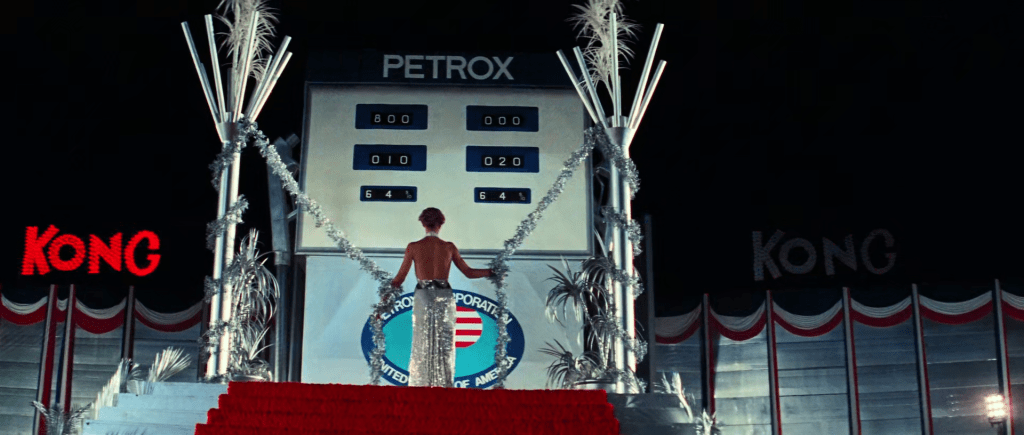
Who thought wheeling out Kong inside a petrol bowser was a good idea?
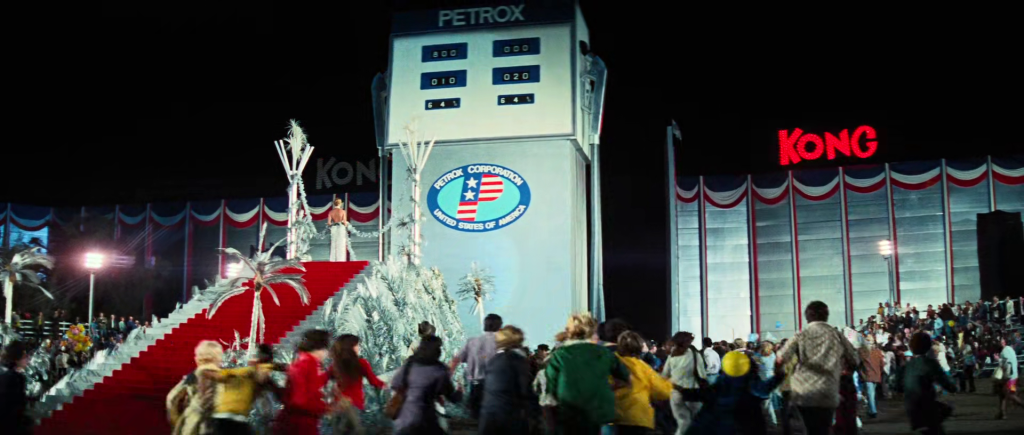
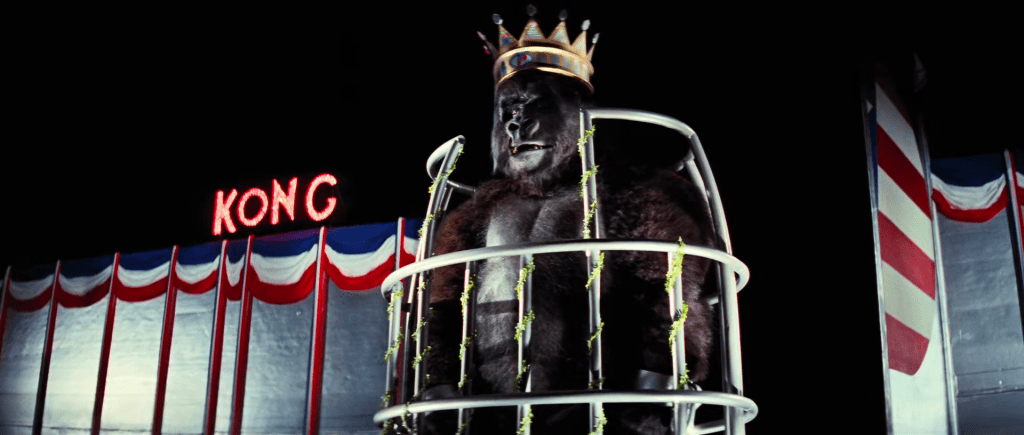
I can understand the argument that the film-makers were highlighting commercialism and corporate greed, but it comes across as a little cheesy and over-the-top for me. However, the humiliation ritual that followed was very well executed – the juxtaposition of Kong wearing a crown whilst imprisoned in a cage is clever and effective.
Of course, we all know what happens next – and I think the final act of the film suffers from the contemporary setting; especially the replacement of the iconic Empire State Building with the World Trade Center – which unfortunately has not aged well.
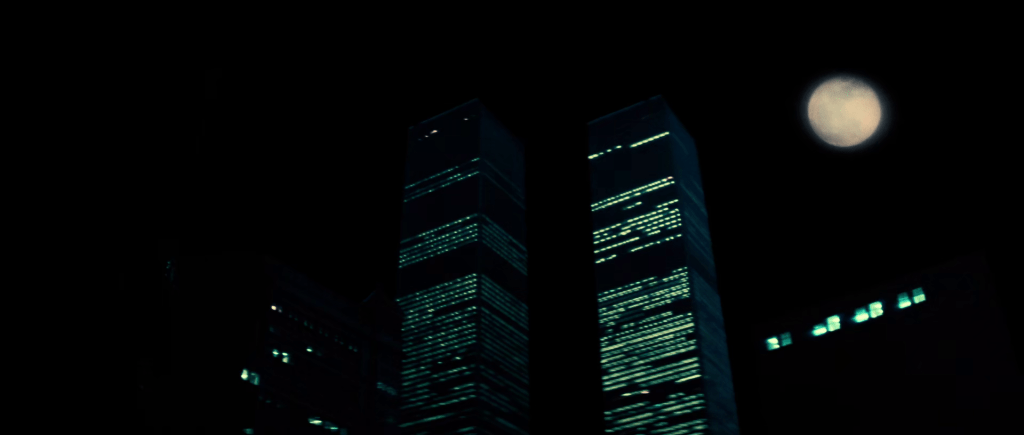
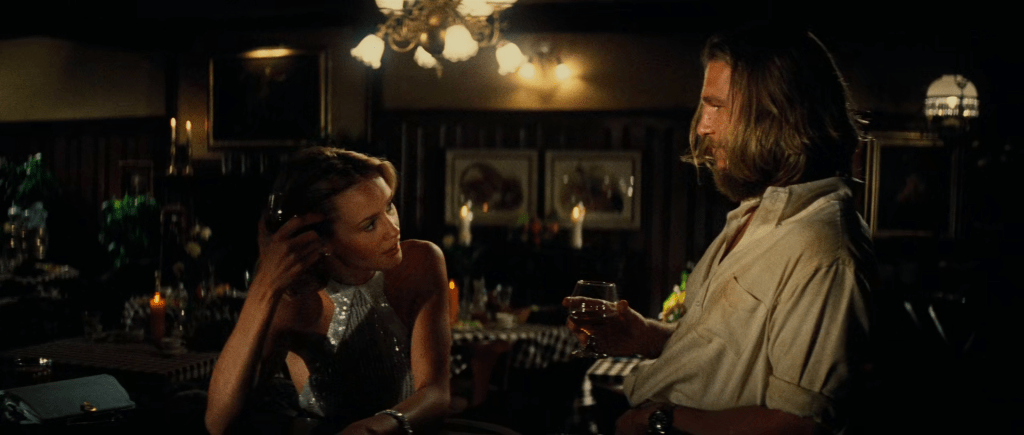
There was a sequence within this final act that I could not get my head around, when the main characters were on the run from a rampaging Kong and Dwan (Jessica Lange) insists on stopping at a bar for a drink. Don’t get me wrong, I’m all for moments of levity – but the timing of this was diabolical!
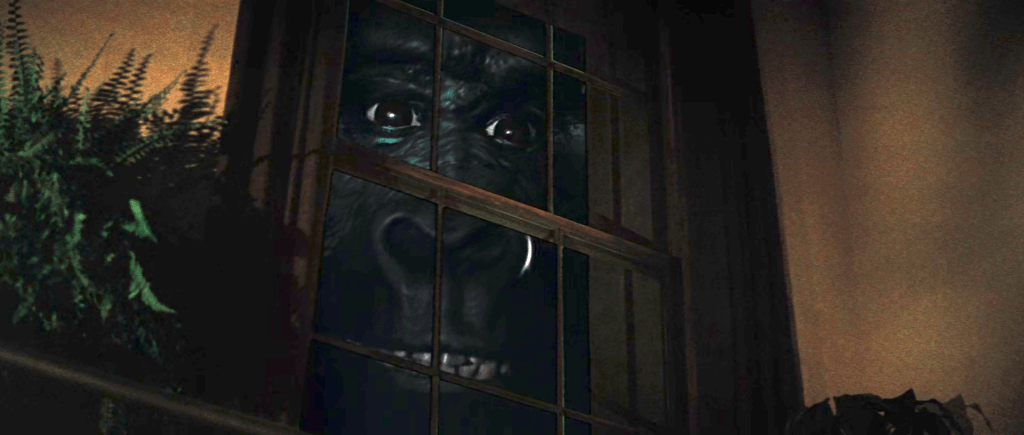
And the shot of Kong looking through the window when he finds them is just as outrageous! What a shocker! At this point, I was having fits of laughter.
But it’s not all bad, because some of the sequences with miniatures only moments earlier were quite impressive!
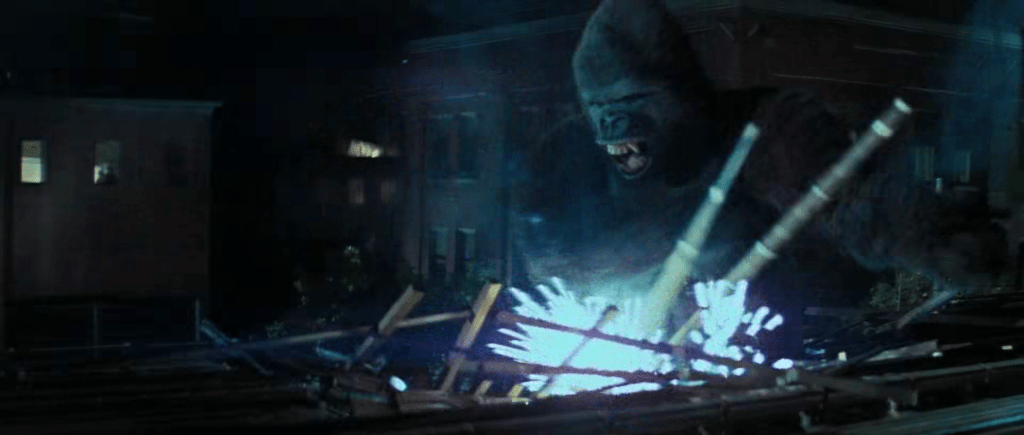
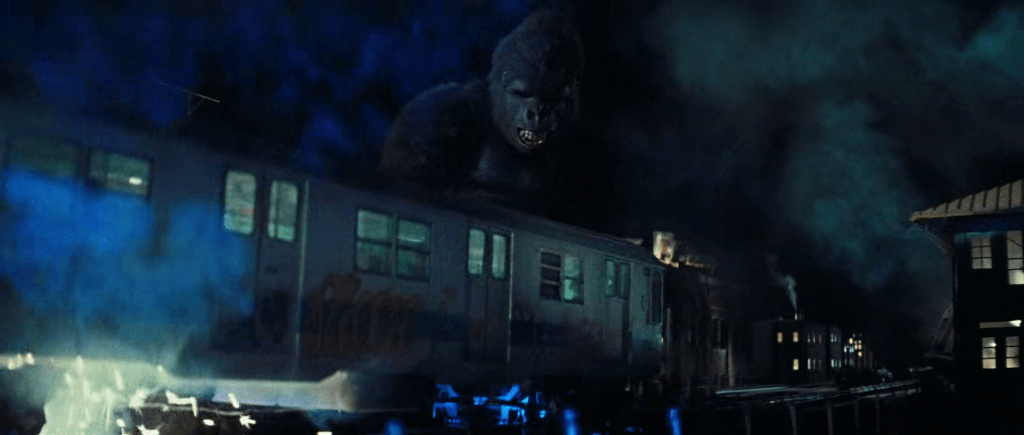
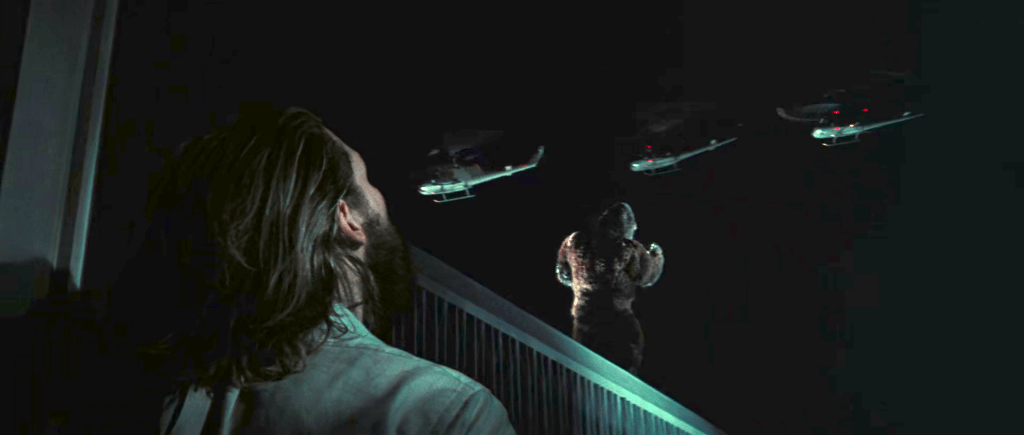
The film is struggling to hold it together at this point, but it is still an enjoyable spectacle. Unfortunately, the special effects throughout Kong’s battle with helicopters atop the World Trade Center are pushed well beyond their limits, and the scaling and perspective are terribly askew – see screenshot below.
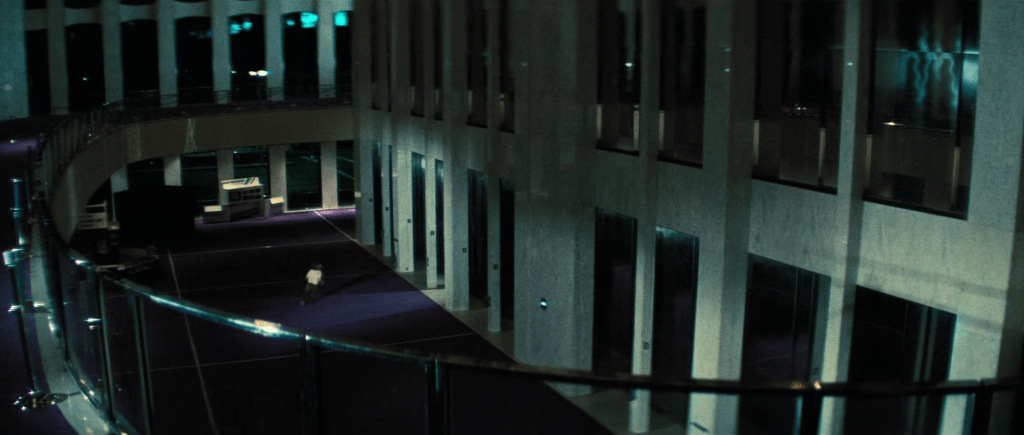
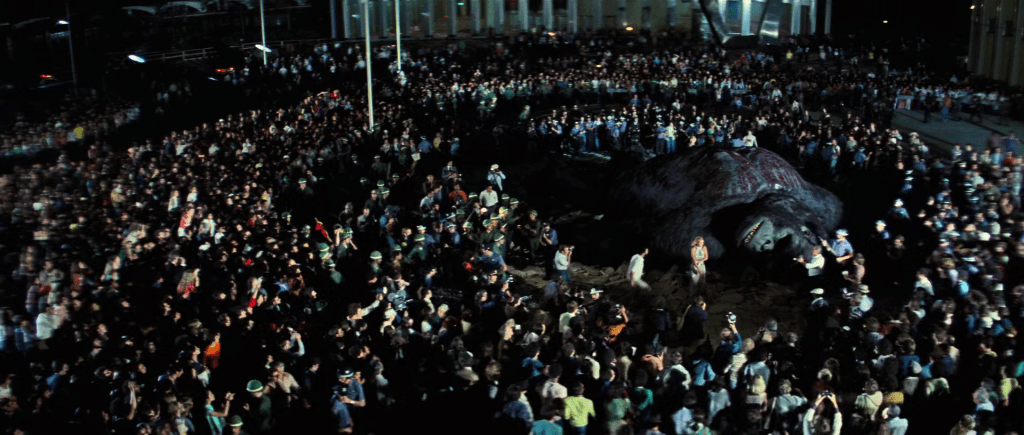
In the lead-up to the rooftop showdown, there were a number of shots that appear to have been filmed inside one of the World Trade Center buildings, which now come across as sombre and haunting. I am also certain that the plaza where Kong falls to his death was filmed at the now-extinct complex.
Overall, I enjoyed the 1976 version of ‘King Kong’ having watched it through older and more critical eyes. I found it to be well-directed, neatly-paced and above all entertaining – not to mention keeping fairly true to the original story.
On the flip side, I don’t think the modern setting works; especially during the New York finale, but plays out reasonably well throughout most of the film. Some of the special effects shots were a little ordinary – and I’m still giggling over that window shot – but it worked most of the time, and I must keep in mind that the film was made in the nineteen-seventies.
‘King Kong’ certainly aimed high, and delivered on most of its promises, but ultimately fell short of being the classic movie the producers intended it to be. That being said, this film impressed me enough to give it seven out of ten!
All screenshots are courtesy of Dino De Laurentiis Corporation and Paramount Pictures.

