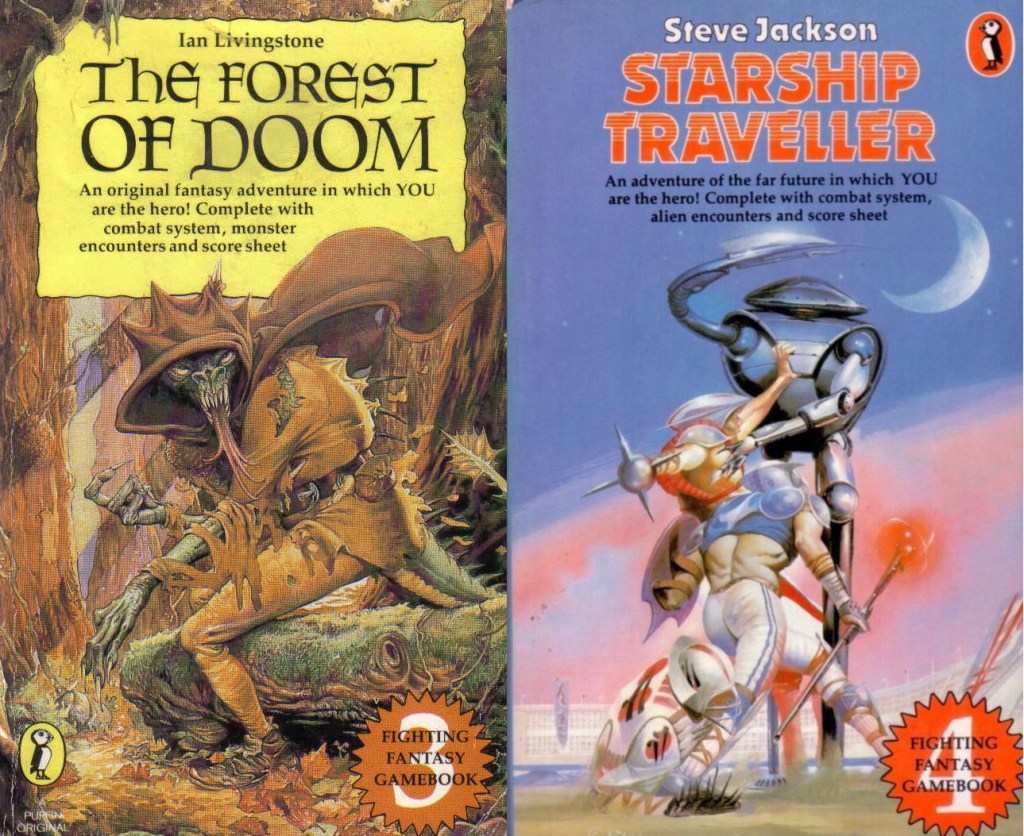
More artwork from the ‘Fighting Fantasy’ book series.

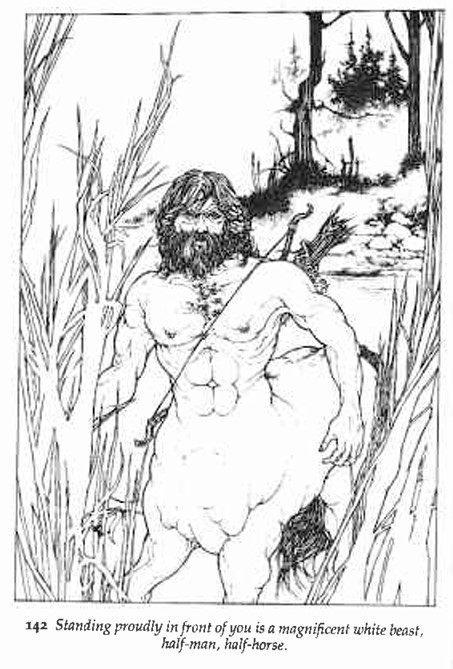
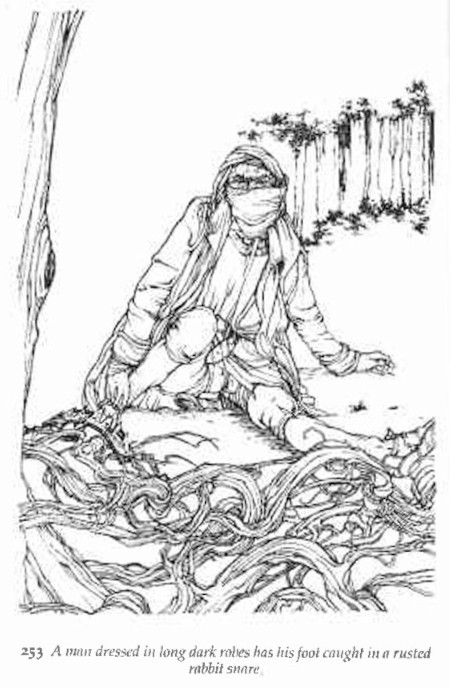
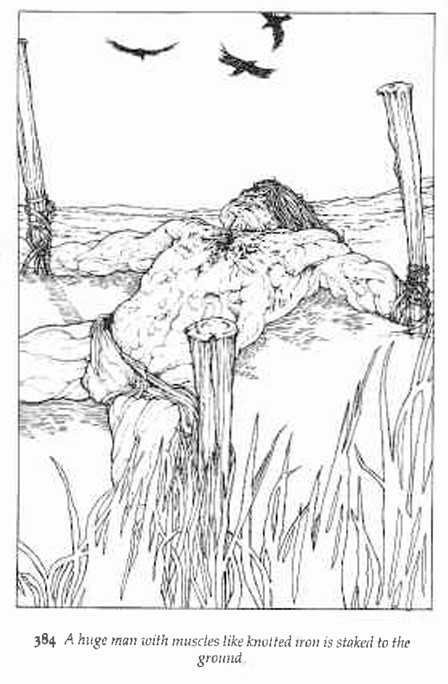
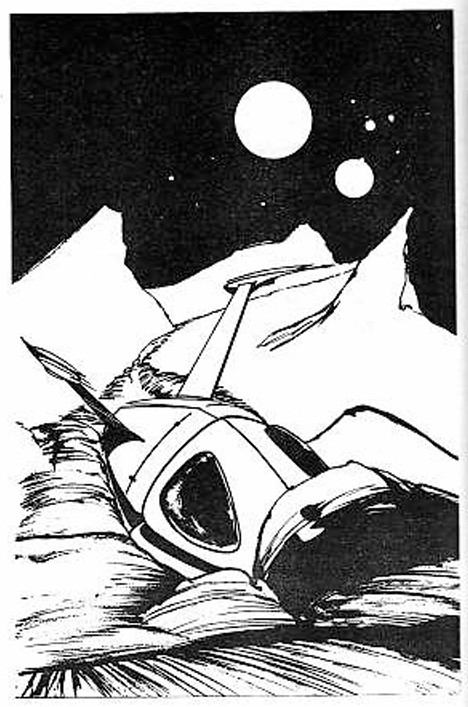
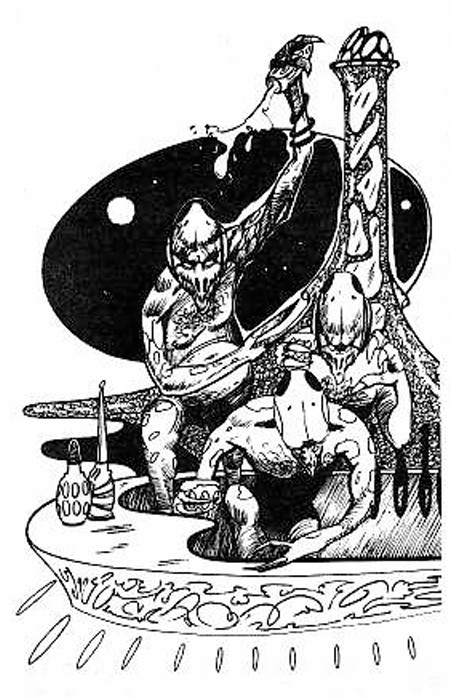
Following on from my article about the first two entries in the series, we now move on to appreciate the art from books three and four: – ‘The Forest of Doom’ and ‘Starship Traveller’.

These were two very different editions, with ‘Forest of Doom’ continuing on with the fantasy/sorcery genre, whilst ‘Starship Traveller’ veered off on a science-fiction trajectory and introduced a more complex system of game play.

‘The Forest of Doom’ was illustrated by Malcolm Barter, and his style is similar to Russ Nicholson – who provided the artwork for the previous two books.
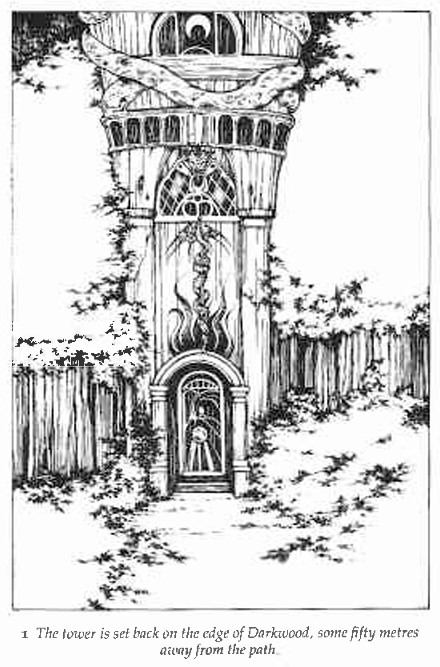
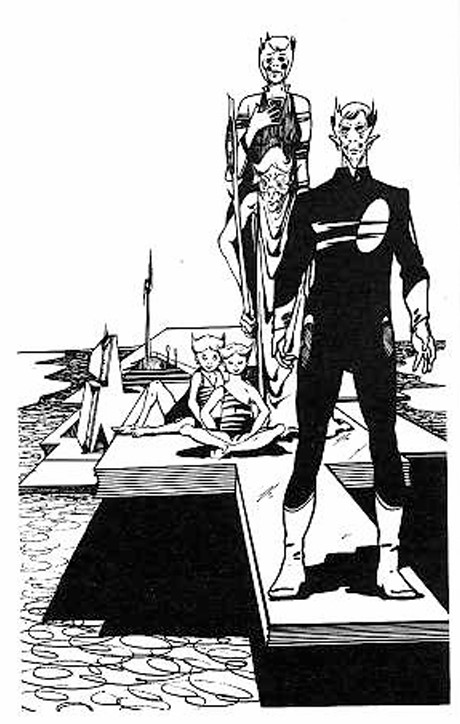
Not only did ‘Starship Traveller’ go in a different direction plot-wise, but the illustrations were also on an alternate wavelength. I’ll be honest here and say that I did not like this change, and never read/played this book as a result.

Examples of the artwork from Peter Andrew Jones are below.
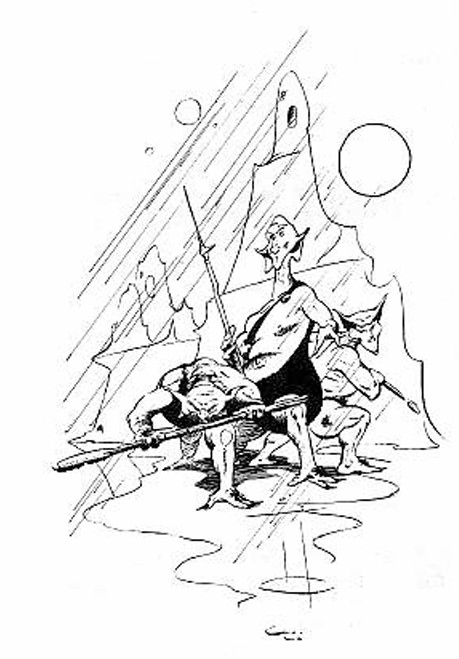
To me, there is something about the sword and sorcery art that gives it an edge – perhaps there is more imagination and menace immersed into the illustrations – who knows?

I am not being overly critical of the designs from ‘Starship Traveller’ as they are stylish and futuristic, but I just find the artwork from ‘The Forest of Doom’ – as well as ‘The Warlock of Firetop Mountain’ and ‘The Citadel of Chaos’ – vastly superior.

Cover art and illustrations courtesy of Fighting Fantasy and Puffin Books.

Van Diemen’s Land artwork by John Glover

John Glover was born in England in 1767 and migrated to Van Diemen’s Land (Tasmania) in 1831. Glover was already an established painter before moving to Tasmania, and would go on to create some of his most famous works during his later years there.

Glover’s paintings can be found in a number of museums and art galleries across Australia. There is an annual art competition named in his honour that takes place in the Tasmanian town of Evandale, near to where he lived, as well as a statue of the artist in one of the local parks.

I have highlighted four of his most famous works; a couple of which should be familiar to anyone from the Apple Isle.

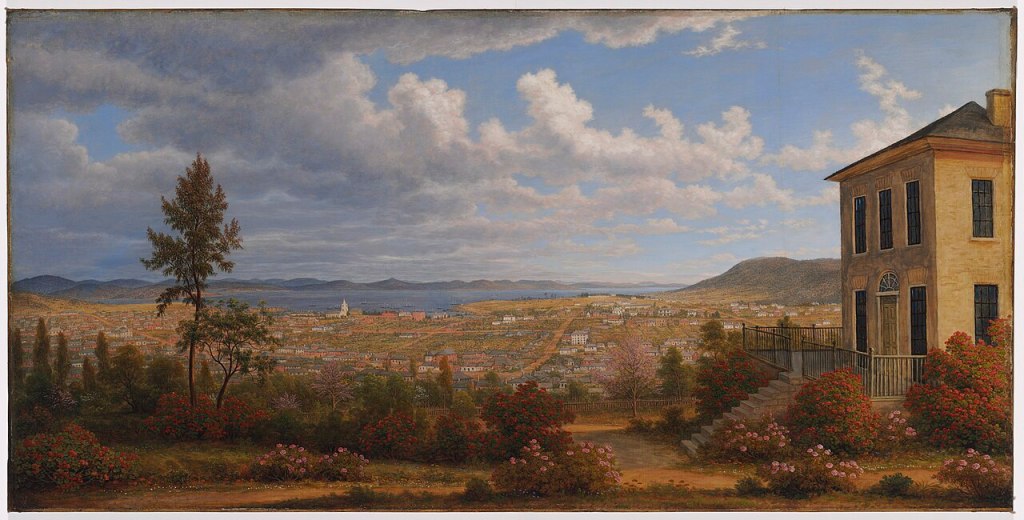
‘Hobart Town taken from the garden where I used to live.’ (1832) – State Library of NSW.

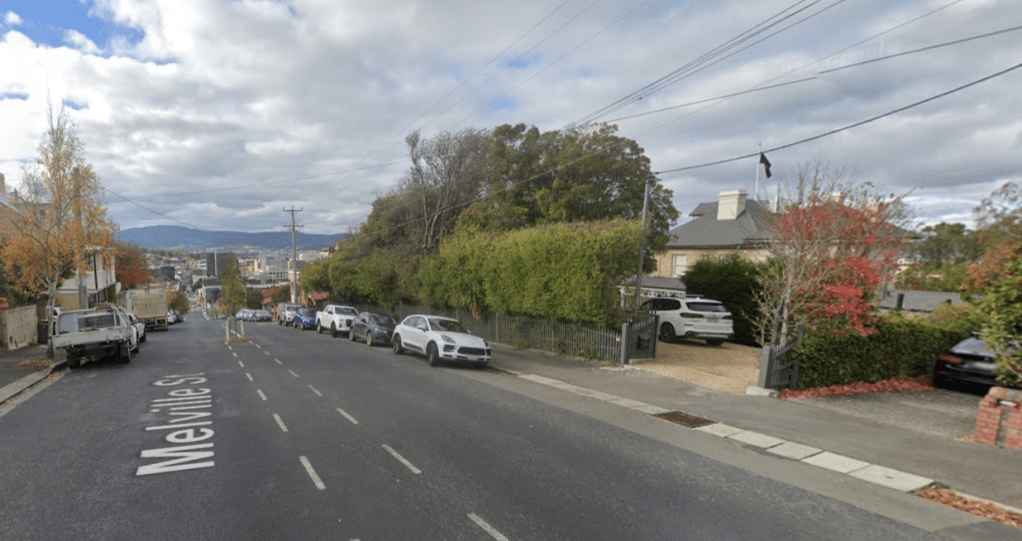
This is the modern day view of Glover’s home – known as Stanwell Hall – situated on Melville Street, West Hobart. It is the building with the flag flying and you can still see the sandstone walls, although it has undergone some renovations over the years.

‘A view of the artist’s house and garden, in Mills Plains, Van Diemen’s Land.’ (1835) – Art Gallery of South Australia.

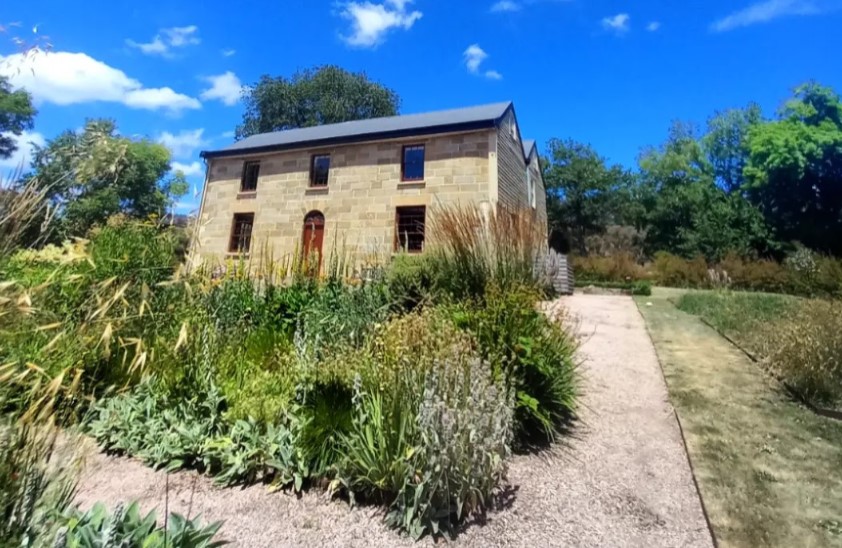
Here is a recent photo of Glover’s homestead at Deddington, Tasmania.

‘Natives on the Ouse River, Van Diemen’s Land.’ (1838) – Art Gallery of NSW.
‘Mount Wellington and Hobart Town from Kangaroo Point.‘ (1831-33) – National Gallery of Australia.

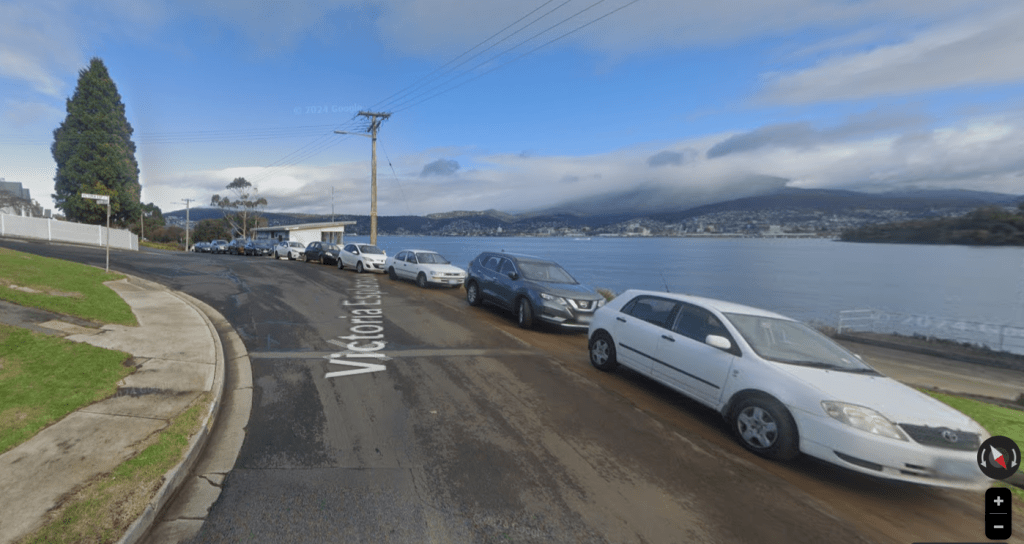
This location at Bellerive is near to where Glover would have found his inspiration. Any local would tell you that his interpretation of Mount Wellington (kunanyi) is slightly exaggerated and it seems he has taken some liberty with elevation as well – but these factors make this painting all the more impressive.

There is a lot more information about John Glover available online, including a decent Wikipedia biography and a website for ‘Glover Country’ in Deddington, Tasmania.

See links below.

https://en.wikipedia.org/wiki/John_Glover_(artist)

https://www.glovercountry.com.au/

Photos courtesy of Wikipedia, Google Maps and other online sources.