Aussie Big Things – Collection 2

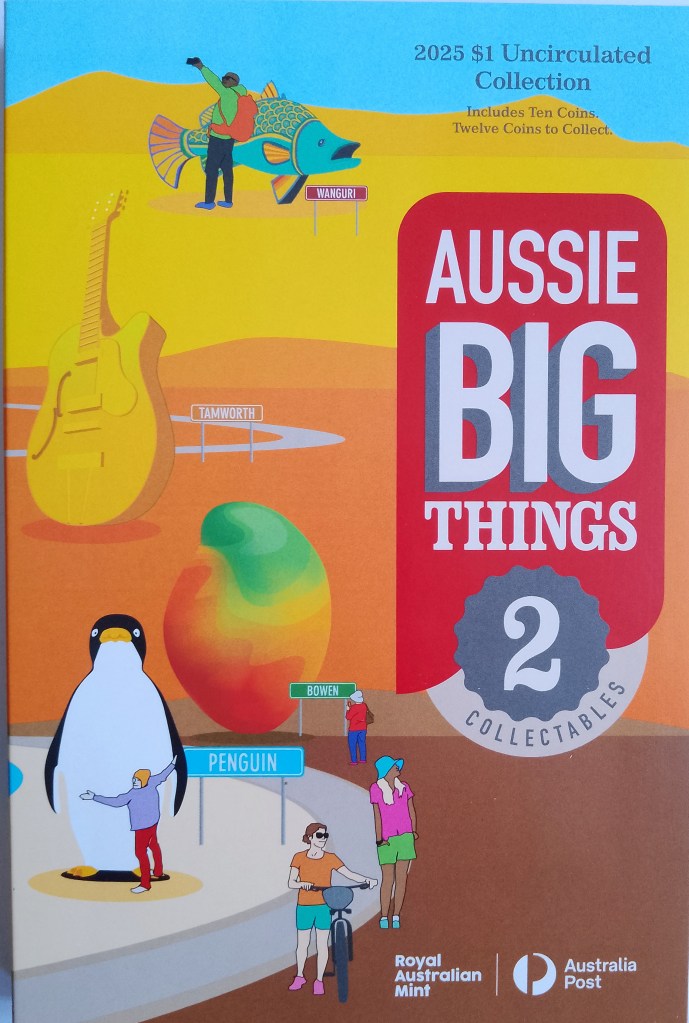
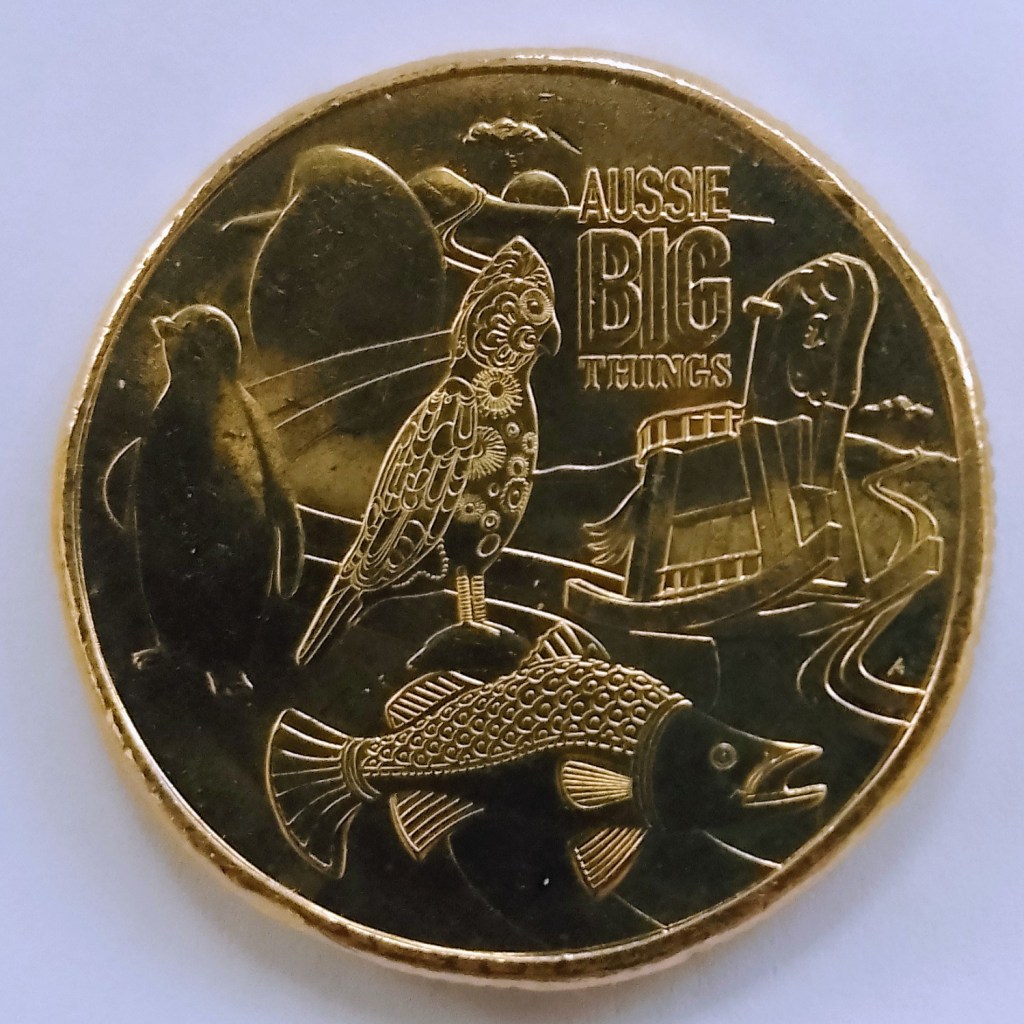
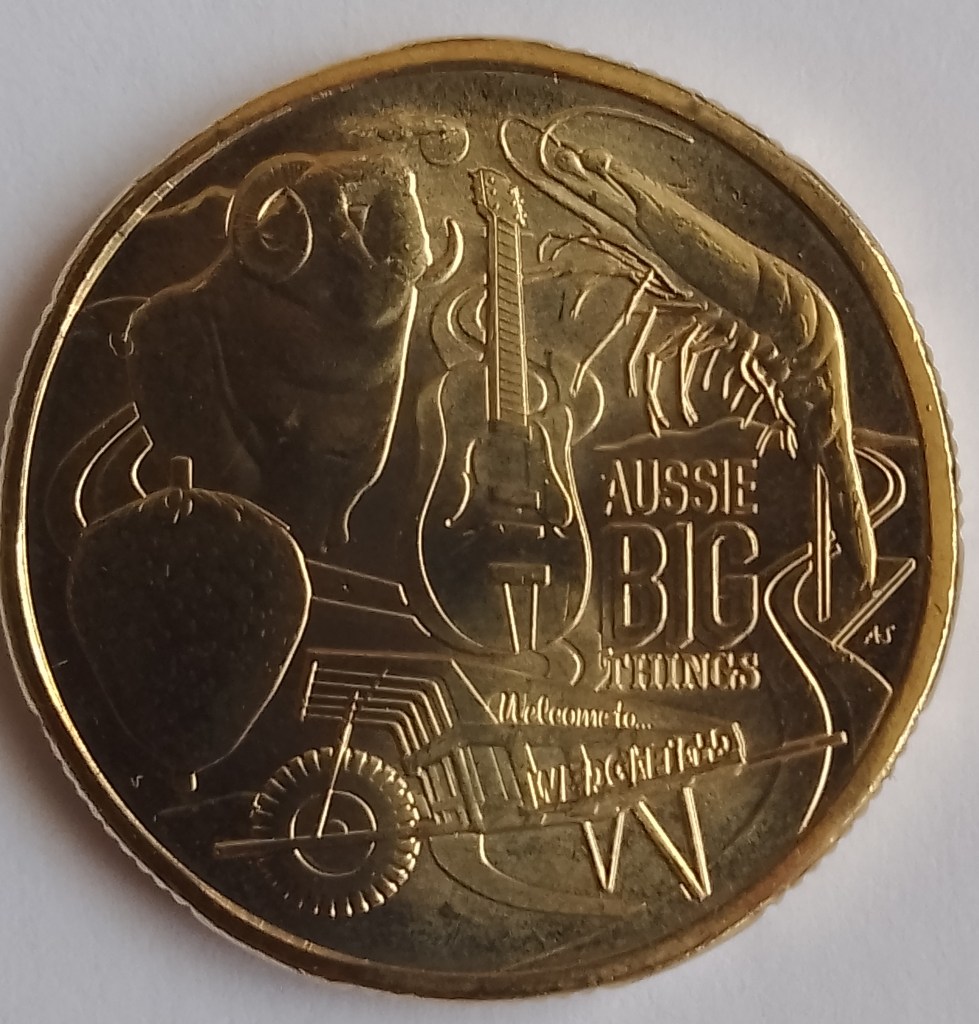
If you don’t know what an ‘Aussie Big Thing’ is – these are large sculptures (or structures) of Australian flora and fauna, as well as iconic local symbols, that are positioned by major roads and highways to serve as tourist attractions.

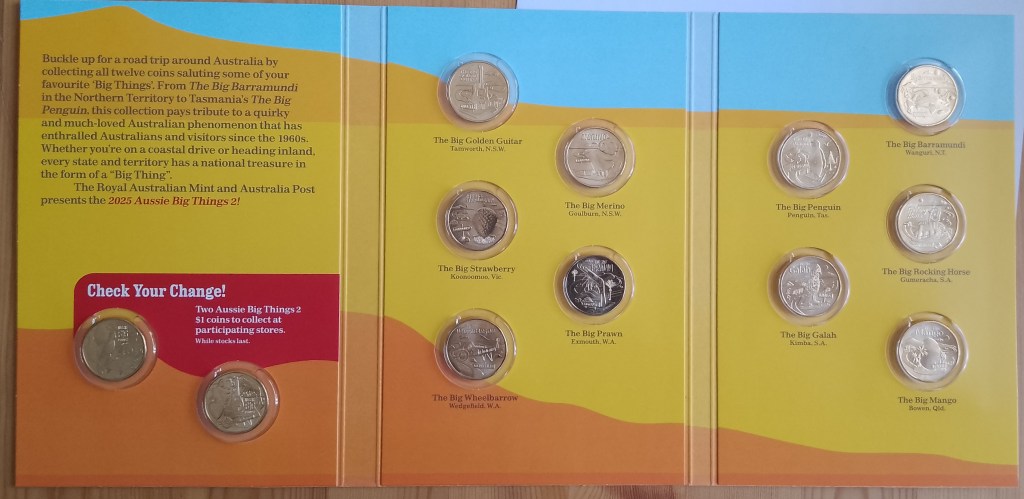
Despite the term ‘kitsch’ often being used to describe them, a number of these roadside gems are featured on one-dollar coins; with the first ‘Aussie Big Things’ collection being released back in 2023. The latest series – which I am going to show in detail shortly – came out in September 2025.

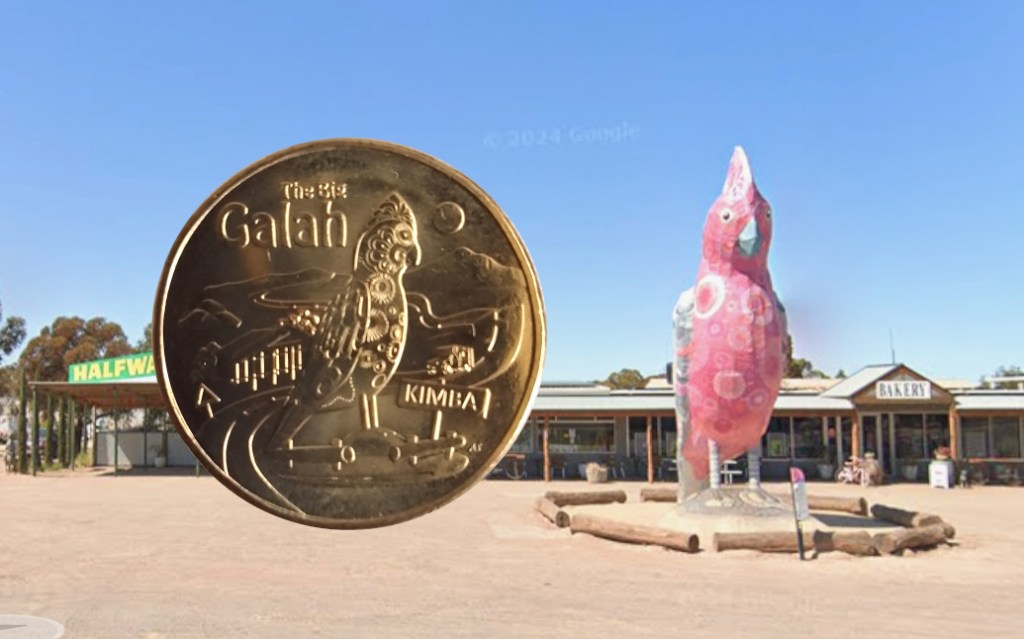
There are ten different ‘big things’ featured in the newest edition; and were chosen to represent every state and territory – except the ACT. To be honest, I think a couple of these attractions are a little lame, but nevertheless I have presented the photos of all ten places below – using Google Street View for consistency and showing the real location alongside the $1 coin for comparison.

THE BIG GALAH – Kimba, South Australia.

This attraction is positioned at the halfway point across Australia – from east to west.

THE BIG MANGO – Bowen, Queensland.

Some pranksters actually stole this entire mango a couple of years ago – if you want a good laugh then I suggest you look up the story.

THE BIG PRAWN – Exmouth, Western Australia.

This is a weak entry to be honest, as there is a ‘bigger’ Big Prawn in Ballina, NSW – as seen in the photo below.

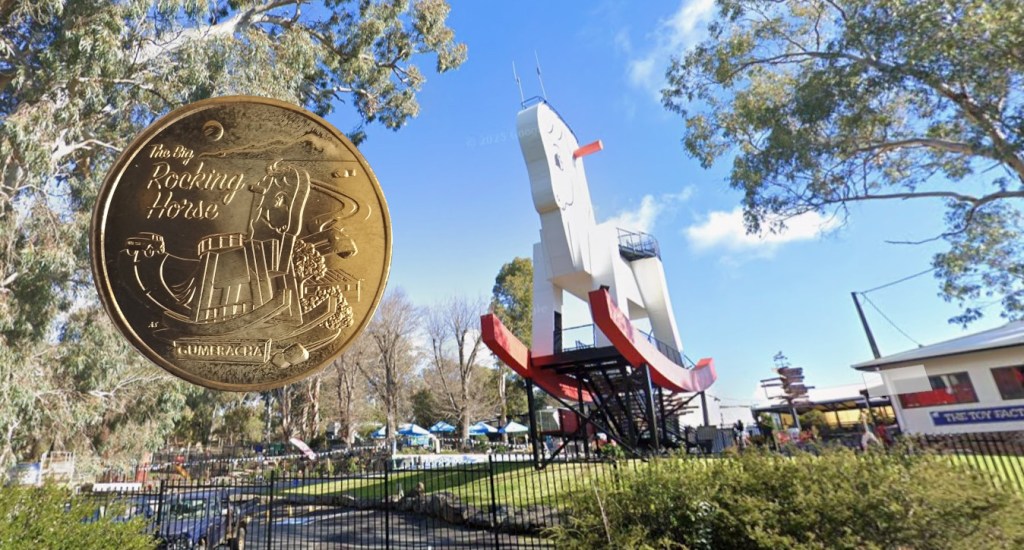
THE BIG ROCKING HORSE – Gumeracha, South Australia.

It’s weird, but it’s BIG – I will give them that!

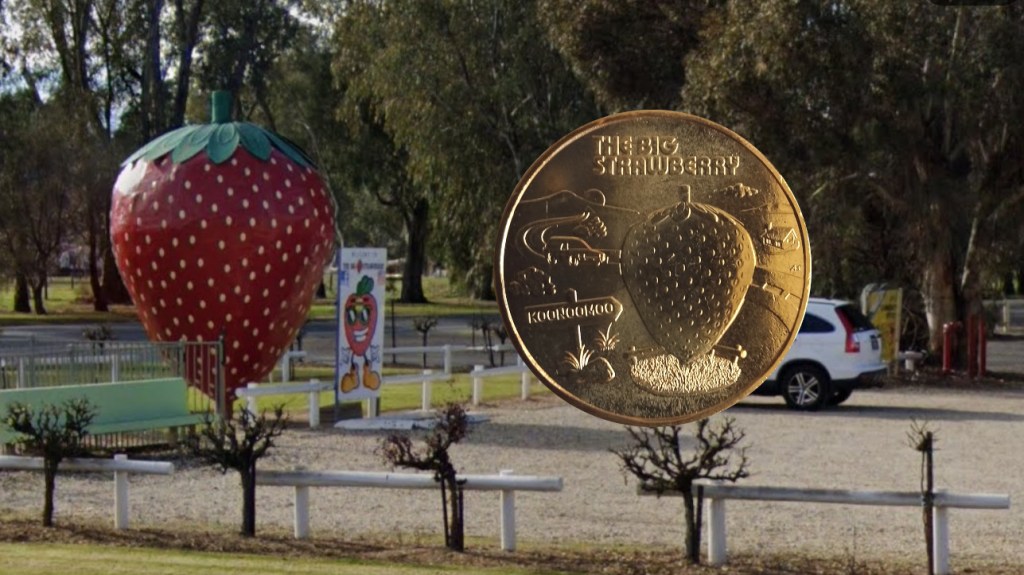
THE BIG STRAWBERRY – Koonoomoo, Victoria.

This is not big – compared to some of the others – but it’s big for a strawberry, I suppose.

THE BIG PENGUIN – Penguin, Tasmania.

According to the local tourism websites, this stands three metres high. Hmm…

THE BIG MERINO – Goulburn, NSW.

Now this is BIG! There’s also an awesome bakery across the street.

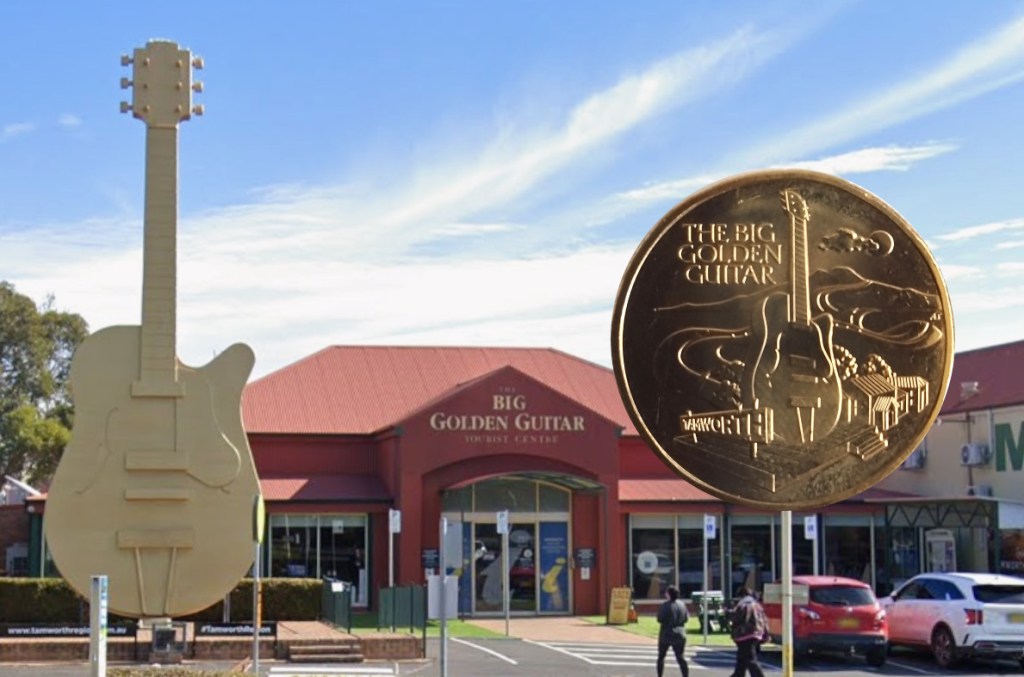
THE BIG GOLDEN GUITAR – Tamworth, NSW

For those unaware, Tamworth is Australia’s country music capital – our equivalent of Nashville.

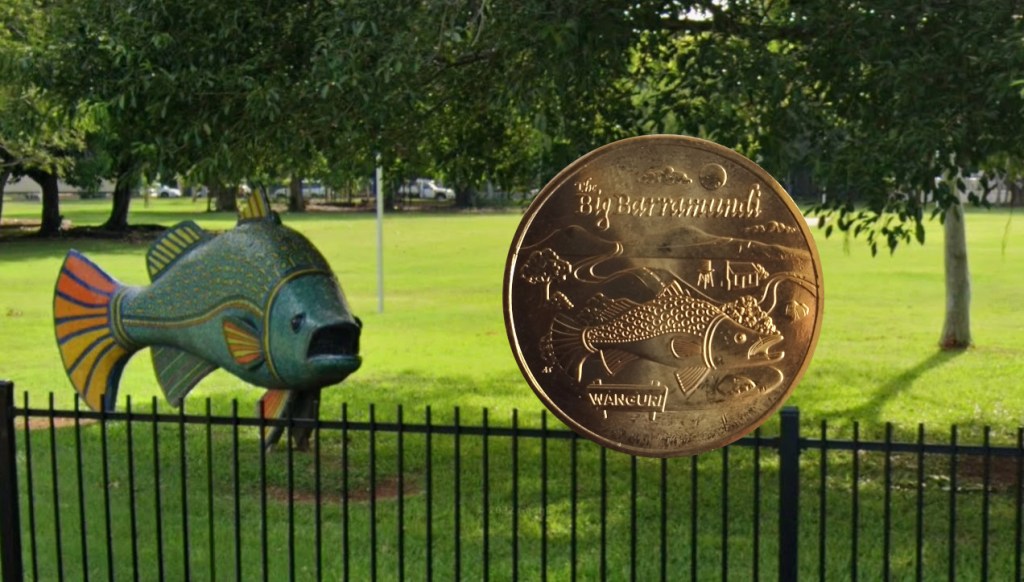
THE BIG BARRAMUNDI – Wanguri, Northern Territory.

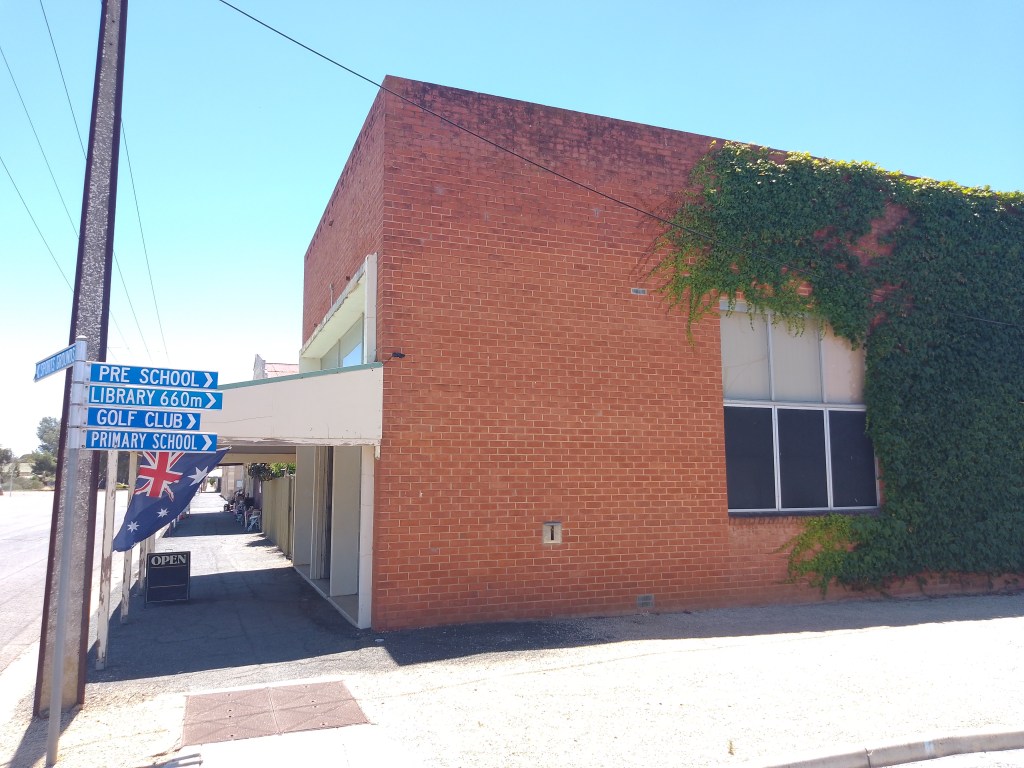
Be careful with this one, as I think it is on the property of a primary school – note the fence.

THE BIG WHEELBARROW – Wedgefield, Western Australia.

This is positioned in a remote mining town, so I guess it makes sense.

The Aussie Big Things – Collection 2 is available to purchase from post offices and coin dealers, and there’s a one-in-ten chance to find a coloured Big Strawberry coin. The set comes with a folder and sealed tube of uncirculated coins – and will set you back $34.

Screenshots courtesy of Google Maps.

I found some new coins – but only a few

As far as my coin collection is concerned, the Coles self-serve checkouts did not deliver the goods over the past couple of months, with only a handful of special coins being issued randomly amongst my change.

But despite luck not going my way, here are some of the collectables – both uncirculated and commonly issued – that I managed to pick up.

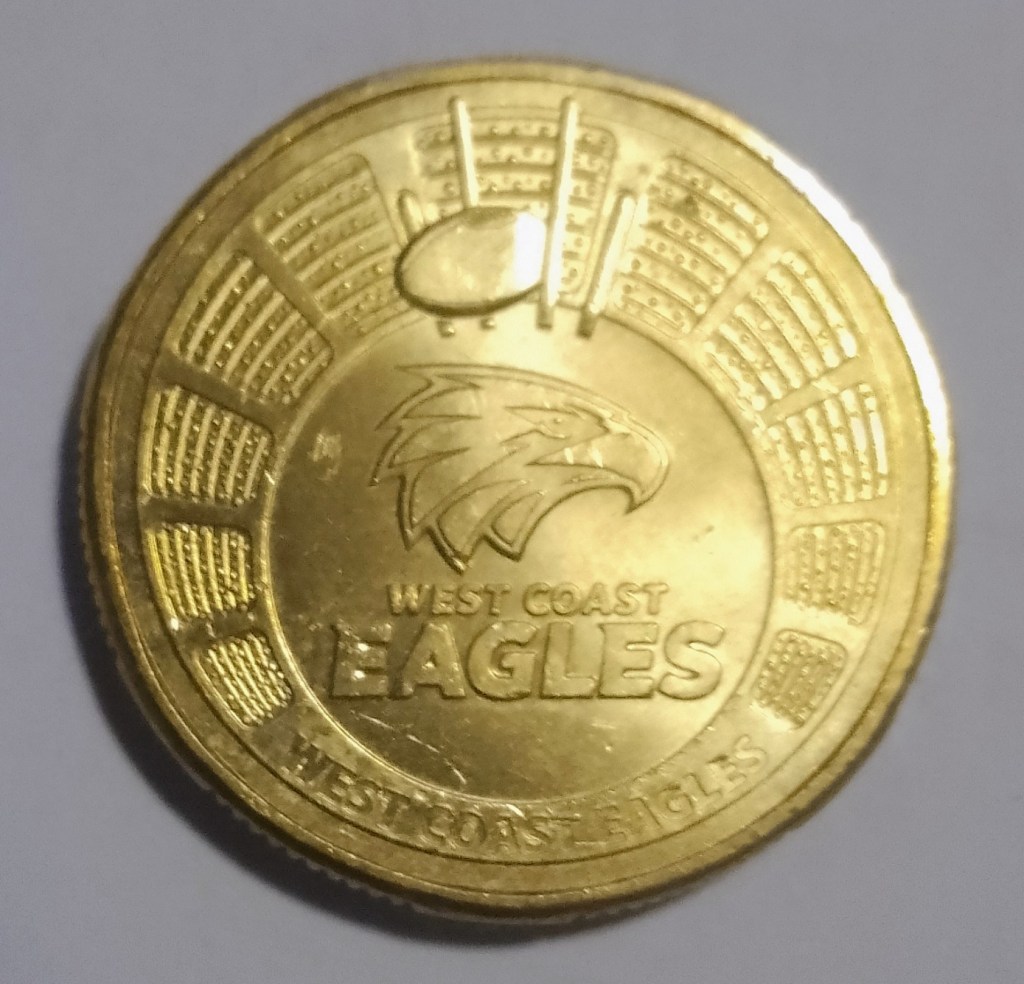
Two uncirculated AFL $1 coins, with the Western Bulldogs (top photo) belonging to the 2023 collection, and the West Coast Eagles (bottom photo) coming from the 2024 series. You can tell the difference between the two collections by the shape of the grandstand surrounding the team emblem.

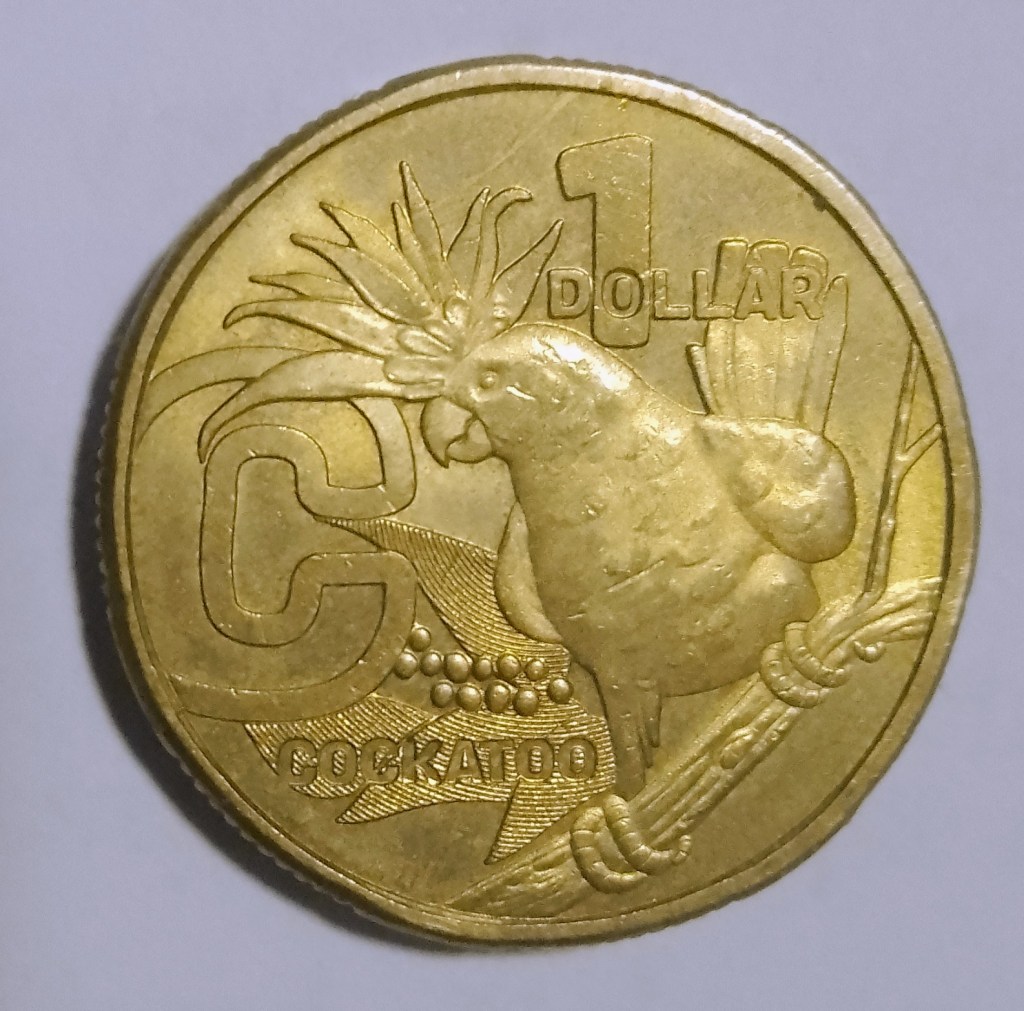
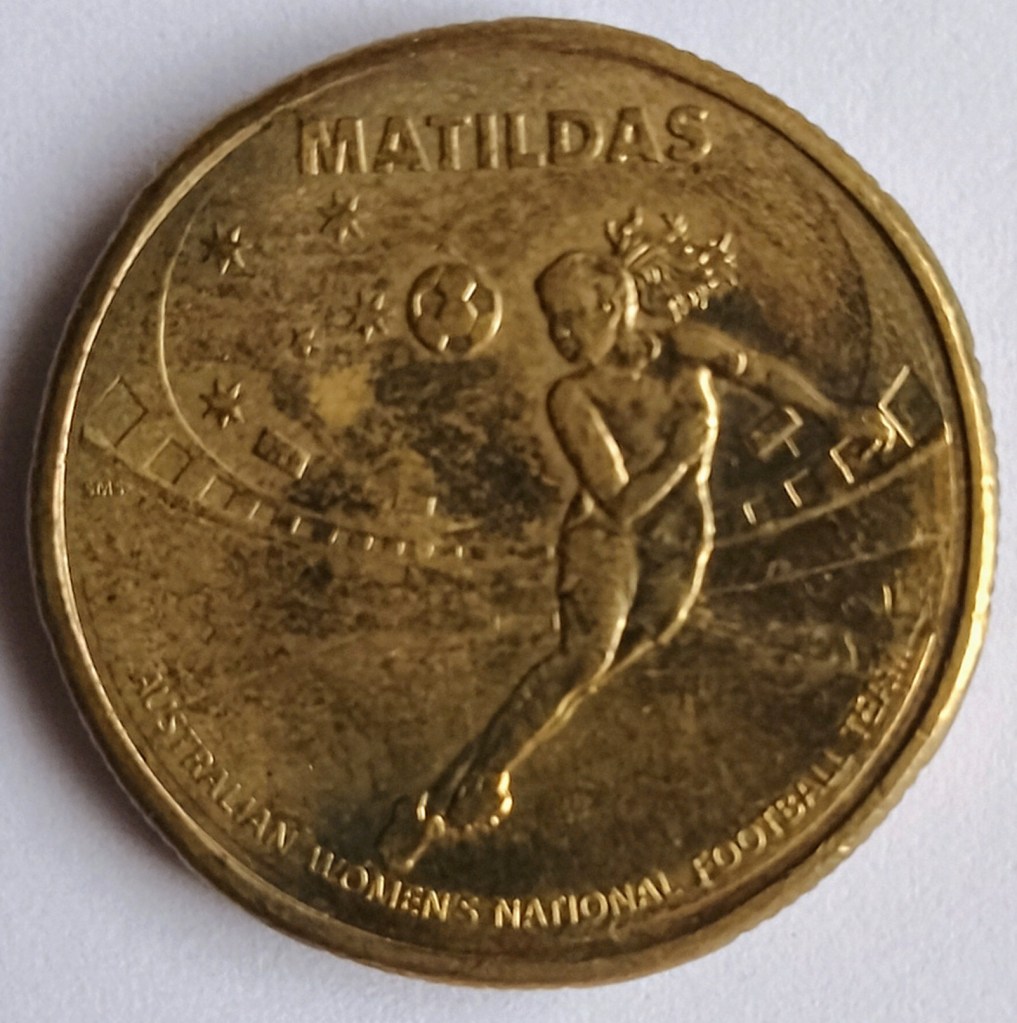
Both of these limited-circulation $1 coins originate from the 2022 A-Z Great Aussie Coin Hunt. I have found many of these coins in my change – across all three series that were released in 2019, 2021 and 2022 – and they are easily mistaken for regular coins unless you are paying close attention.

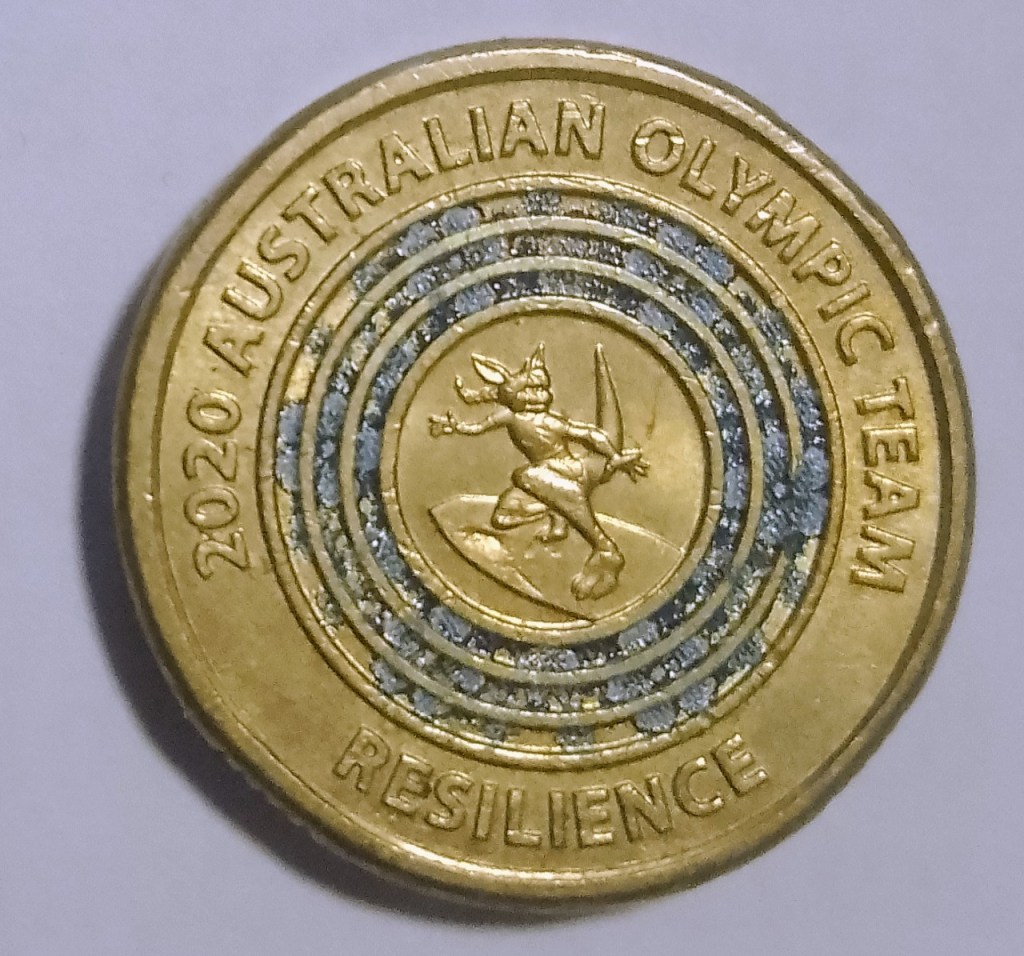
I am scraping the bottom of the barrel here by including this worse-for-wear $2 coin commemorating the 2020 Tokyo Olympics, but I did say that it was a quiet month.

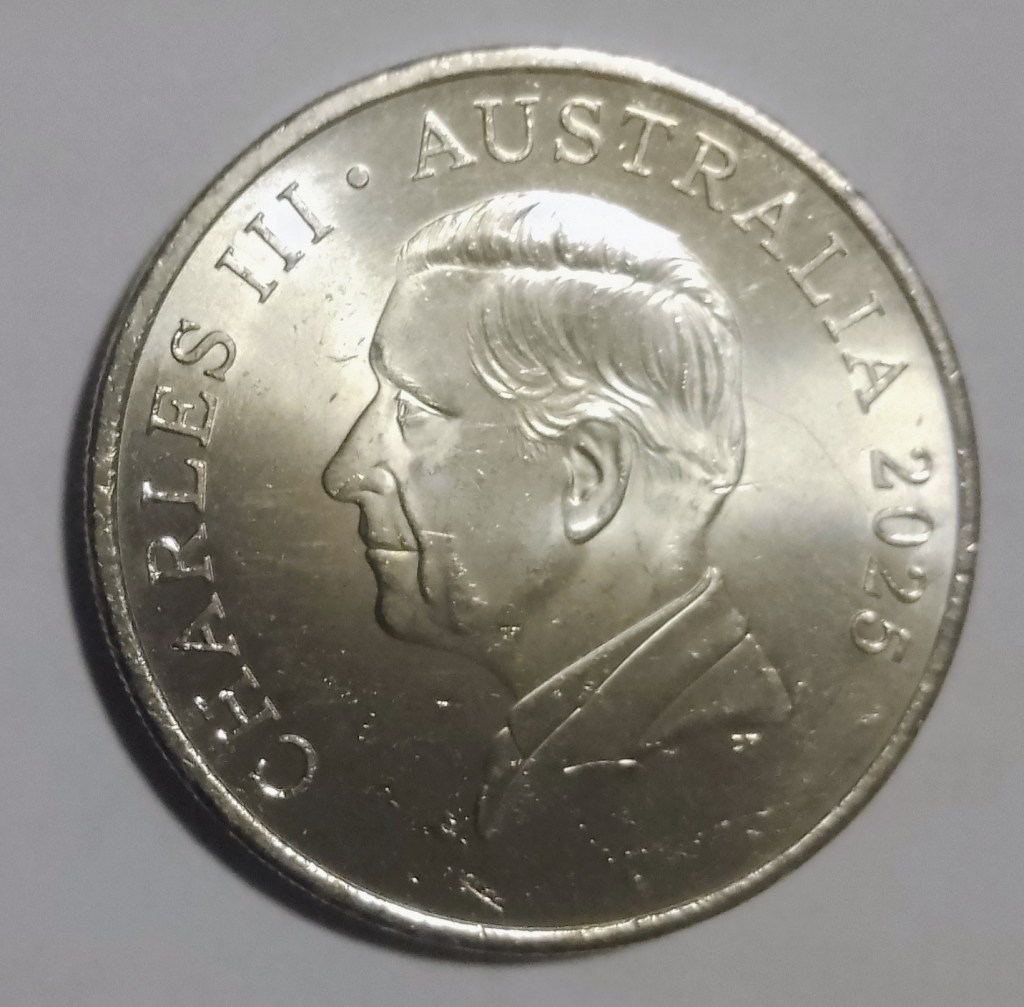
The next couple of coins are not rare or collectable in any way, but they are ‘new’ in the sense that we are now seeing shiny 50c and 20c denominations featuring King Charles III enter circulation. To date, I have not come across any 10c or 5c coins displaying the change of monarch – but they can’t be too far away.

I strongly recommend to anyone who either collects coins or is considering dabbling into this pastime to check your change at the Coles or Woolworths self-serve registers, as there are great treasures to be found!

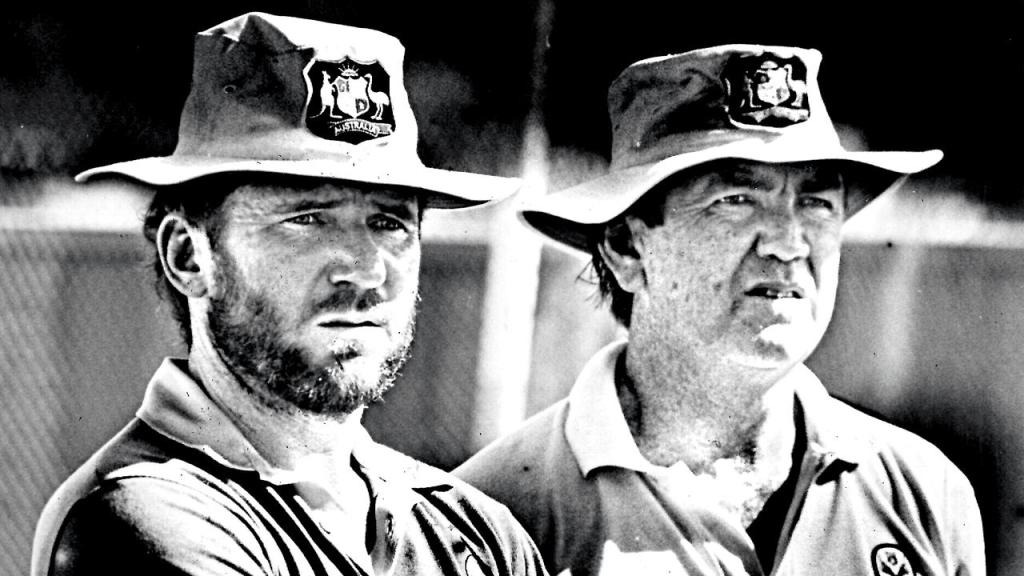
Bob Simpson – an Australian legend

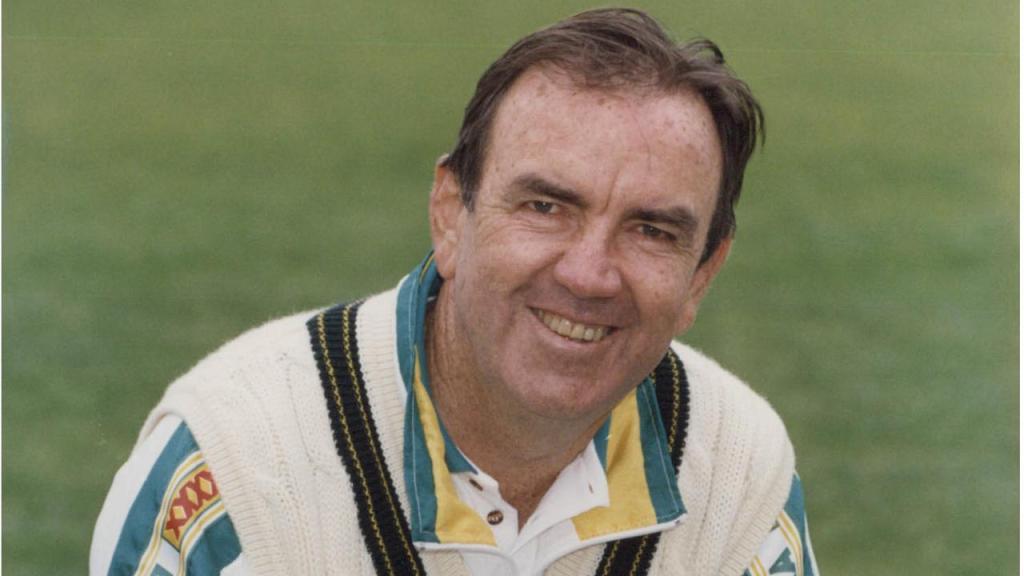
Australia lost one of its greats yesterday, with the passing of cricketing icon Bob Simpson.

Simpson played in 62 test matches and compiled 4,869 runs at an average of 46.81 – which are incredible figures, even by today’s standards. His highest score was an epic 311 against England at Old Trafford in 1964, which incidentally was his first test century.

Bob Simpson would form a famous opening partnership with Bill Lawry throughout the nineteen-sixties, and would go on to captain his country in the 1963/64 series vs South Africa in the absence of Richie Benaud. Following Benaud’s retirement at the end of the season, Simpson was appointed the captaincy permanently ahead of the 1964 Ashes tour.

Simpson retired from test cricket after the 1967/68 home series against India, but would make a famous comeback at the age of 41 to captain his country following the World Series Cricket rebellion in 1977.

In 1986, Simpson was appointed coach of the struggling national team under Allan Border, and together both men would turn the fortunes of Australian cricket around; to such an effect that the groundwork laid would reap the rewards for decades to come.

Bringing a new level of professionalism and mental toughness to the job, Simpson’s influence on the young team brought about immediate results; with winning the 1987 World Cup and destroying England 4-0 in the 1989 Ashes perhaps the two greatest examples. He would remain in the job – despite a few health issues – until the 1996 World Cup where Australia were beaten by Sri Lanka in the final.

On a personal note, I was fortunate enough to meet Bob Simpson around ten years ago. I was on my lunch break from work and noticed an old fellow sitting on a bench outside a newsagency at the Newington shops in Western Sydney. I knew it was Simpson, but politely had to ask the man as this was a once-in-a-lifetime chance to meet an Aussie legend – and quite frankly, I could not believe my luck!

What an absolute gentleman he turned out to be, and the pair of us chatted candidly about cricket for around ten minutes. We could have continued our conversation for a little longer, but sadly I had to return to work. This was an encounter that has stayed with me until this day, and I was saddened to hear of this great man’s passing yesterday.

Vale Bob Simpson (1936-2025)

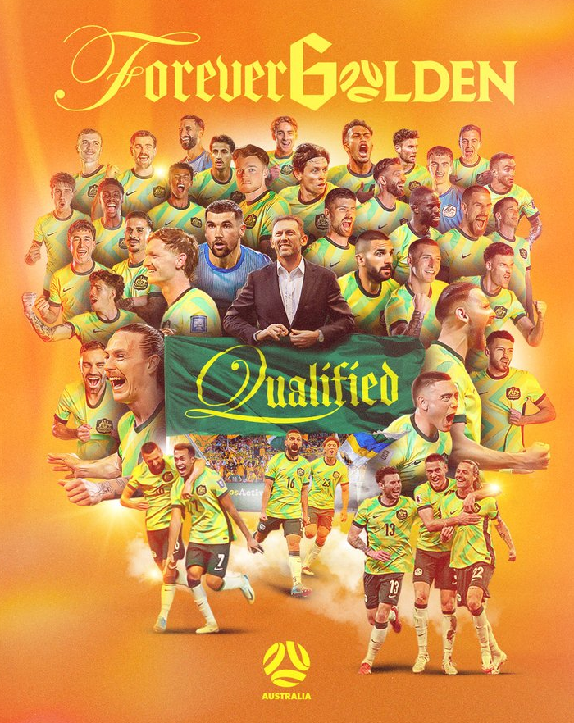
The Socceroos are on their way!

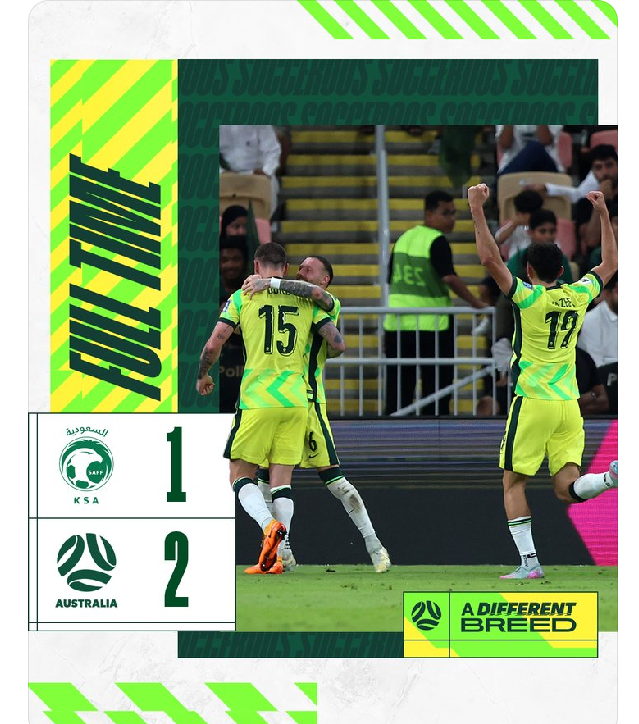
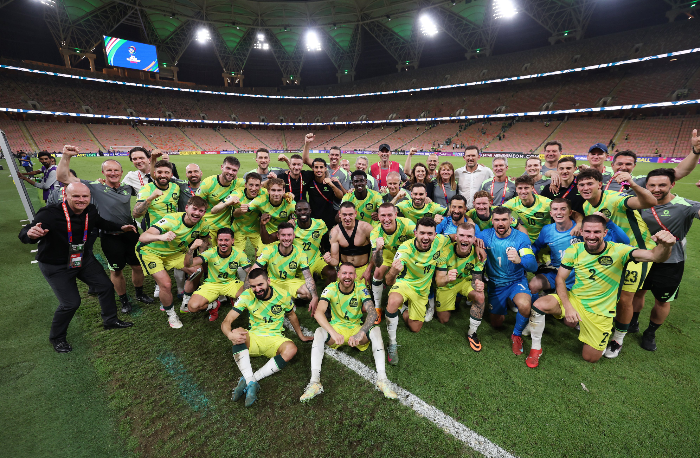
In the early hours of this morning, the mighty Socceroos beat Saudi Arabia 2-1 in Jeddah to secure their berth at the 2026 FIFA World Cup.

While not as nail-biting and exciting as the penalty shootout against Peru four years ago, I’m glad that this time around they qualified via the direct and easier path.

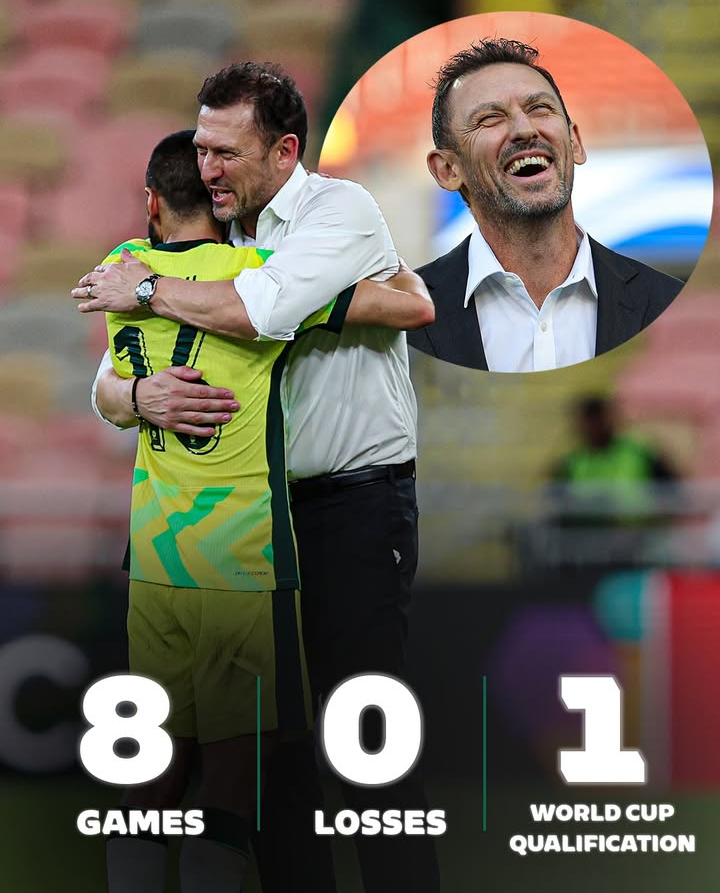
A special shout-out goes to coach Tony Popovic, whose record stands at 5 wins, 3 draws and 0 losses. To be honest, it was a little up and down at times, but he got the job done!

The final table shows that Australia qualified by two clear games and vastly superior goal difference, but there are a few interesting things to point out here.

  1. Bahrain – who finished last – managed a total of 6 points, of which 4 of those came courtesy of their two matches against the Socceroos.
  2. Indonesia secured 4th place – and passage through to the next qualifying round – which is a massive achievement for them, and note that they won 3 matches during this difficult stage.
  3. China flop yet again – finishing 5th – and were eliminated from the competition.
  4. Japan were almost unstoppable in this group, but the Socceroos had their measure – holding them to a draw in Tokyo and beating them last week in Perth.

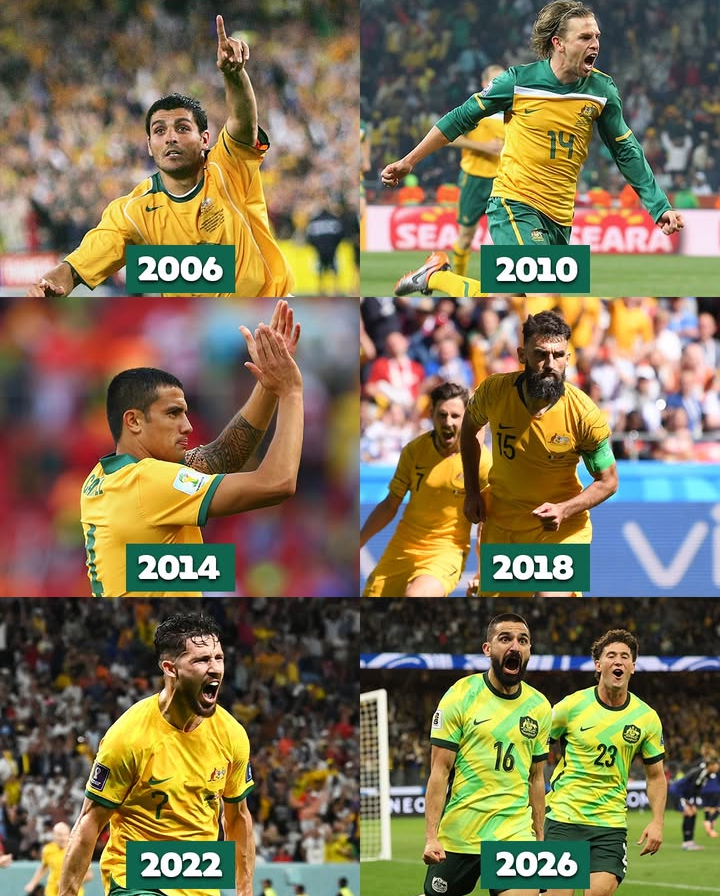
This is six successful qualifying campaigns in a row! Bring it on next year!

All photos courtesy of Football Australia and various online sources.

Coles self-serve checkouts – A coin collector’s dream.

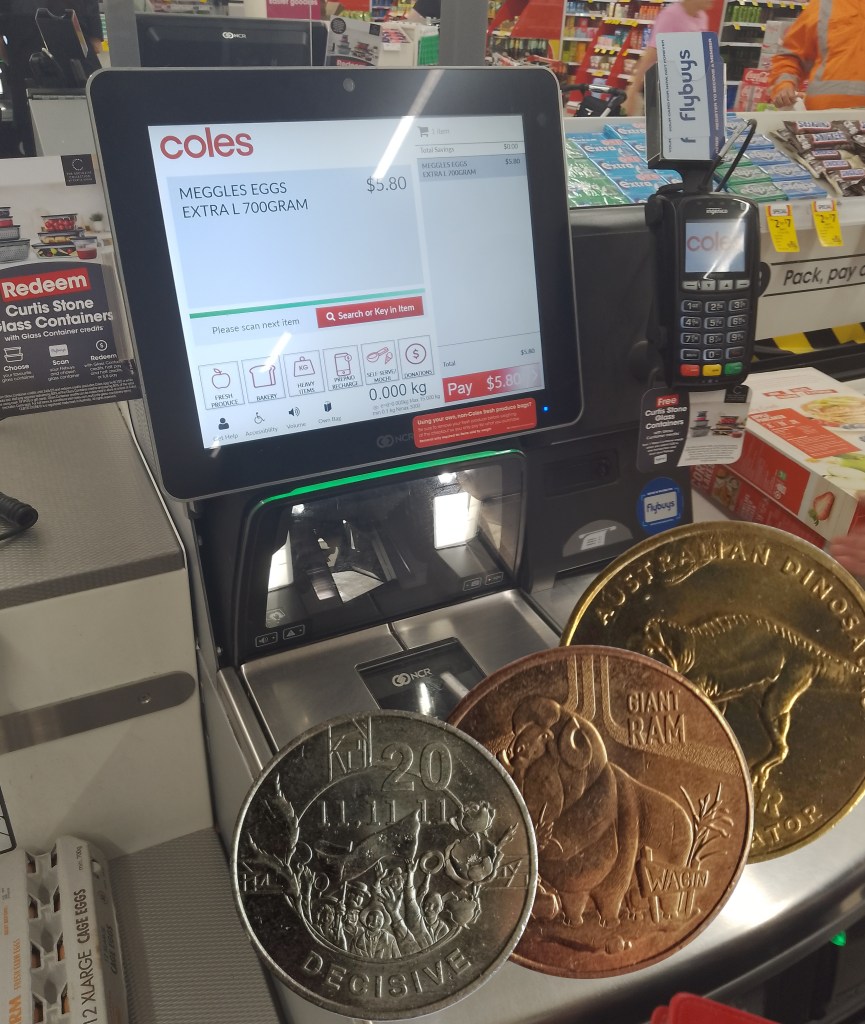
There are all sorts of coins – both circulated and non-circulated – being spat out of the self-serve cash registers at Coles these days.

I’ve collected quite a number over the past six months, and there has been a sharp increase over the last week or two – which has prompted me to write this report. I keep finding one-dollar coins belonging to collections, forty-year-old coins shining in near-mint condition, and foreign coins being passed off as Australian currency.

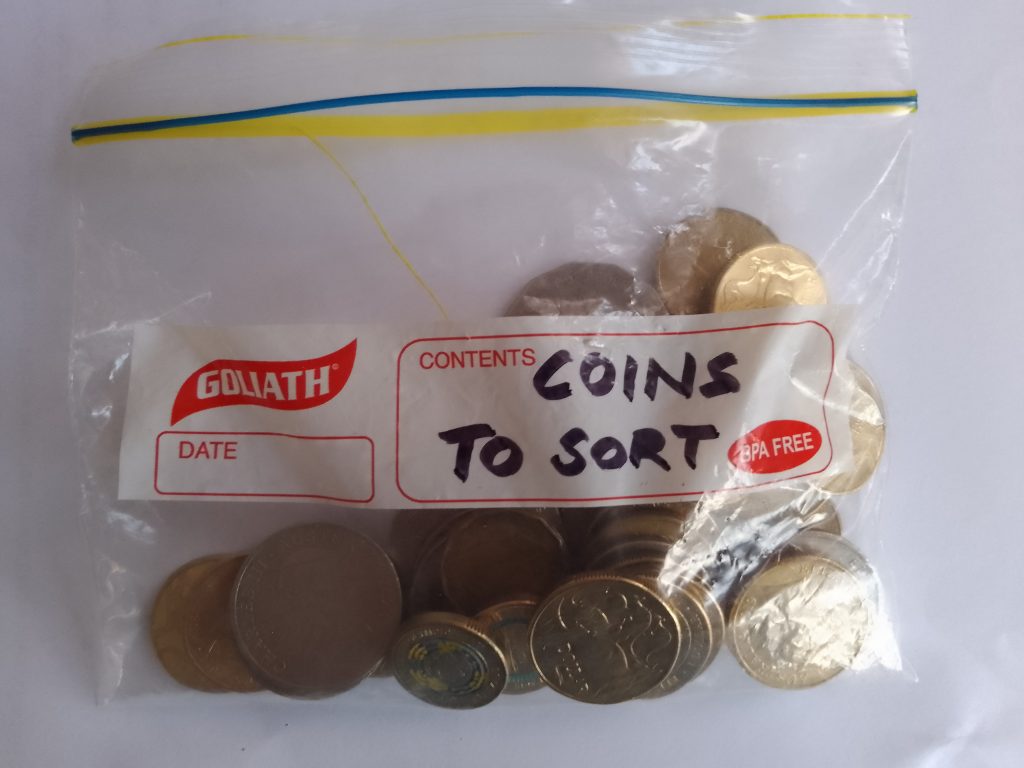
Whenever I find a collectible coin from the auto-checkouts, I place it inside a plastic zip bag before sorting it into an album. The above photo shows around four to five months worth.

I photographed some of the more interesting coins that have come into my possession through these self-serve registers, and they are presented below.

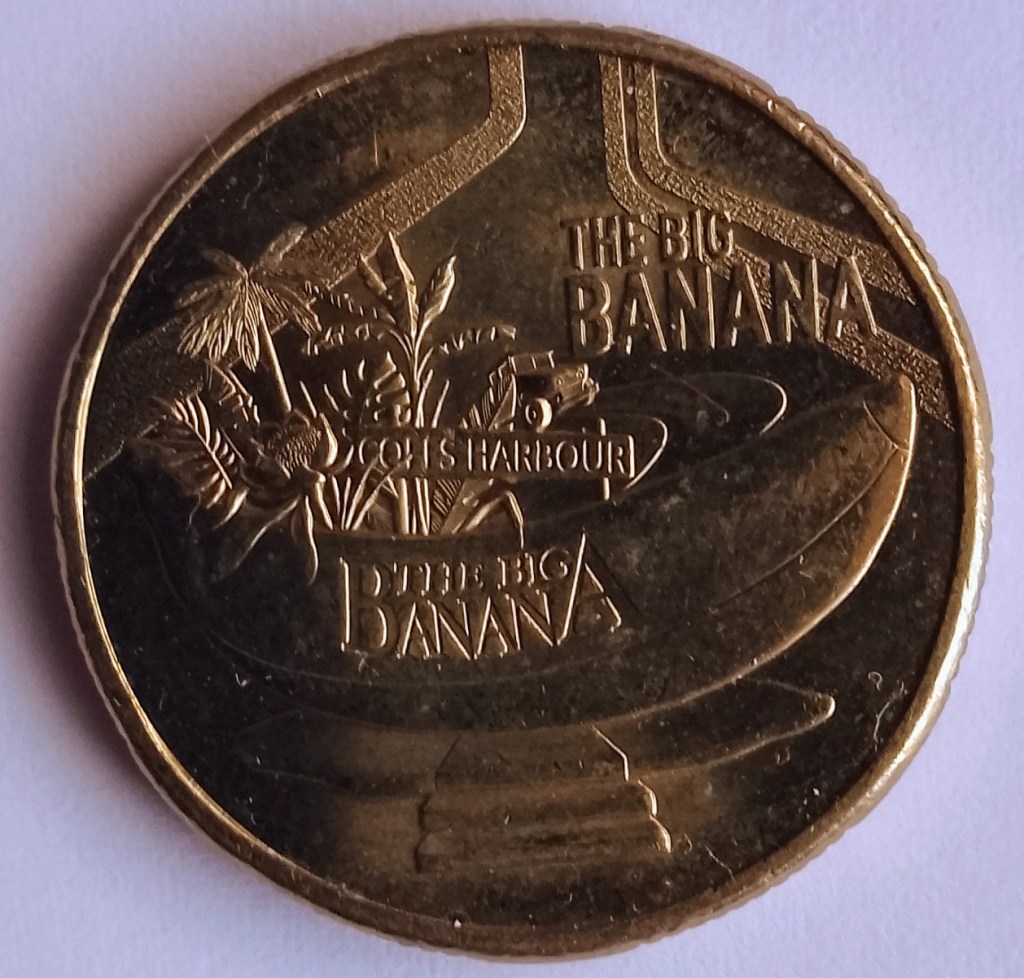
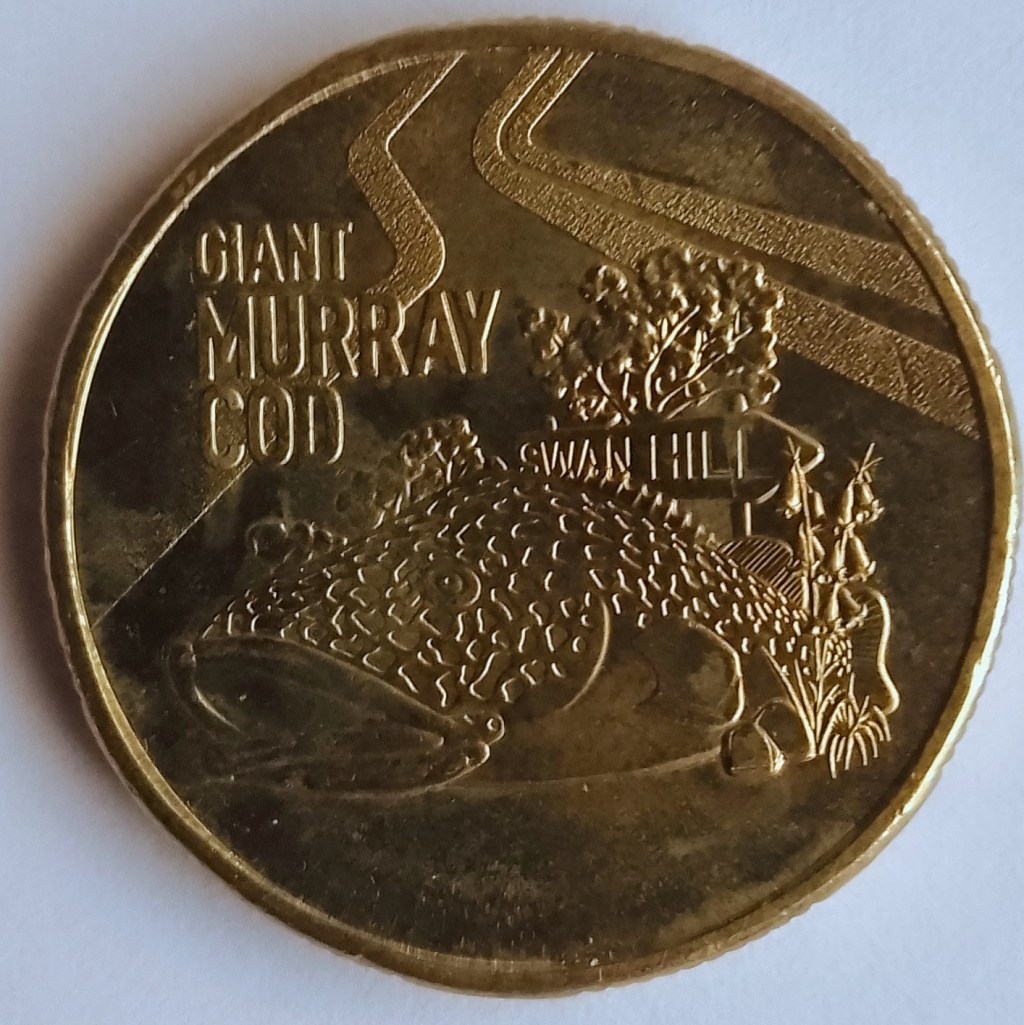
These two are from the ‘Aussie Big Things’ collection from 2023 – and feature The Big Banana at Coffs Harbour and The Giant Murray Cod at Swan Hill ($1 coins).

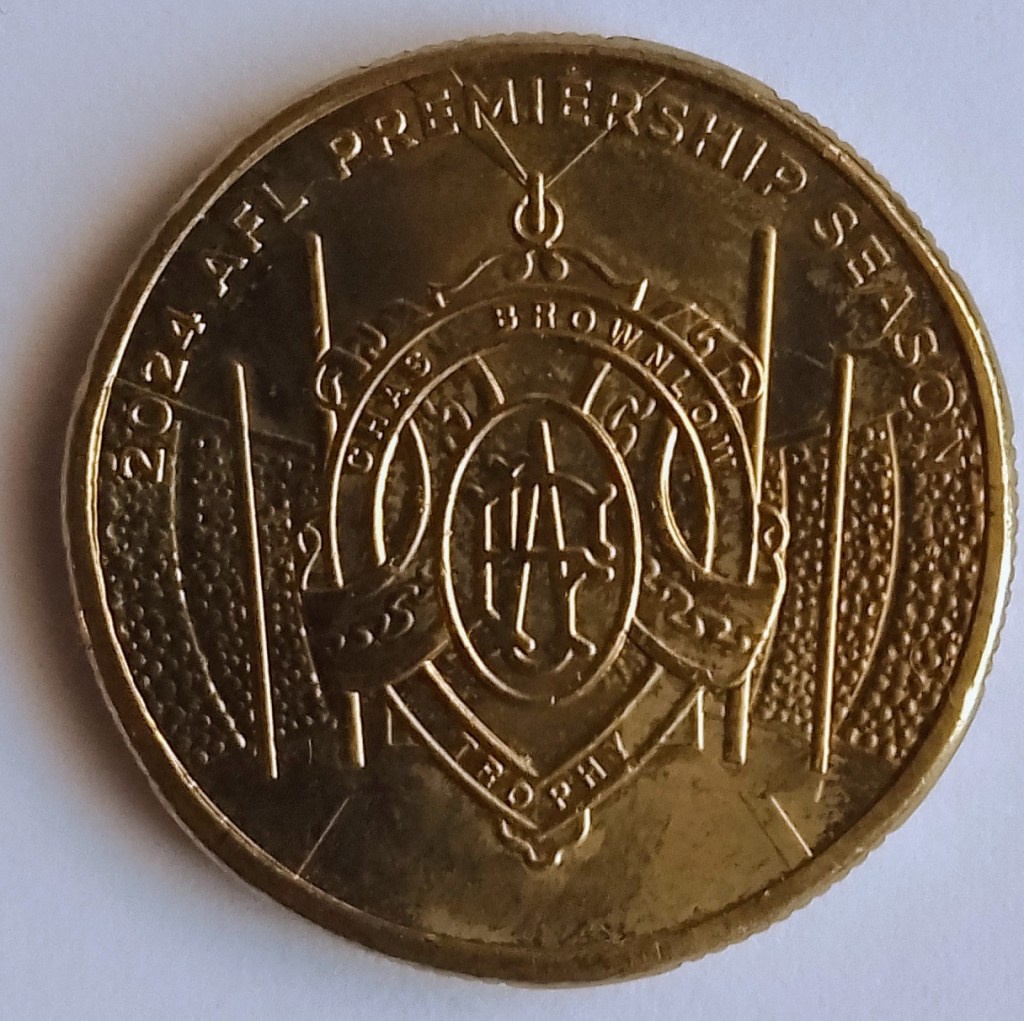
Two AFL coins from 2024 featuring both men’s and women’s competitions; specifically the medals awarded for Player of the Season ($1 coins).

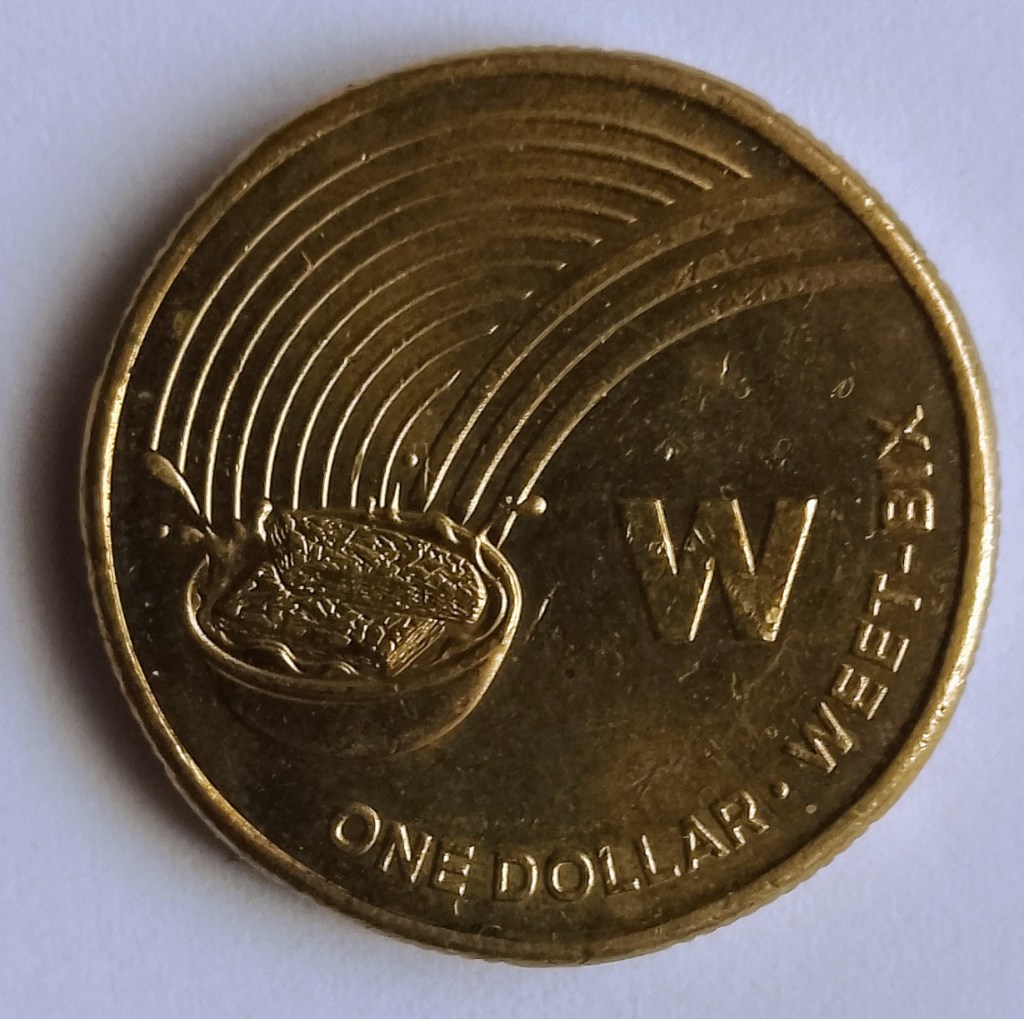
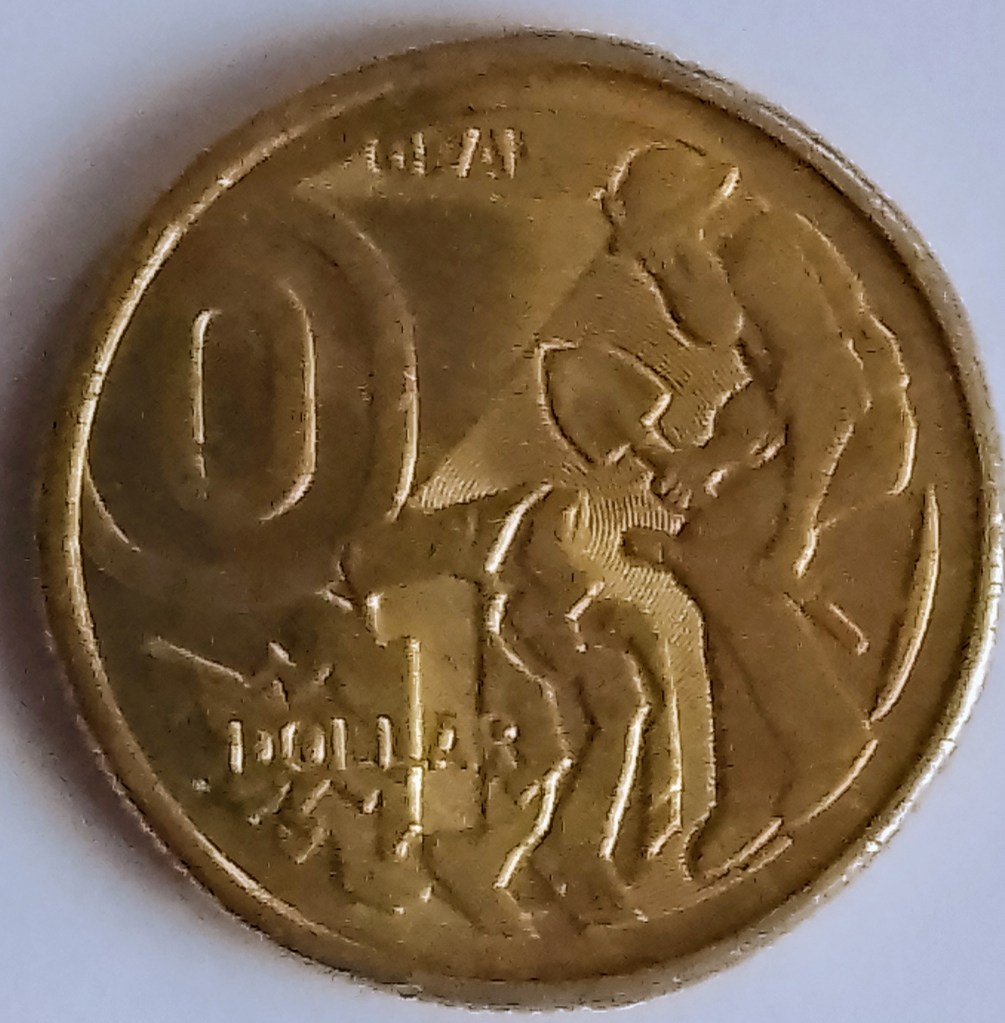
‘A-Z of Australian Things’ collection. These coins are from different series – with the ‘W for Weet-Bix’ from 2019 and ‘O for Opal’ being released in 2022 ($1 coins).

I come across a lot of these dinosaur coins, but I am yet to find the missing one to complete the set. The series of four was released in 2022 ($1 coins).

This one-dollar coin is also part of a set – I think of four – that was released in 2023.

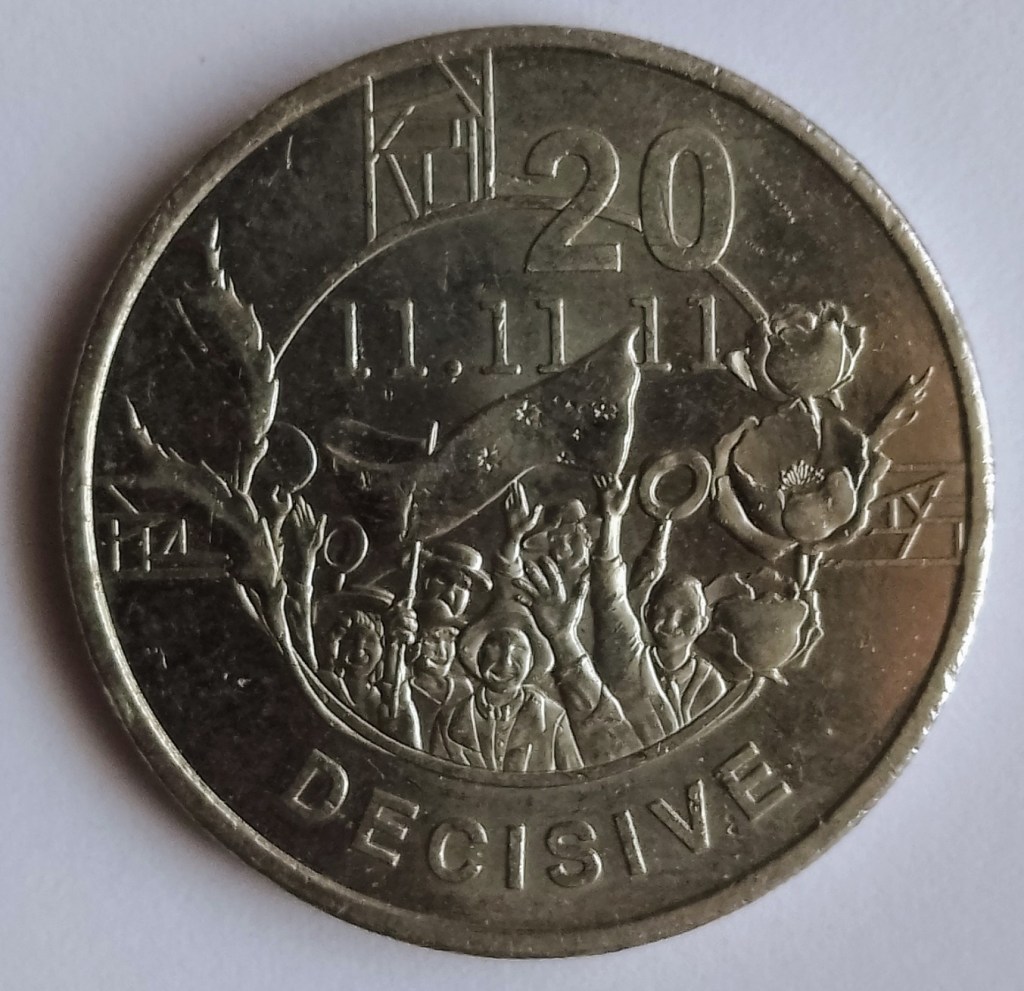
It also pays to check your silver lower-denominations as well, as this is a 2018 uncirculated twenty-cent coin commemorating the ANZAC one-hundred year anniversary.

All of the above coins were not put into circulation, and could only be purchased from either the Royal Australian Mint, the post office or a coin dealer. However, they are legal tender and can be used for shopping; and evidently this is what’s happening.

For those observant enough to see no monetary value on some of these designs, I can inform you that the amount of ‘one dollar’ appears on their reverse sides. Therefore these are coins, and not ’rounds’.

Now onto some more common – but still collectible – items that I have found.

This is a one dollar coin that was released into circulation back in 2019. It was part of a set of three with different mint marks – ‘A’, ‘U’, and ‘S’ – and was created as a competition or challenge to collect each coin and win prizes from the mint.

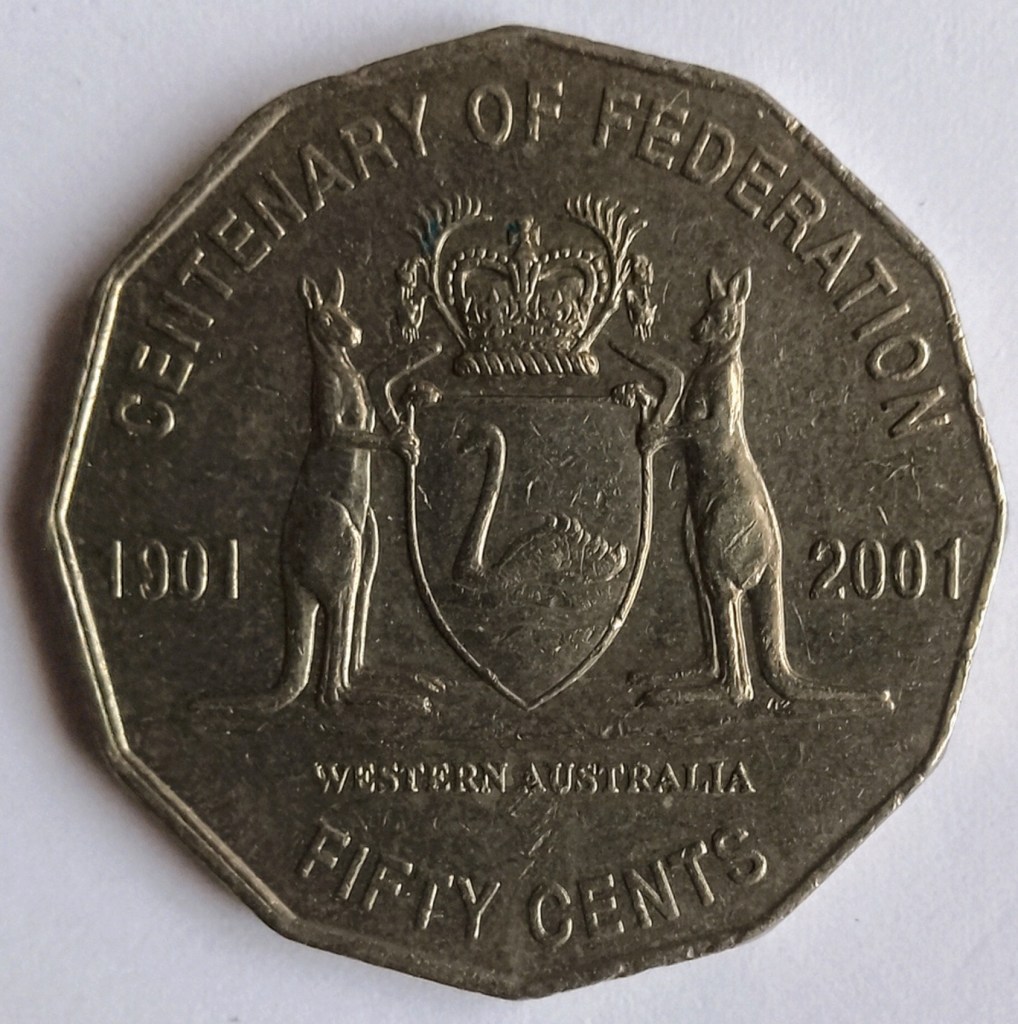
This is from the 2001 Centenary of Federation collection. I am finding a lot of these in really good condition, and they are worth keeping an eye out for, as there are different coins – nine altogether – for every state and territory.

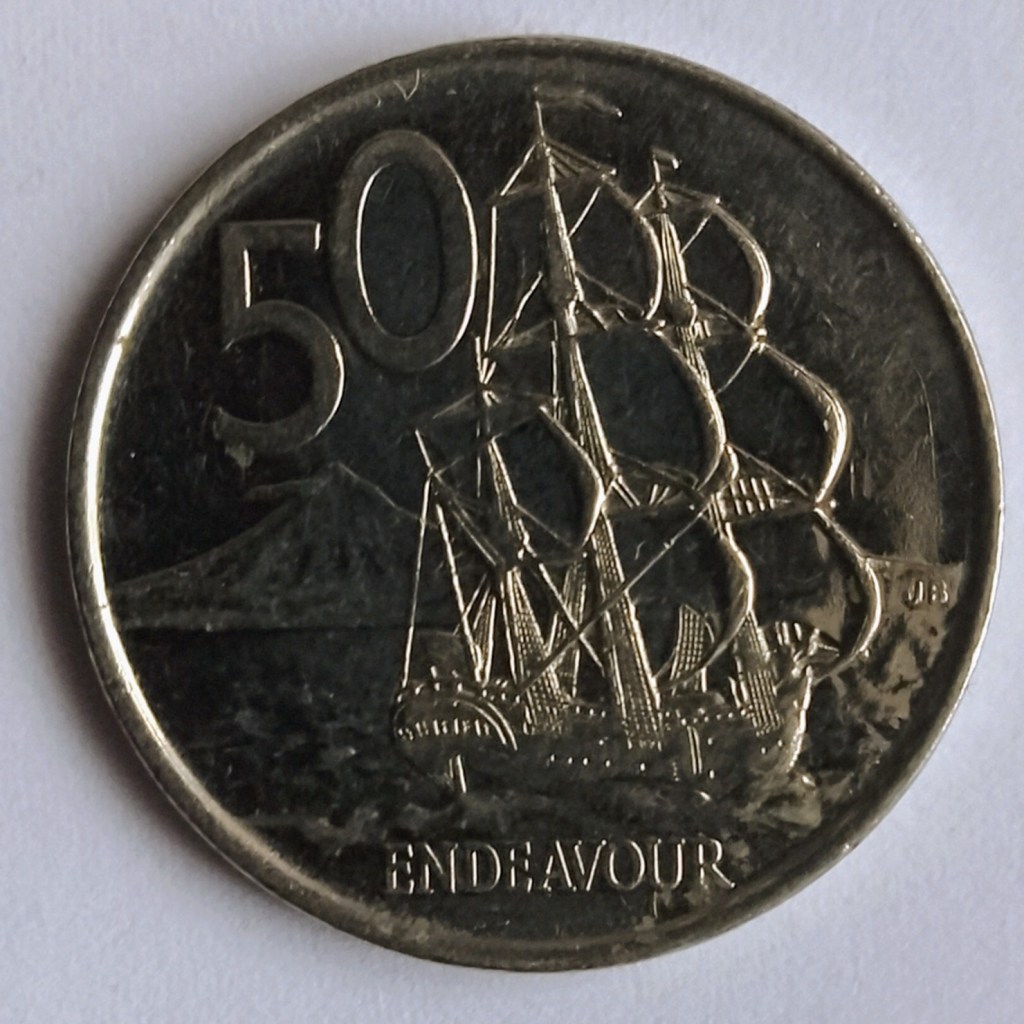
This is a New Zealand fifty-cent coin, and is the same size as our ten cent piece. I suppose if anyone wants to trick the self-serve machine into thinking this is an Aussie coin, then fair enough – however its true value would be around forty-five cents.

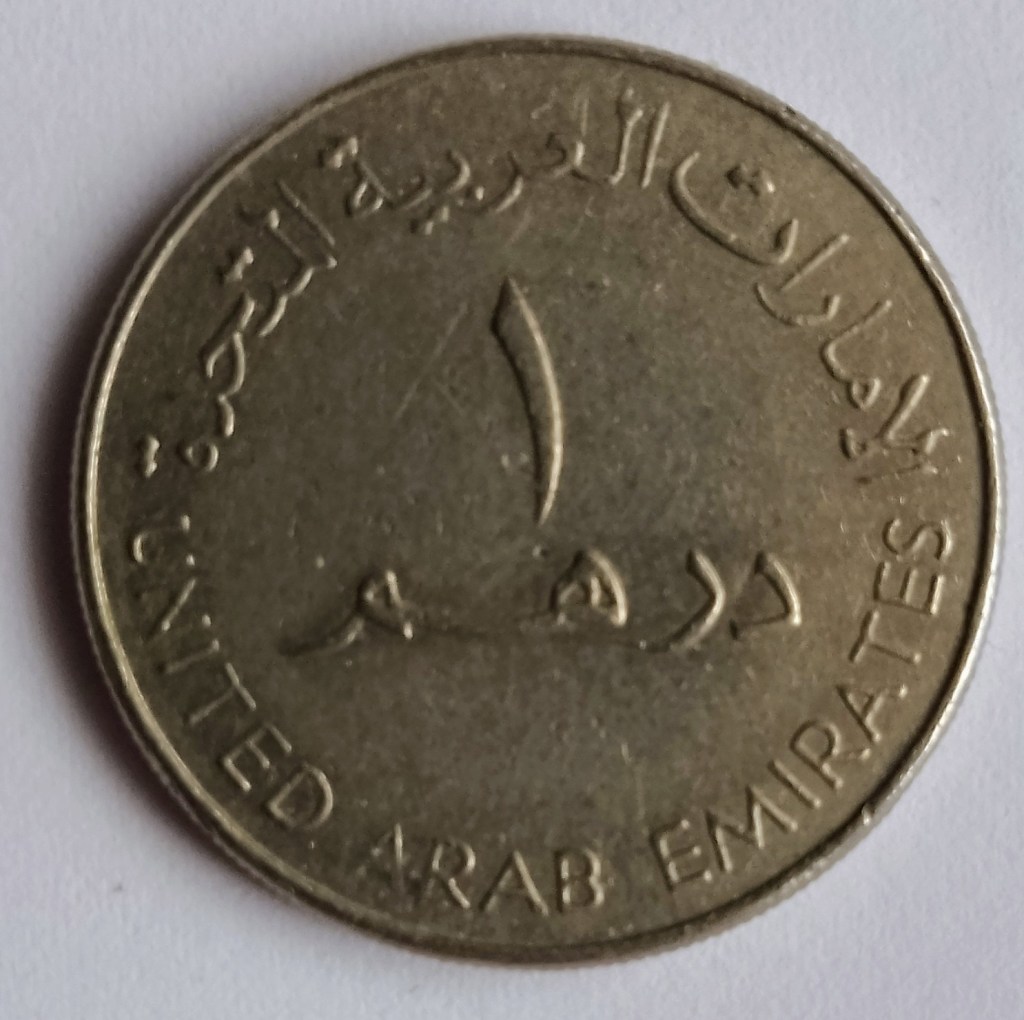
Here is another foreign coin being used as ten Australian cents, with this one originating from the UAE, as you can clearly see from the markings. I suppose it makes sense that people are using overseas coins, as more often than not they would be worth less than the local currency (unless you’re a Kiwi handing over forty-five cents instead of ten).

In summary, if you are a coin enthusiast it does pay to check the change you are given – especially with what these auto-machines have been dispensing lately.

Therefore, I suspect that there are a lot of hidden treasures inside these checkout machines – at both Coles and Woolworths. With only two or three cash checkouts in each supermarket, the odds of finding a collectible coin are reasonable, but you better be quick before they go 100% cashless!

The Blind Date Ball

My latest offering should be available on Kindle Unlimited in June.

This will be my ninth book – tenth if you count ‘Lockdown Driver Wanted’ – and is the first direct sequel that I have written, as it follows on from the events of ‘Nine Mile Beach’.

The story revolves around two young men – who have been friends since childhood – and the vastly different turns their lives take after becoming involved in a match-making social event.

Of course, there is a lot more to it than that, but I can’t give too much away. What I can say is that the title was almost going to be ‘The Blind Date Ball: A Misogynist’s Tale’ – so that might suggest something about one of the main characters in the book. I’m still 50/50 on whether or not I should still use that additional line.

Currently I am in the final stages of editing, having completed the previous draft back in October last year, and in all honesty it’s looking pretty good at this stage.

Is this the greatest YouTube channel ever?

Drain Cleaning Australia – yes, that’s right! As crazy as it sounds, this channel features some of the most addictive content I have ever come across, and all brought to you by a plumber based in Perth, Western Australia.

The premise is quite simple; the host gets called out to unblock drains, pipes, and grease traps – and then films everything while offering an entertaining and uniquely Australian commentary. I don’t know why this works, but it does – and very well indeed!

The plumber himself is a bit of a mystery man, as we never see his face nor learn the name of the business he owns. I could be wrong about this, but I have watched dozens of his videos and this appears to be the case. I think this dynamic works well for the channel.

What we do know is that his name is Bruce, and that he operates in Perth where he offers plumbing services to both the city and surrounding areas. We also learn very quickly indeed that Bruce is quite a character – a real entertainer to be sure!

How this man can film to such a high standard while battling difficult jobs is an achievement in itself, especially when you consider that most of his videos are created via his mobile phone – with additional footage provided by a drain camera.

Not only are the videos well-edited and presented, but the channel also provides a soundtrack of sorts – with 1980’s synth-electronic music pumping out whenever the action reaches a crescendo. The main beat sounds a little like Daft Punk, whilst another track regularly featured on the channel has a real Pet Shop Boys vibe about it.

These videos are highly informative and educational, as Bruce takes the time to explain the nature of how complex networks of pipes work and the direction in which the water is supposed to flow. Before long you will be talking about gullies and inspection points, and after that you will start noticing these places wherever you go – paying attention to things that were always there, and now knowing their purpose having watched this channel.

I can also assure you that after absorbing some of Bruce’s grease trap content, you will gain considerable knowledge about how these contraptions work.

The host also provides a great rundown of the equipment that he uses, and you quickly learn how and why – and under which circumstances he deploys them. In fact, after watching a couple of videos you might be able to start anticipating which tools Bruce is about to use – depending on what type of job he is facing.

For the most part, the weapon-of-choice is a high pressure jet hose – with a famous nozzle attached to the end that is known as ‘The German’.

I’m sure the owner won’t mind me giving his videos a plug, and I should mention that all the photos I have used were taken directly from his channel – Drain Cleaning Australia.

Look, it’s not everyone’s cup of tea, so if you are a little weak-stomached when it comes to built up grease and gunk – not to mention sewage – then perhaps you should give this channel a miss. But for those who have a curious streak and enjoy delving into subjects and situations foreign to them, then Drain Cleaning Australia could be for you.

Also consider that water usage is a big part of our everyday lives; we just don’t think about it a lot until something goes wrong – and when it does, plumbers become modern-day heroes. With that in mind, the host of this channel is incredibly highly-skilled at his job, and always gets the business done – leaving his viewers completely satisfied after every video.

Drain Cleaning Australia – 248,000 subscribers can’t be wrong, so check it out!

https://www.youtube.com/@DrainCleaningAUSTRALIA

All screenshots used are courtesy of Drain Cleaning Australia YouTube Channel.

Jeff Fenech v Samart Payakarun – A memorable chapter in Australian boxing history.

On the 8th of May 1987, an eagerly-anticipated and much-hyped boxing match took place in Sydney, Australia.

The bout was for the WBC Super-Bantamweight title between the local fighter Jeff Fenech and the reigning champion Samart Payakarun (often spelled ‘Payakaroon’) from Thailand.

While Fenech was already a sporting hero in Australia – having come close to an Olympic medal in Los Angeles before turning pro and winning the IBF Bantamweight title a year later – his Thai opponent was highly regarded and most pundits had the Aussie as an underdog, despite the fight taking place in his hometown.

The fact that the event was held in Sydney and not Bangkok would indicate that somehow the Australian promoters were able to scrap together enough money to lure the Thai champion to fight outside of his own country. This is where the story became outrageous, because as soon as Payakarun was paid, he and his entire team placed a ‘double-or-nothing’ bet on him winning the fight. Not only that, but to appease the disappointed crowd come fight night, the Thai boxer was prepared to put on a Muay Thai kickboxing show following his victory – presumably after a defeated Fenech was stretchered out of the ring.

Samart Payakarun certainly did come into the fight with a reputation that preceded him, for he was the biggest star in Thai martial arts before turning to professional boxing. Since making the switch, his most impressive performance was a fifth round knockout of Mexican champion Lupe Pintor in a chaotic Bangkok stadium, claiming the WBC Super-Bantamweight title.

I remember there being reports at the time that Payakarun had been given the ‘Ring Magazine Fighter of the Year’ award – perhaps as a ploy by the promoters and local media to build-up the fight – but this was incorrect. Instead, the Thai had been awarded a far lesser accolade; something along the lines of an ’emerging talent’ recognition, following his upset win over Pintor. Either way, Payakarun had successfully defended his title twice and had been champion for over a year, so he meant business when he came to Sydney.

There was a large (and vocal) Thai contingent at the fight, and once Payakarun entered the ring he hardly took his eyes off Fenech, and this was clear when the two boxers received their final instructions from the referee.

The fight started with Fenech as the aggressor, with the Thai cleverly using his speed and reach advantage to keep out of trouble. Nearing the end of the first round, the Australian walked into a straight right from Payakarun and suffered a flash knockdown – but this would prove to be the champion’s only highlight of the bout.

From the second round onward it was all Jeff Fenech, as Payakarun struggled to keep a comfortable fighting distance, and slowly but surely ‘The Marrickville Mauler’ began to wear his opponent down.

To give credit to Payakarun – he came to fight and stood right in front of Fenech the entire time – but this would prove to be his undoing. After copping a great amount of punishment in the second and third rounds, the Thai would ultimately collapse into unconsciousness late in the fourth, handing Fenech his second world title.

There were stories after the fight claiming that a humiliated Payakarun returned to Thailand and became a monk. If this was true, then it did not happen immediately after losing to Fenech as the rumours suggested, for the Thai boxer returned to the ring two more times – winning both fights by knockout – before ‘retiring’ in early 1988.

Payakarun made a comeback five years later, culminating in a title fight for the WBA Featherweight belt where he was stopped in the eighth round. Following this, Samart Payakarun changed career paths entirely and became a successful singer and actor in Thailand.

To end the story on a friendlier note, the above photo was taken in 2013 when Fenech and Payakarun came face-to-face again – but on this occasion the Thai master was in Australia promoting a kickboxing event.

I should also point out that the legendary Gus Mercurio (facing the camera) was part of the Seven Sports commentary team – and was a brilliant boxing pundit – not to mention the father of Paul Mercurio from ‘Strictly Ballroom’ fame.

Jeff Fenech vs Samart Payakarun can be watched on YouTube, and there is a link below to the full fight – courtesy of Rewind YouTube channel.

Note: The fight starts at around 25 minutes into the video.

Photos courtesy of Seven Sport, Fox Sports and Rewind YouTube Channel.

Top 5 Australian sporting fails of 2024.

Before we get into this, I should point out that these shockers are my personal top five. I don’t keep a close eye on sports such as basketball, rugby or golf – and I’m sure they would have provided a few dud performances over the past year – so my list does have a limited scope.

However, I’m confident that we will all agree on who claimed the number one spot for 2024 – but we’ll get to that disaster later…

So, let’s count them down.

5. Tim Tszyu vs Bakhram Murtazaliev.

This was a really weird fight, and the result of poor preparation and management, rather than any fault of Tszyu himself. It was evident after only a couple of rounds that Tim might have bitten off more than he could chew – and the powerful Russian ended up making short work of the Australian.

It actually pains me to include this in my top five, as I have a soft spot for Aussie boxing – but in all fairness this non-event had to be squeezed in somewhere.

4. GWS Giantsenormous choke in the AFL finals.

This should make everyone’s list of sporting failures for 2024, because the Giants actually fell asleep two weeks in a row – and during their most important matches of the season!

In week one of the finals, GWS blew a 28 point lead against cross-town rivals Sydney, but to be fair here – the dangerous Swans were hanging on and always looked like making a rush towards the end of the game – and did so to win by four points.

That being said, there can be no excuses for the following week.

With home ground advantage against Brisbane in a knockout semi-final, the Giants amassed a 44 point lead at one stage in the third quarter – only to allow the Lions to kick eleven out of the next twelve goals in the game and run out five point winners.

Their social media post after the match said it all…

3. Socceroos 0 – Bahrain 1

This should have been a certain three points on the way to the 2026 World Cup, but instead set the Socceroos on a much longer and shakier path to qualification.

The match was a home game – being played on the Gold Coast – and it was an abysmal spectacle with the Bahrain players constantly faking injury and time-wasting in an effort to secure a 0-0 draw.

As fate would have it, they went one better than that and managed to score via an own goal very late in the game, presenting the tiny gulf nation with arguably their greatest footballing moment – and marking the beginning of the end for Australian coach Graham Arnold.

2. Sydney Thunder bowled out for 15.

For those who do not follow or understand cricket; believe me when I tell you that this is a massive sporting disaster – about as bad as it gets! I can’t really give too much perspective by comparing it to other sports – only to suggest that it may equate to an NBA team scoring less than 30 points in a game or a pro golfer hitting a round of 200.
Being bowled out for such a low score at this level of cricket is a once-in-a-decade moment, and in any other year the Sydney Thunder would have clinched the number one spot.

However, Australian ‘sport’ produced something else truly extraordinary in 2024 – at the Olympic Games no less – and there’s no prize for guessing who it is!
1. Raygun

I’m going to leave this here, as Raygun has put together a legal team who are very protective of her image and ‘special’ dance moves.

All I can do is offer my own opinion and say that her performance was a national embarrassment – worse than the 1981 underarm incident and our America’s Cup yacht sinking in 1995.

************************************

I’m sure most Aussies would agree with at least three of my picks belonging in the top five. I did try and keep it as high-profile and mainstream as possible, choosing efforts that made back page headlines in most newspapers around the country.

Let’s hope 2025 is a great year for Aussie sport!

Photos courtesy of Code Sports, Daily Mail, The Guardian, Cricinfo, BBC, ABC and CNN.

Van Diemen’s Land artwork by John Glover

John Glover was born in England in 1767 and migrated to Van Diemen’s Land (Tasmania) in 1831. Glover was already an established painter before moving to Tasmania, and would go on to create some of his most famous works during his later years there.

Glover’s paintings can be found in a number of museums and art galleries across Australia. There is an annual art competition named in his honour that takes place in the Tasmanian town of Evandale, near to where he lived, as well as a statue of the artist in one of the local parks.

I have highlighted four of his most famous works; a couple of which should be familiar to anyone from the Apple Isle.

‘Hobart Town taken from the garden where I used to live.’ (1832) – State Library of NSW.

This is the modern day view of Glover’s home – known as Stanwell Hall – situated on Melville Street, West Hobart. It is the building with the flag flying and you can still see the sandstone walls, although it has undergone some renovations over the years.

‘A view of the artist’s house and garden, in Mills Plains, Van Diemen’s Land.’ (1835) – Art Gallery of South Australia.

Here is a recent photo of Glover’s homestead at Deddington, Tasmania.

‘Natives on the Ouse River, Van Diemen’s Land.’ (1838) – Art Gallery of NSW.
‘Mount Wellington and Hobart Town from Kangaroo Point.‘ (1831-33) – National Gallery of Australia.

This location at Bellerive is near to where Glover would have found his inspiration. Any local would tell you that his interpretation of Mount Wellington (kunanyi) is slightly exaggerated and it seems he has taken some liberty with elevation as well – but these factors make this painting all the more impressive.

There is a lot more information about John Glover available online, including a decent Wikipedia biography and a website for ‘Glover Country’ in Deddington, Tasmania.

See links below.

https://en.wikipedia.org/wiki/John_Glover_(artist)

https://www.glovercountry.com.au/

Photos courtesy of Wikipedia, Google Maps and other online sources.