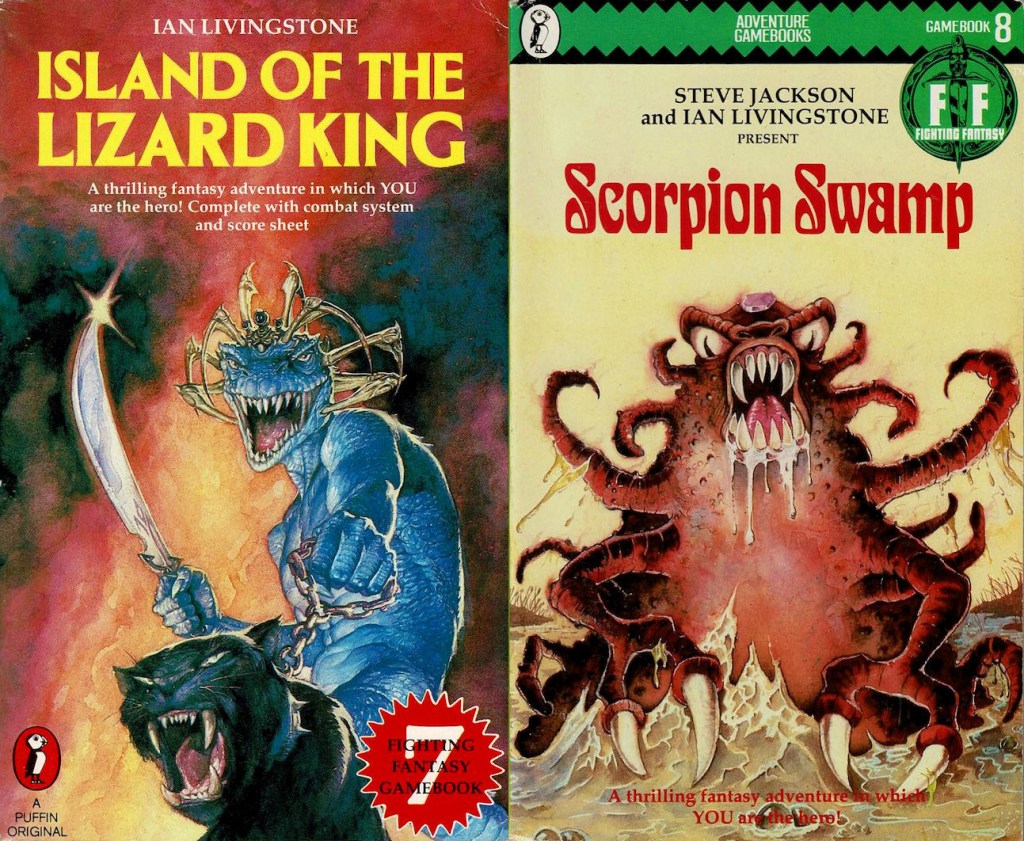
‘Island Of The Lizard King’ and ‘Scorpion Swamp’

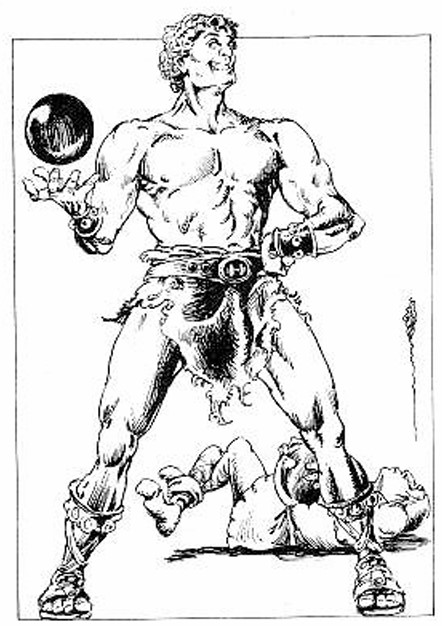
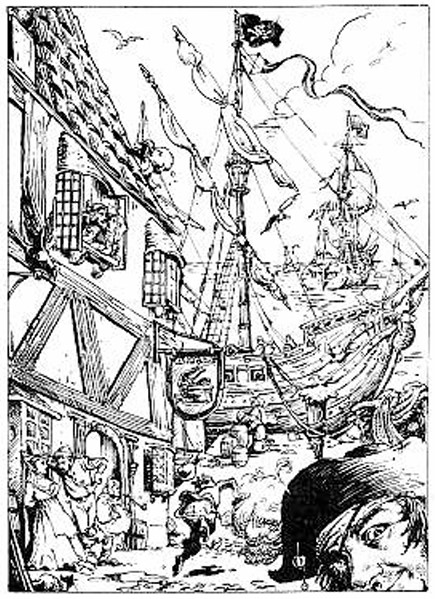
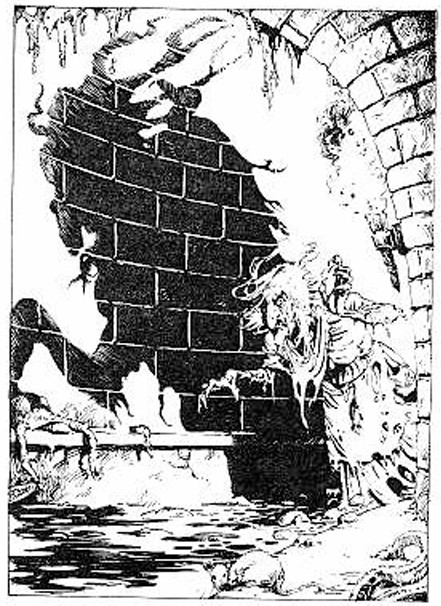
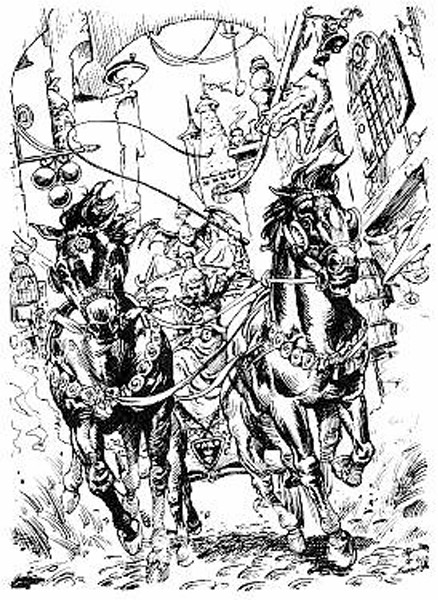
It’s been a while since I showcased (and critiqued) any artwork from the Fighting Fantasy book series, so let’s now check out entries seven and eight: – ‘Island of the Lizard King’ and ‘Scorpion Swamp,’ which were both released way back in 1984.

For me personally, I remember when I was twelve years old and feeling that these classics were beginning to drop away a little at this point, having peaked with earlier stories such as ‘City of Thieves’ and ‘Deathtrap Dungeon’. In fact, to this day I consider ‘Island of the Lizard King’ to be the last title in a brilliant sequence of fantasy adventures (not counting ‘Starship Traveller’) from books one through to seven.

Anyway, let’s get on with giving each story a quick overview before diving into the artwork that played such an important role in enhancing these iconic and imaginative tales.
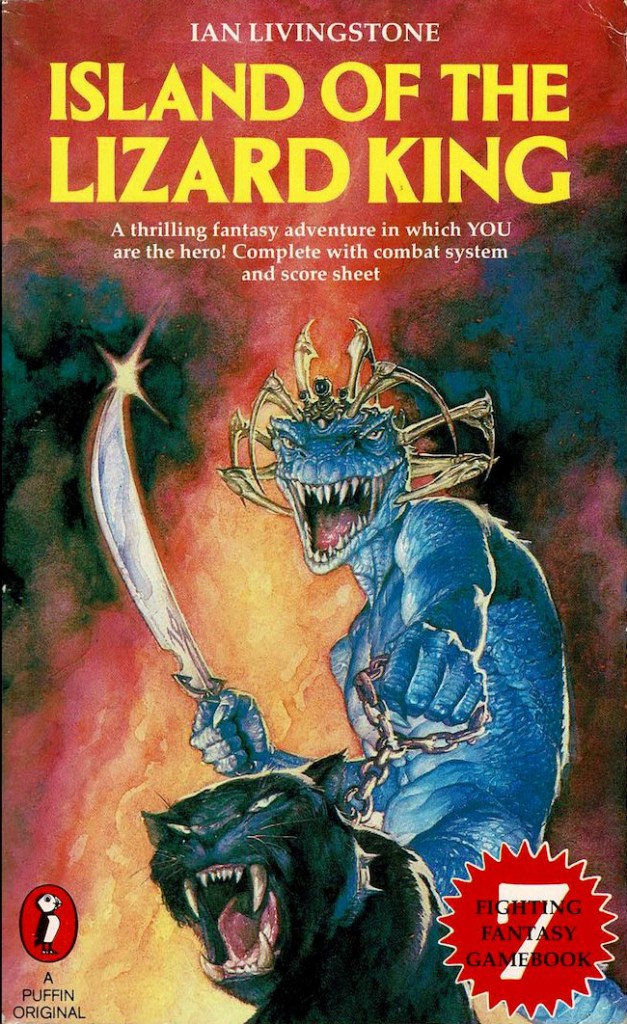
‘Island of the Lizard King’ by Ian Livingstone is set in the same fantasy universe as ‘City of Thieves’ and ‘Deathtrap Dungeon’ – with the events of the story taking place not far from Port Blacksand and Fang – two locations that are well-known to fans of the series.

As the story goes, Lizard Men have been raiding towns and villages, kidnapping young men to be put to work as slaves in the brutal mines of Fire Island – which is under the merciless rule of The Lizard King. Of course, it falls to you – the great adventurer – to set sail and sort this slave-driving bastard out once and for all!

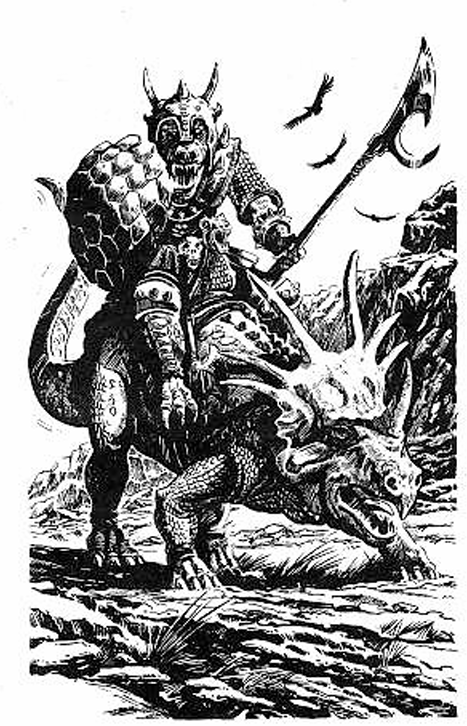
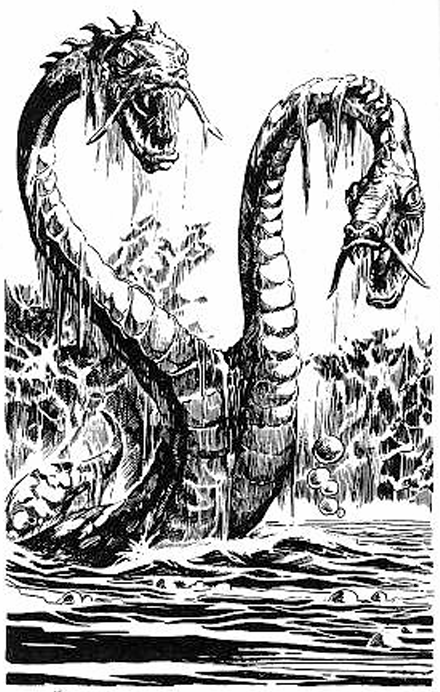
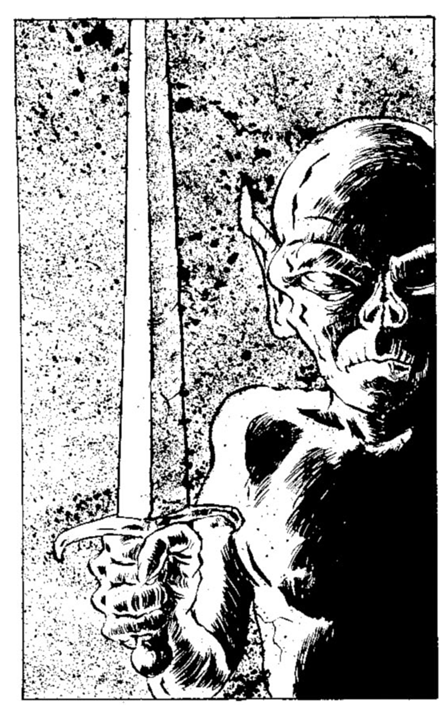
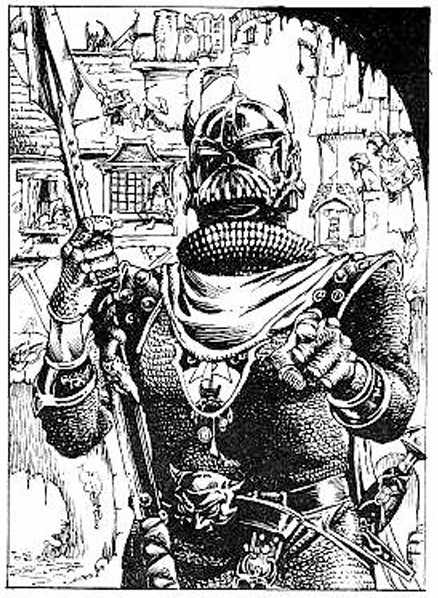
The cover art for this book is by Iain McCaig, who provided the artwork for the previous two entries into the series – the highly regarded and aforementioned ‘City of Thieves’ and ‘Deathtrap Dungeon.’ The illustrations within the pages of ‘Island of the Lizard King’ are from Alan Langford, and we shall now focus on some of his amazing drawings.

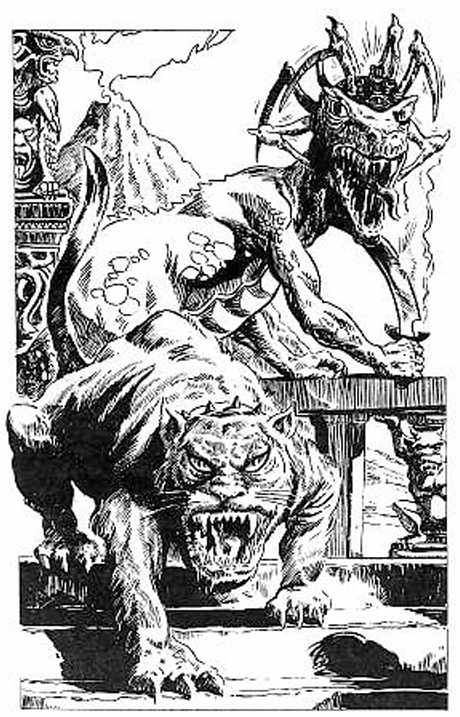
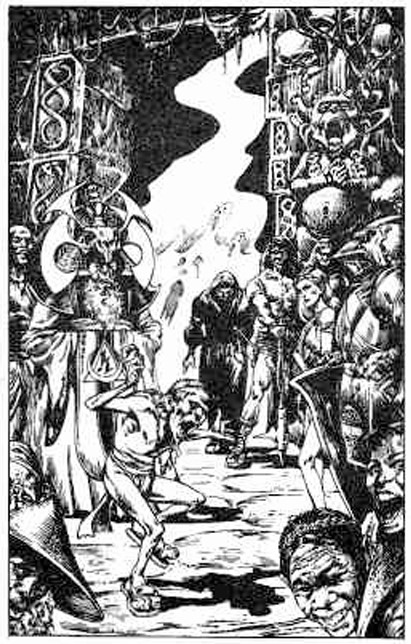
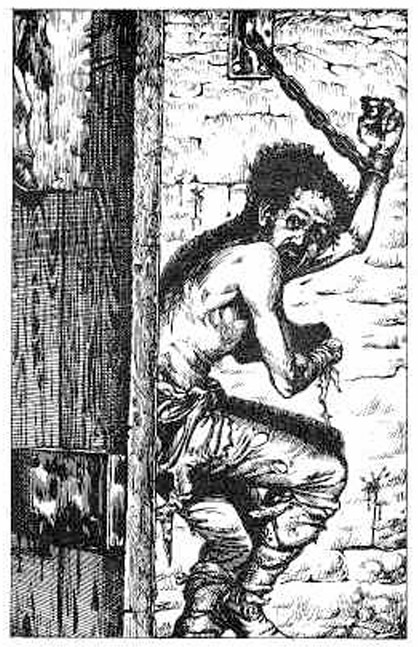
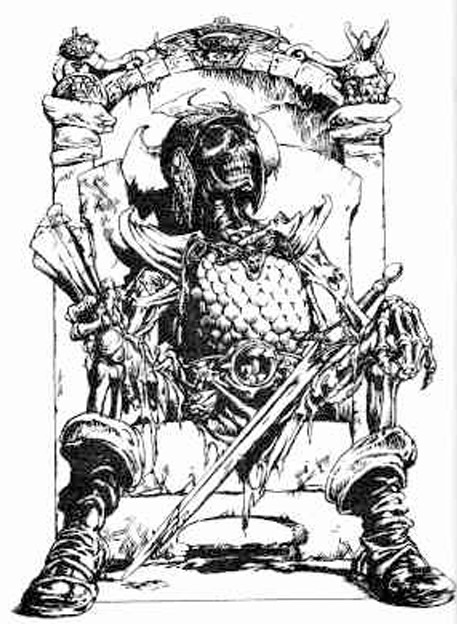
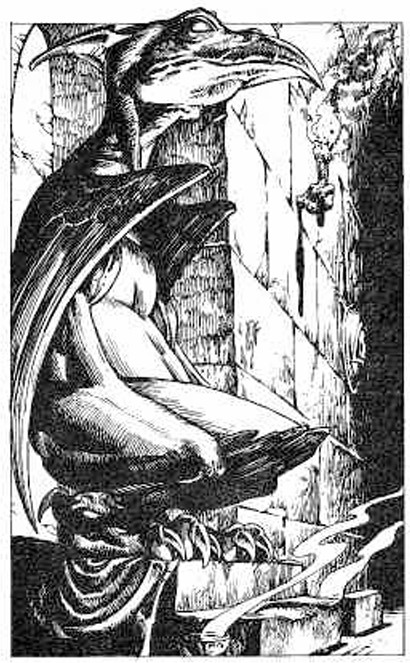
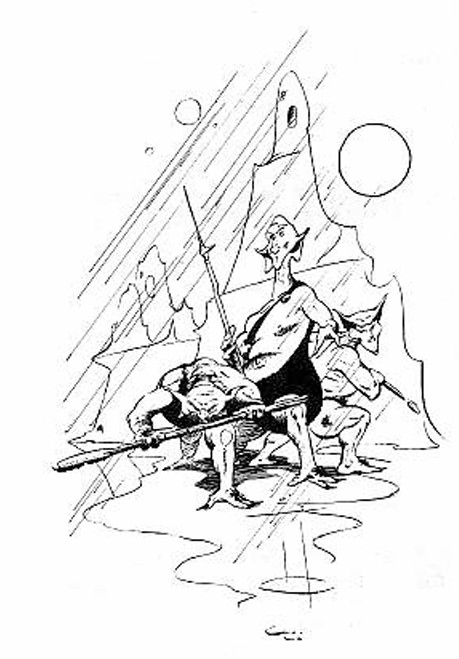
From these opening two pictures alone, one must conclude that Langford is an artist of immense talent – in fact, his work does bear resemblance to Iain McCaig’s contributions from those earlier books.

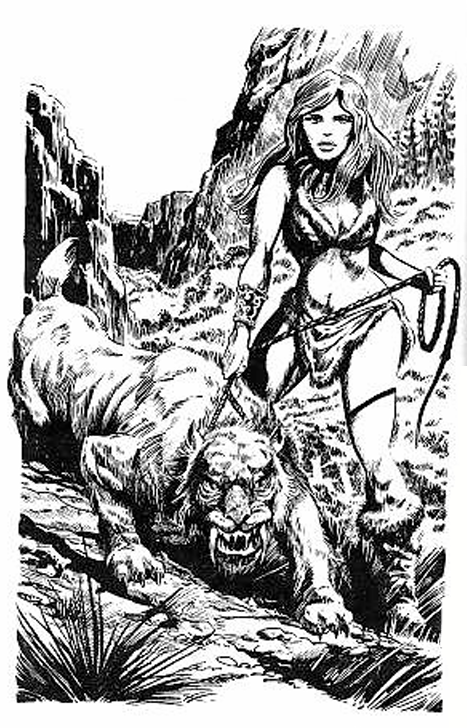
And respect to the guy for treating teenage fan-boys with some hot chicks!

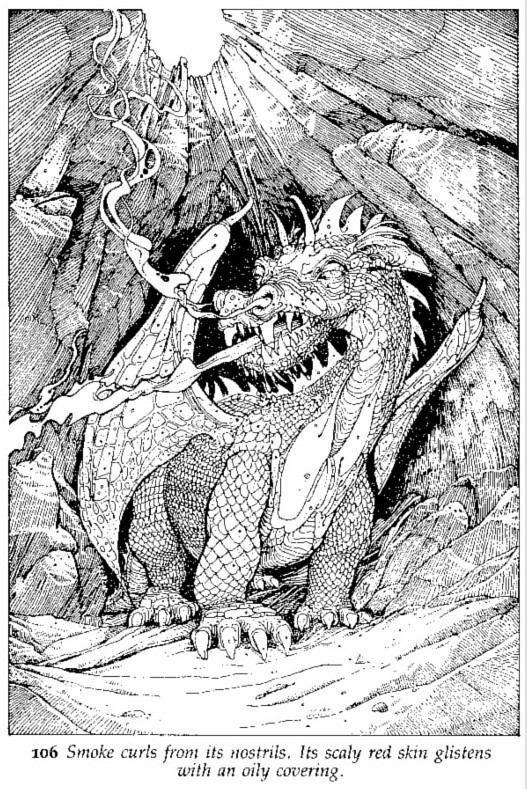
That being said, Langford’s drawings of monsters are not too shabby either.

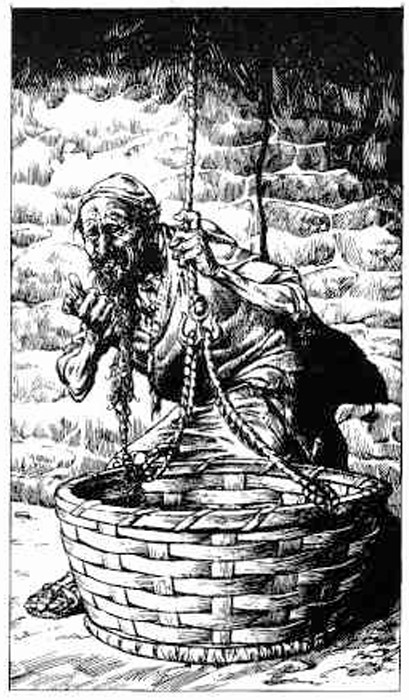
I remember ‘Island of the Lizard King’ as being a difficult adventure to defeat, with countless foes – both man and beast – trying to kill you from all angles. Not only that but success depended too highly upon pivotal moments in the story, such as deciding to take a chained monkey with you or not: – the one seen in the picture below.

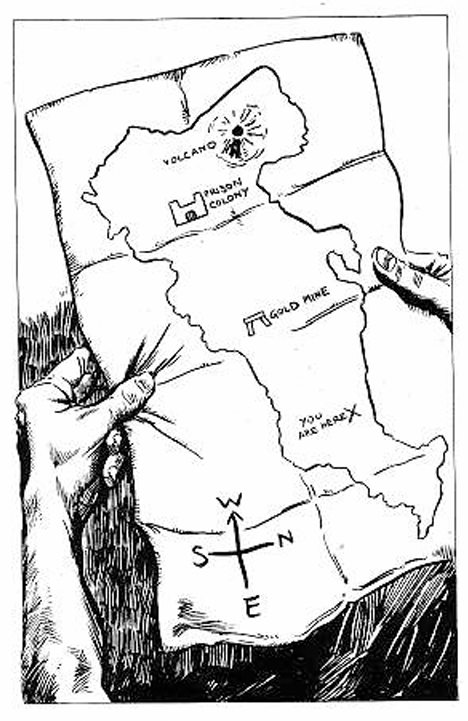
Overall, Alan Langford’s artwork is right up there among the best in the Fighting Fantasy series. From what I have seen so far, only Russ Nicholson and Iain McCaig have done it better.
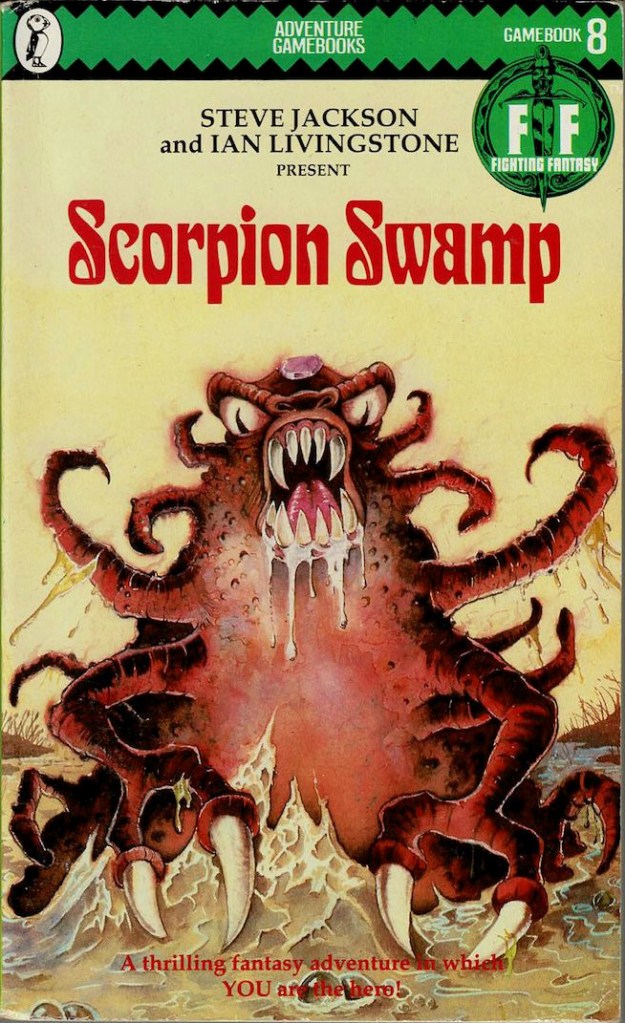
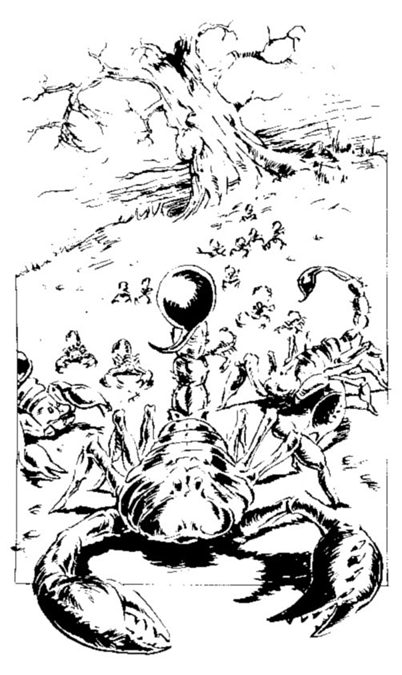
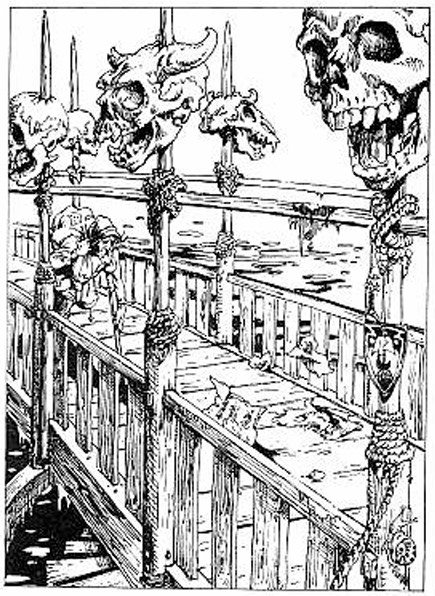
We now move onto ‘Scorpion Swamp’ from Steve Jackson, which to be honest was a book that I couldn’t really get into back in the day. Taking a look at it again all these years later, I think my lack of enthusiasm could have had something to do with the illustrations.

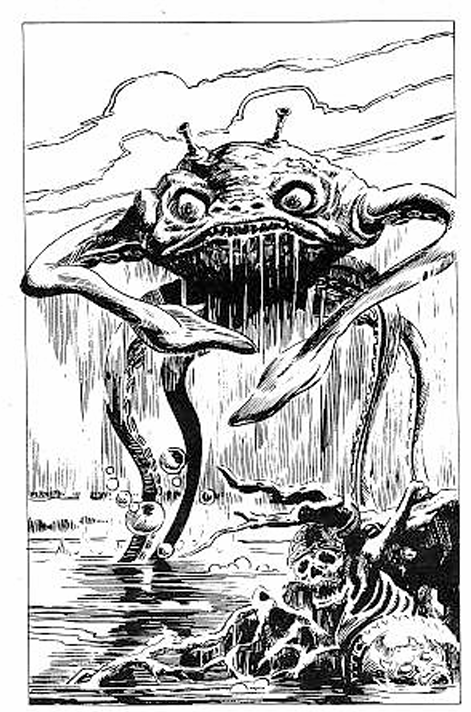
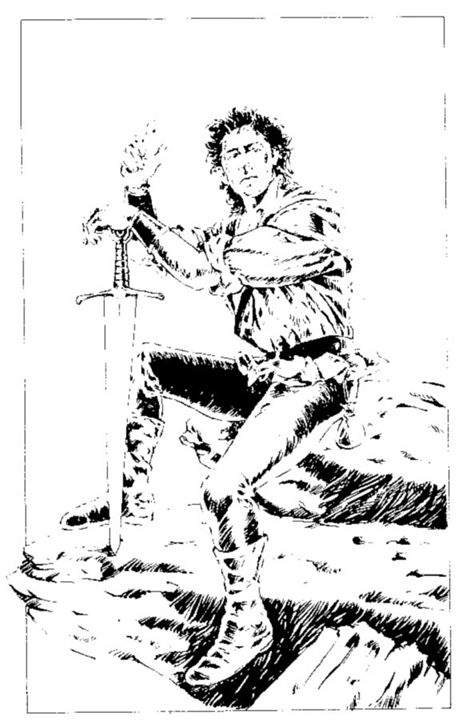
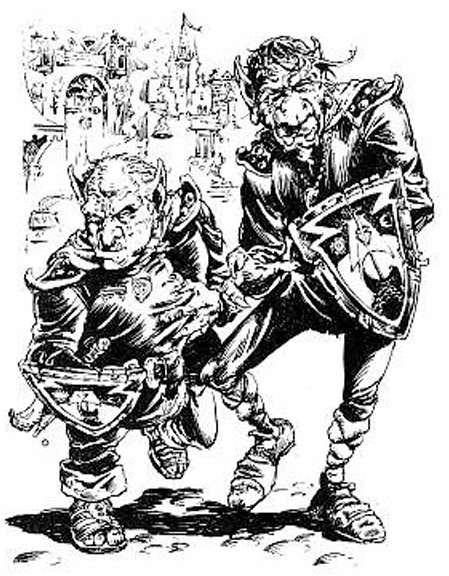
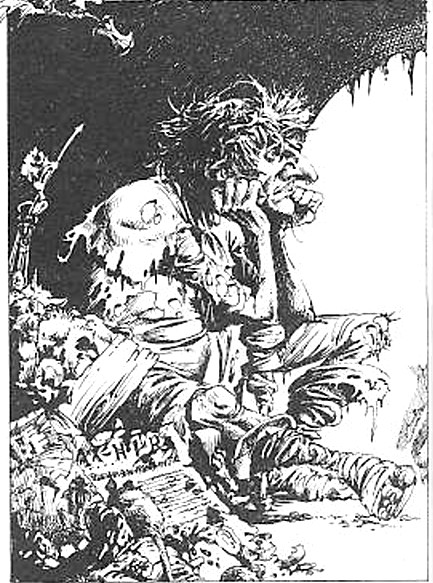
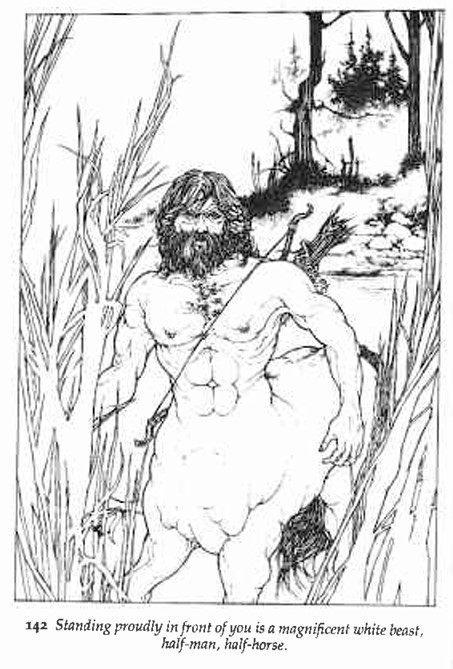
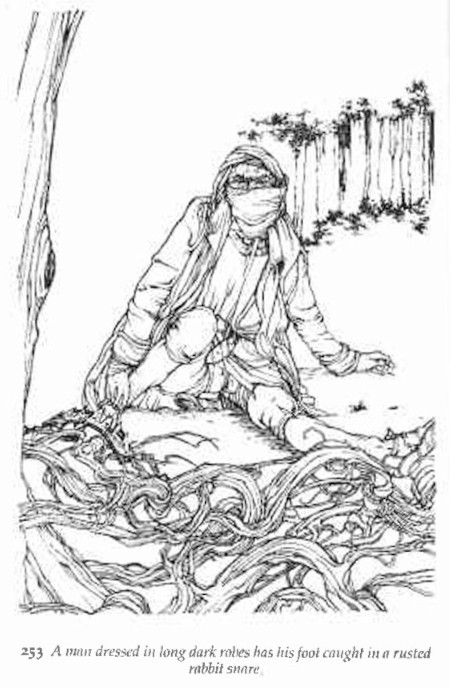
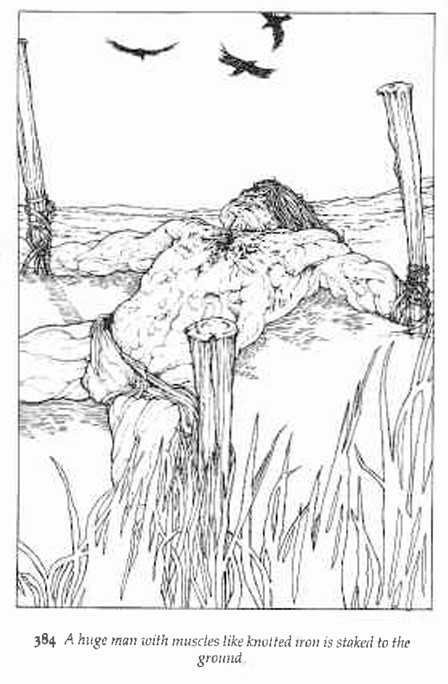
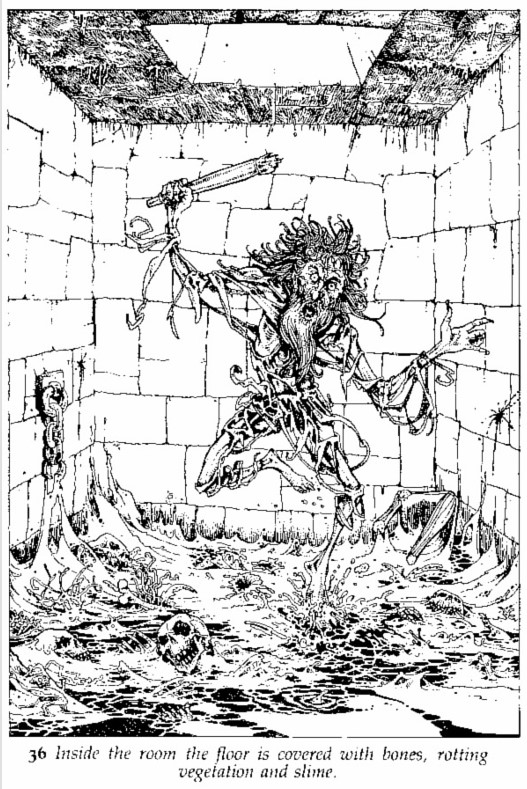
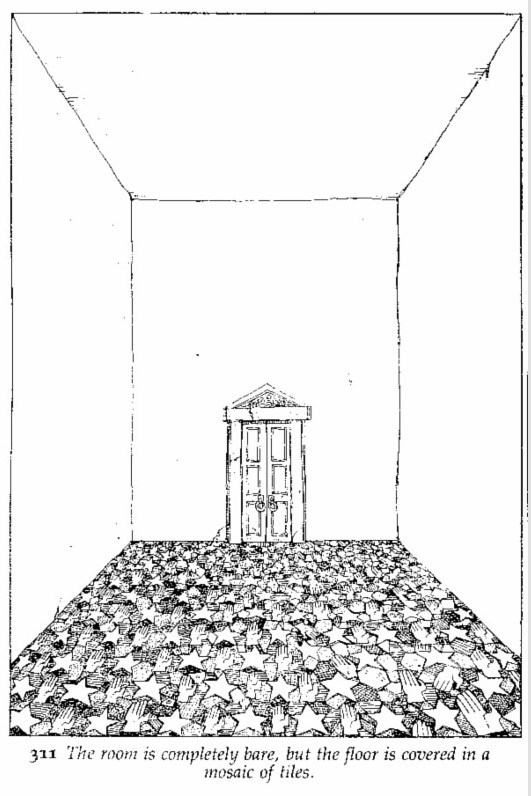
Before I continue – and to be fair to the artist Duncan Smith – my scanned copy was not of the highest resolution, but even with this concession the artwork in this book is nowhere near the quality seen in the previous title. Not only that, but if you want to engage with a predominantly male reading group, I would keep the wimpy stuff out: – note the following examples.
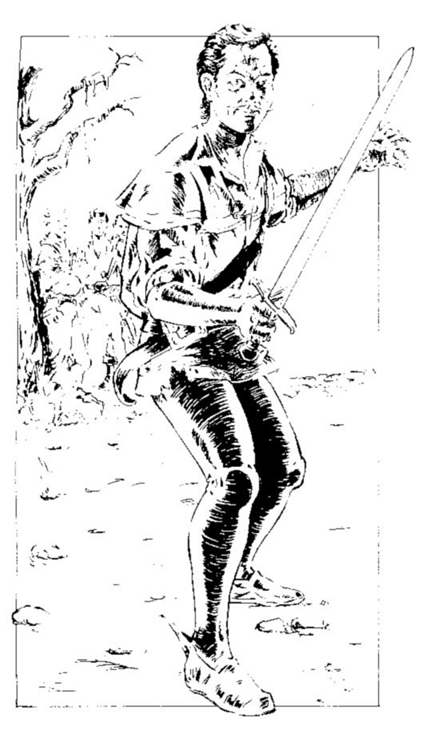
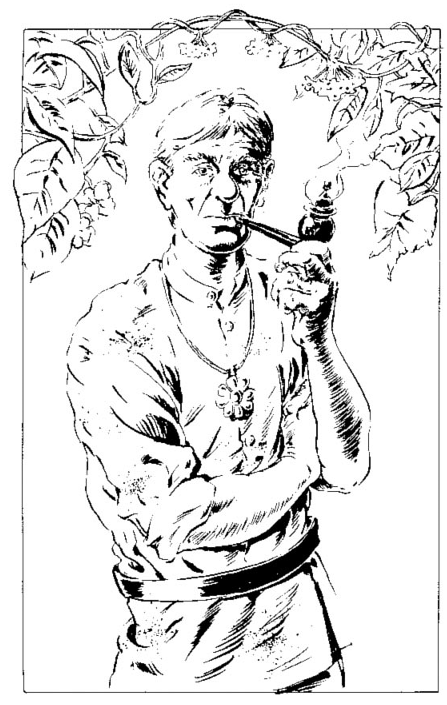
What the heck was going on at Scorpion Swamp?

It wasn’t only these illustrations that were seriously undermining whatever menace and excitement may have been in the story – I mean, check out the following efforts…
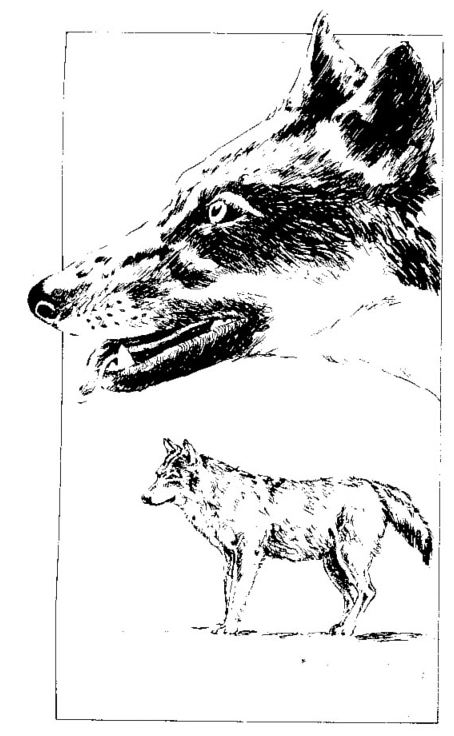
This could be a sketch drawn by a member of The Dog Lover’s Society.

And why do I feel like singing the theme song from ‘Cheers!’ when I look at this picture?
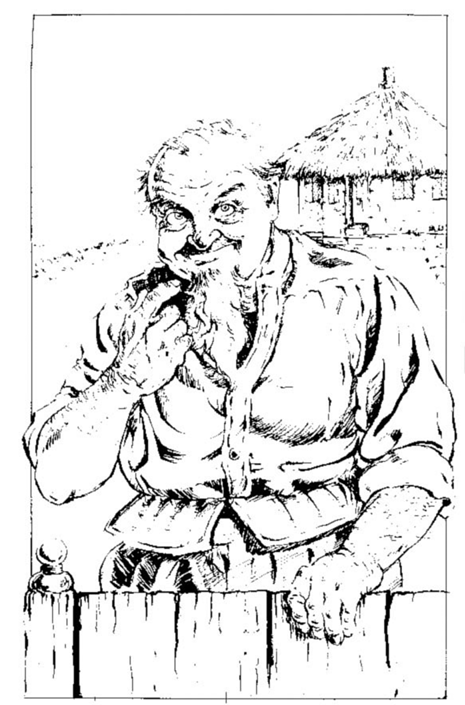
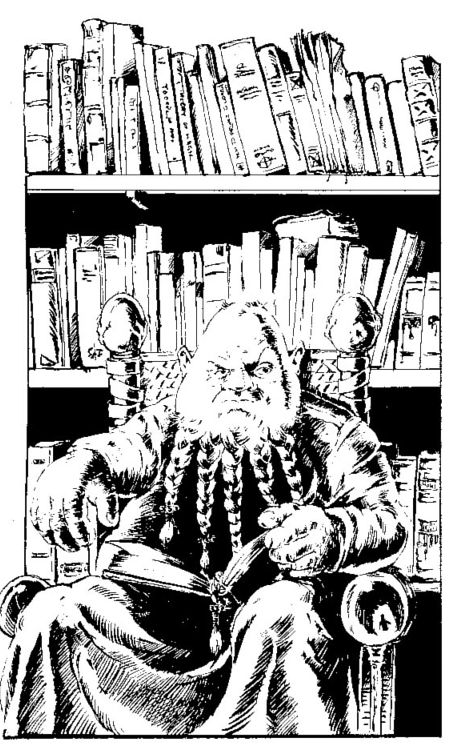
And these two blokes look like English cricket selectors.

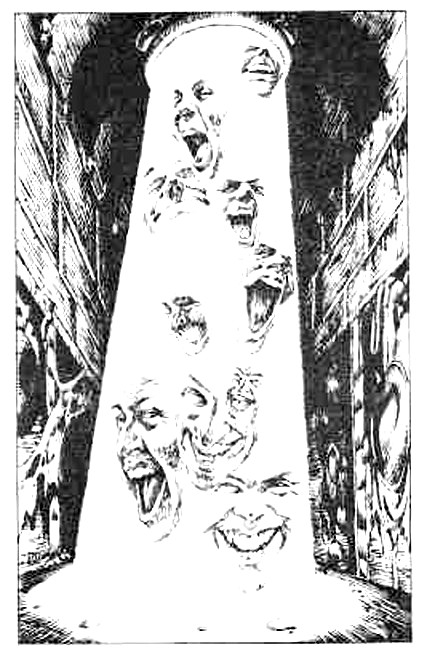
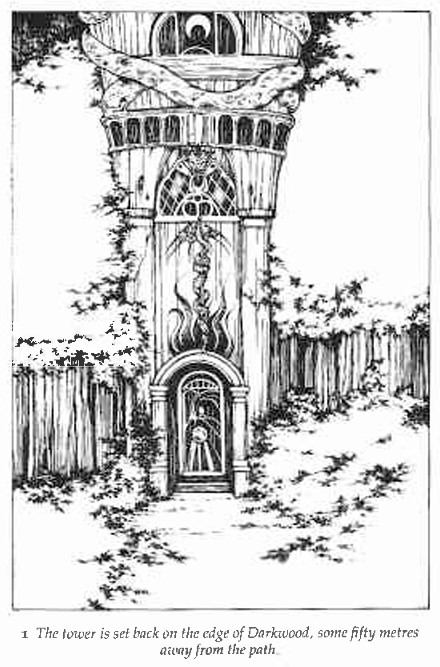
But all jokes aside, there were a few standout pieces from Duncan Smith, and I would prefer to finish on a high note – so here they are.
Overall, the seventh and eighth entries into the Fighting Fantasy series – ‘Island of the Lizard King’ and ‘Scorpion Swamp’ – are two books that in terms of visual quality could not be any further apart.

While every illustration in ‘Lizard King’ oozed danger and captured perfectly the chaotic elements of the story, the more light-hearted offerings from ‘Swamp’ might have you believing that the adventure was one big picnic – with a couple of bad guys thrown in here and there. But let me finish by saying that Duncan Smith is a top artist – not as good as Alan Langford in my view – but perhaps his style was not as well-suited to blood and guts fantasy books.

Anyway, that’s a wrap for these two titles and next on the list are ‘Caverns of the Snow Witch’ and ‘House of Hell’ – both released in 1984.

Artwork courtesy of Fighting Fantasy, Alan Langford and Duncan Smith.

‘City of Thieves’ and ‘Deathtrap Dungeon’.

Having already covered the illustrations from the previous four books in the ‘Fighting Fantasy’ series, it is now time to appreciate the artwork from the next two classic adventures.

For me personally, I felt that these two titles marked the peak of the franchise – with ‘Deathtrap Dungeon’ in particular elevating the popularity of the collection to new heights.

The covers and inside artwork for both books were created by the same person: – American artist Iain McCaig, who is perhaps best known for his work at Lucasfilm with the ‘Star Wars’ prequels. According to what I have read across numerous sites, McCaig played a major role in designing the characters Darth Maul and Queen Amidala.

McCaig is a brilliant artist, and you will note throughout the following drawings that he often has the subjects ‘stepping outside the frame’, so to speak. It’s a fantastic effect and made the artwork for these books stand out and added both weight and atmosphere to the exceptional writing and storytelling.

Let’s start with ‘The City of Thieves’ – where the story is set in a dirty, crime-riddled and violent town called Port Blacksand. Within the city walls are countless foes and villains wanting to kill you, and McCaig’s illustrations reflected these perils perfectly.

Is it just me, or does the person in the last drawing look like Barry Manilow?

All jokes aside, we now continue with ‘Deathtrap Dungeon’, where I have selected more of McCaig’s exceptional work to be admired. As with the previous book, it is difficult to filter out the illustrations into a ‘greatest hits collection’, but I will do my best.

For more information about Iain McCaig, please follow the link below to his IMDB profile.

https://www.imdb.com/name/nm0564572/

McCaig’s only other contributions to the ‘Fighting Fantasy’ series were designing the covers for ‘The Forest of Doom’ – which I covered in the previous review – and ‘Island of the Lizard King’, which I will focus on next time.

Covers and illustrations courtesy of Fighting Fantasy, Iain McCaig and Ian Livingstone.

More artwork from the ‘Fighting Fantasy’ book series.

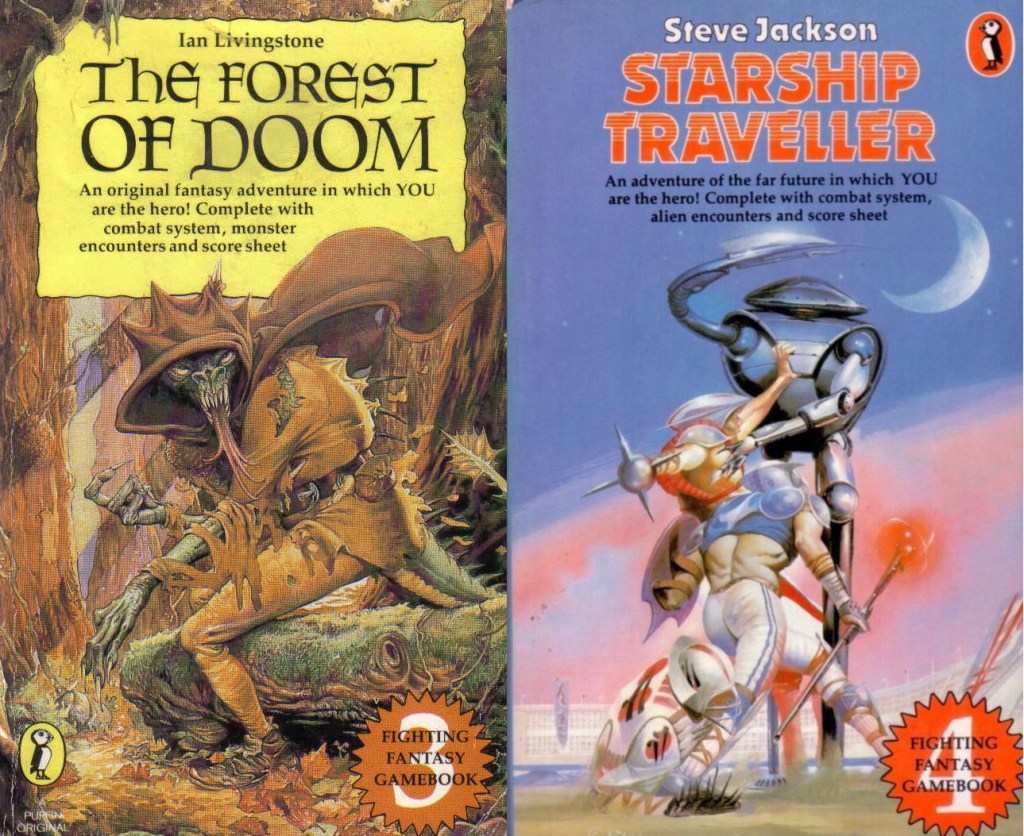
Following on from my article about the first two entries in the series, we now move on to appreciate the art from books three and four: – ‘The Forest of Doom’ and ‘Starship Traveller’.

These were two very different editions, with ‘Forest of Doom’ continuing on with the fantasy/sorcery genre, whilst ‘Starship Traveller’ veered off on a science-fiction trajectory and introduced a more complex system of game play.

‘The Forest of Doom’ was illustrated by Malcolm Barter, and his style is similar to Russ Nicholson – who provided the artwork for the previous two books.

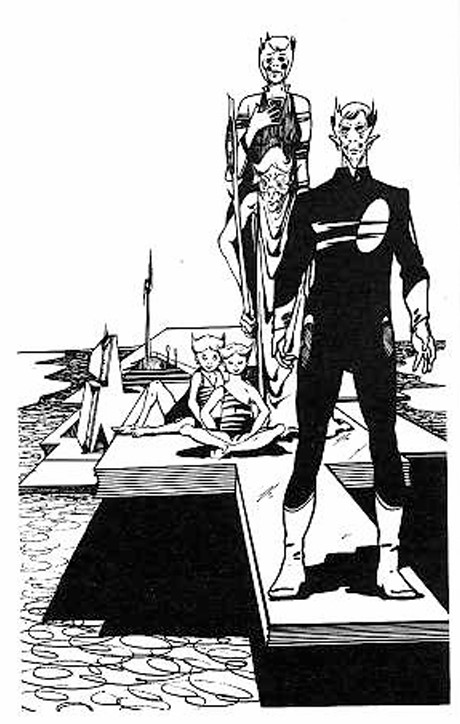
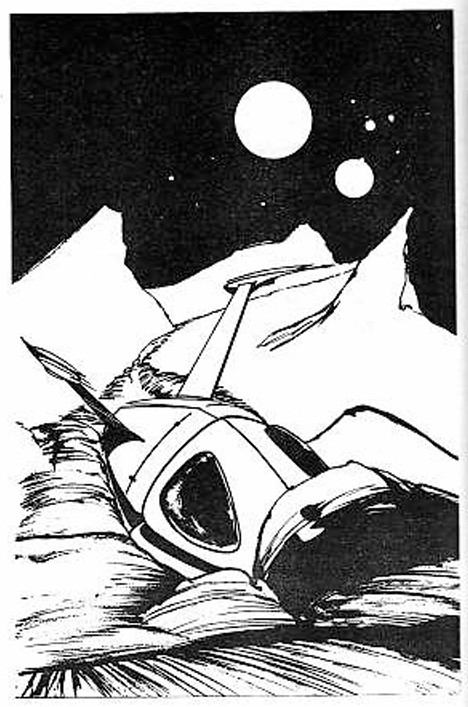
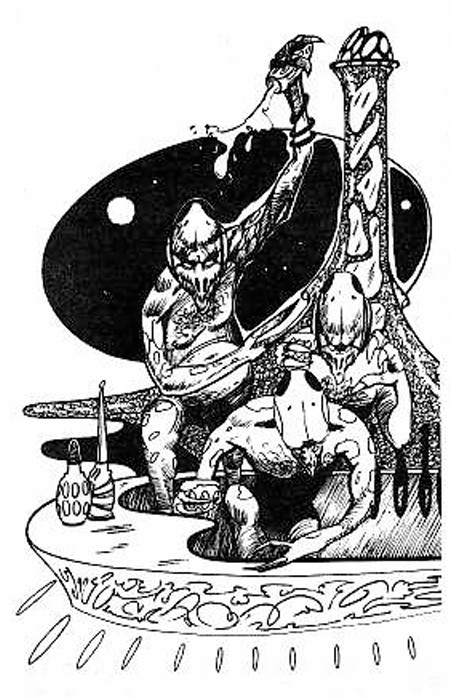
Not only did ‘Starship Traveller’ go in a different direction plot-wise, but the illustrations were also on an alternate wavelength. I’ll be honest here and say that I did not like this change, and never read/played this book as a result.
Examples of the artwork from Peter Andrew Jones are below.

To me, there is something about the sword and sorcery art that gives it an edge – perhaps there is more imagination and menace immersed into the illustrations – who knows?

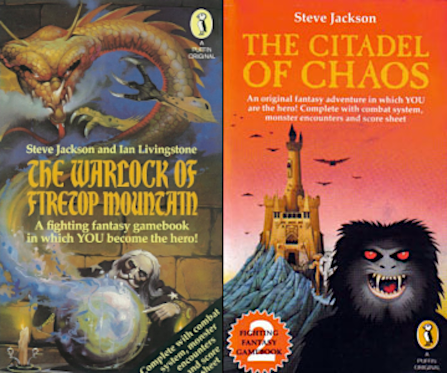
I am not being overly critical of the designs from ‘Starship Traveller’ as they are stylish and futuristic, but I just find the artwork from ‘The Forest of Doom’ – as well as ‘The Warlock of Firetop Mountain’ and ‘The Citadel of Chaos’ – vastly superior.

Cover art and illustrations courtesy of Fighting Fantasy and Puffin Books.

Artwork from the ‘Fighting Fantasy’ book series.

‘Fighting Fantasy’ is a series of books that was first released in the early 1980’s and were written (mostly) by Steve Jackson and Ian Livingstone. I loved reading these (or playing them) back when I was in school, and can recall just how awesome the opening ten to twelve books were – so much so that I can still remember the plots and characters.

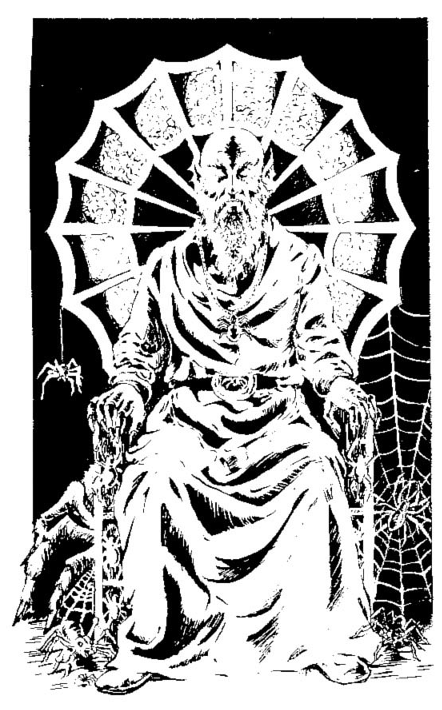
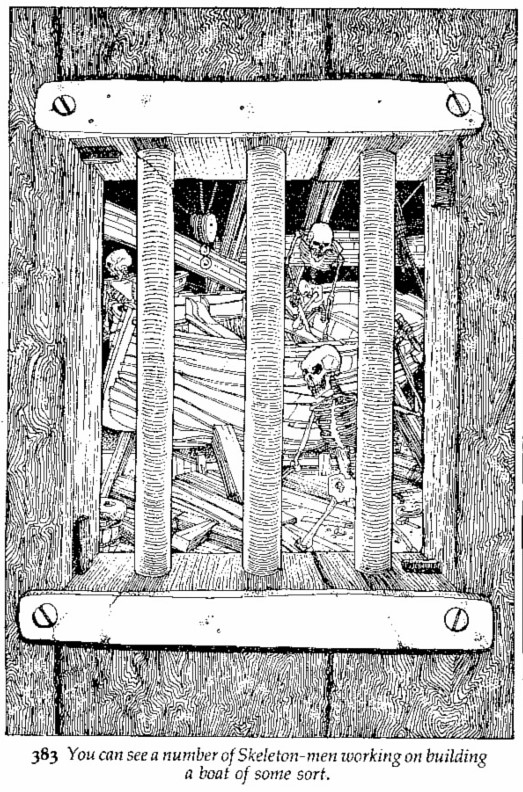
The illustrations scattered throughout the pages would bring to life many scenes within the adventures, and were drawn in a style that created a both a sense of dread and wonder. Although the artwork for every book in this series was first class, I always felt that the pictures in the first two publications – ‘The Warlock of Firetop Mountain’ and ‘Citadel of Chaos’ – created by Russ Nicholson had a little something extra about them.

I will post a follow-up article about the other artists involved in the series at a later date and showcase their excellent work, but for now the focus shall be on Nicholson’s illustrations.

These are from ‘The Warlock of Firetop Mountain’.

And the pictures below are from ‘The Citadel of Chaos’.

Fighting Fantasy books can be purchased online, with sellers such as Amazon offering a brand-new boxed set of the first dozen books. Of course, there are many second-hand titles available through eBay, but the books are now forty years old and probably played through many times – and are therefore a little worse for wear.

Russ Nicholson sadly passed away in 2023, and will be remembered for his legendary fantasy art that can be appreciated across many projects including ‘White Dwarf’ and ‘Warhammer’.

All images courtesy of Fighting Fantasy, Puffin Books and Russ Nicholson.

‘The Final Programme’ – Mind-bending 1970’s Sci-Fi.

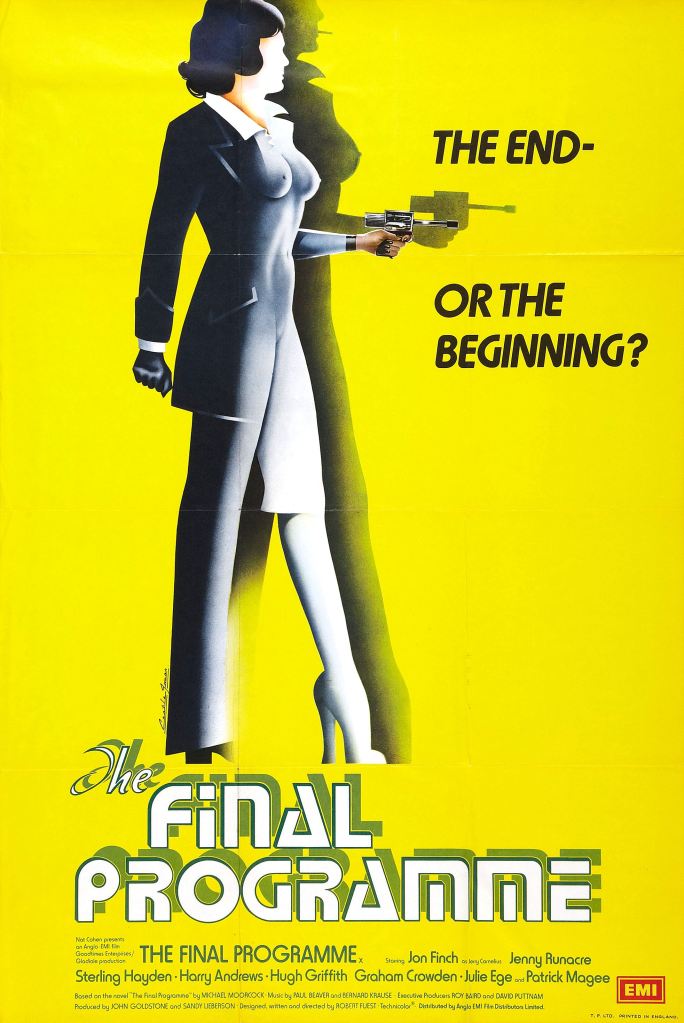
‘The Final Programme’ is a 1973 British science fiction film based on the 1968 novel of the same name by Michael Moorcock. It follows the story of scientist/playboy Jerry Cornelius at a time when the world is about to end, and the race is on to prevent the apocalypse by creating a new Messiah in a laboratory using a super computer.

While the movie is crazy and nonsensical at times, the cinematography – location shoots and studio sets – is of a very high quality and the imagery throughout the film is quite unique.

The movie stars Jon Finch as the main character Jerry Cornelius and was directed by Robert Fuest. You may recognise a few other actors in the film such as Sterling Hayden, Sarah Douglas (who would later star as Ursa in ‘Superman II’), Patrick Magee (who portrayed the writer in ‘A Clockwork Orange’) and Derrick O’Connor (who played the South African henchman Pieter Vorstedt in ‘Lethal Weapon II’).

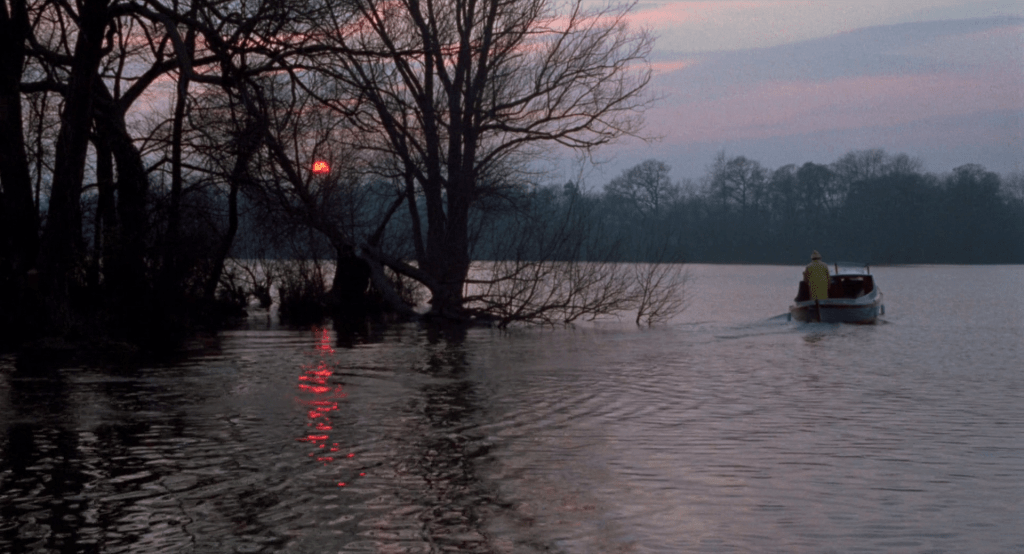
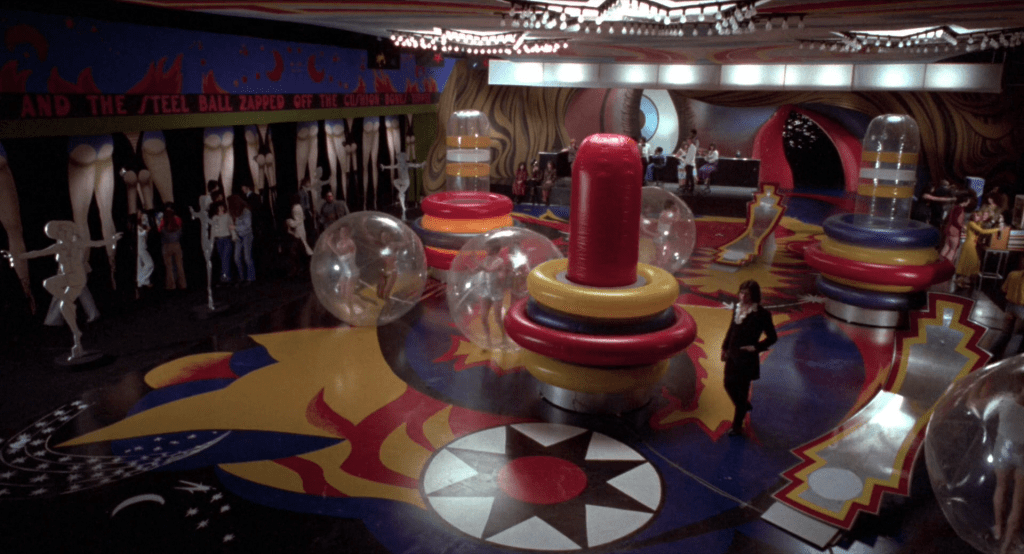
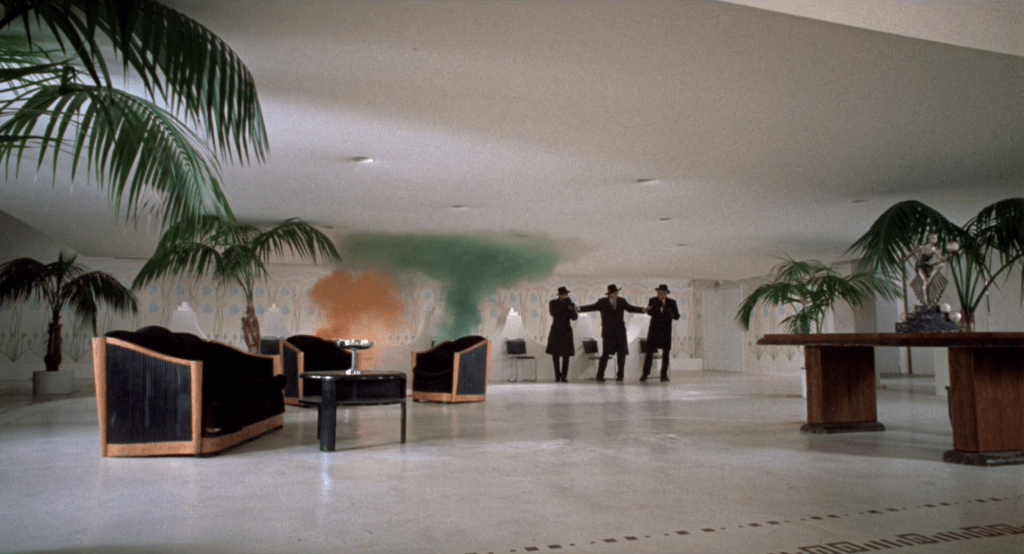
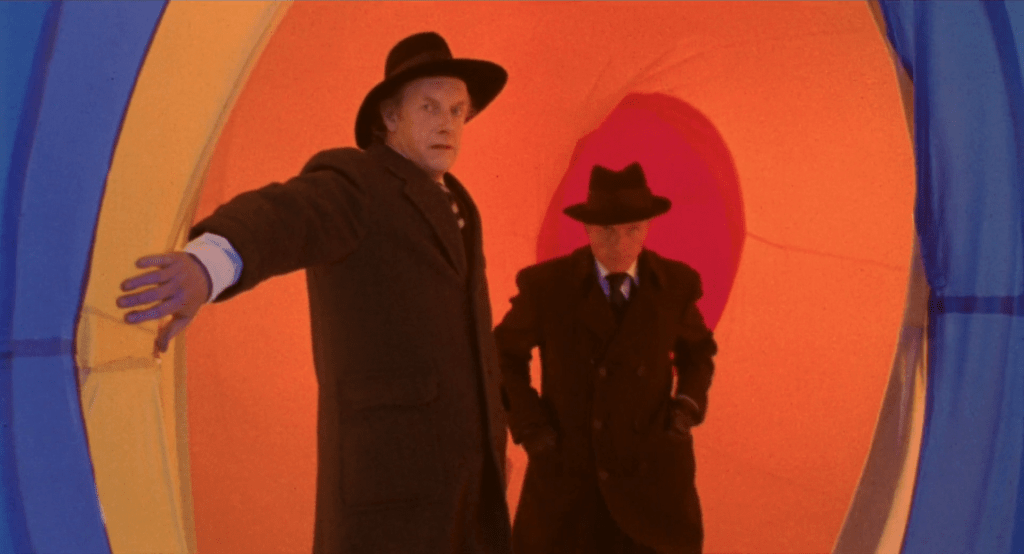
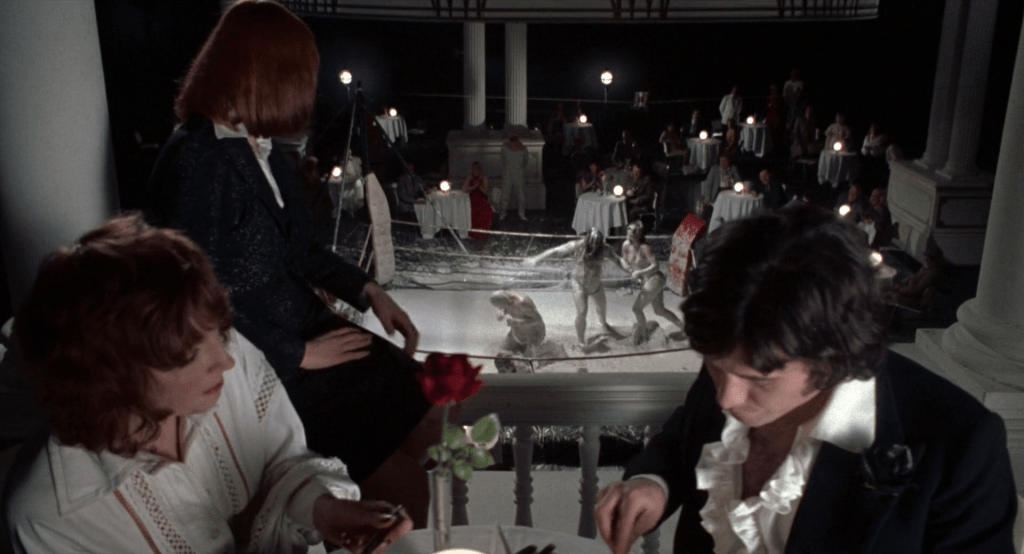
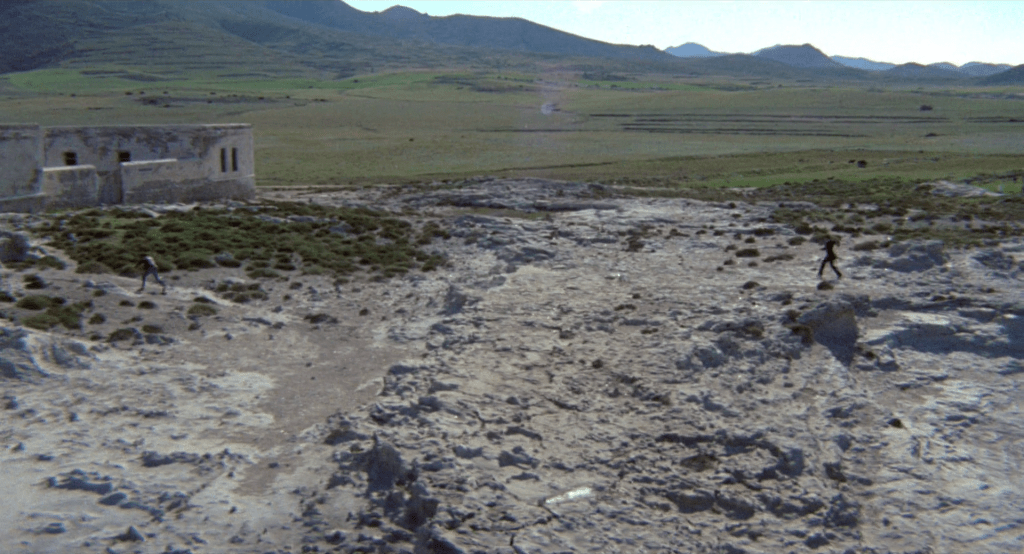
Without spoiling the film, I will simply show a few screenshots highlighting the weird yet impressive locations and camera work. Note the incredible sets for both the bizarre pinball parlour and the snazzy interior of the Cornelius mansion.

The third act of the film takes place in Turkey and then in a secret lab in Lapland. Again, the visuals are outstanding, even if the plot is a little wacky!

This movie is not everyone’s cup of tea, but if you appreciate quirky early seventies British fantasy/science fiction then you will take a lot of enjoyment from this film.

Screenshots courtesy of Goodtimes Enterprises.