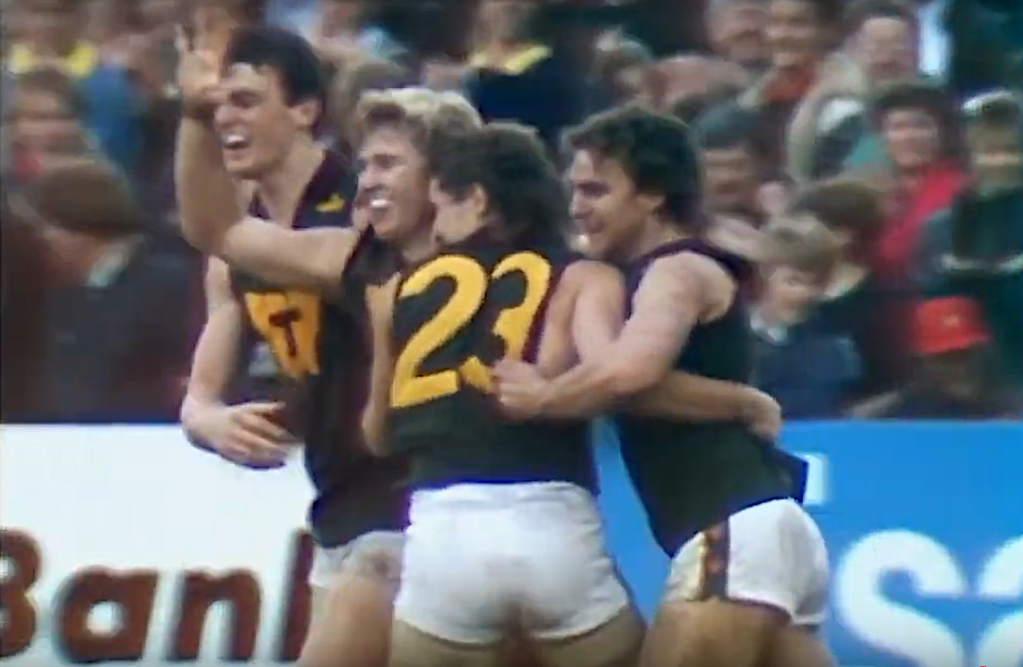
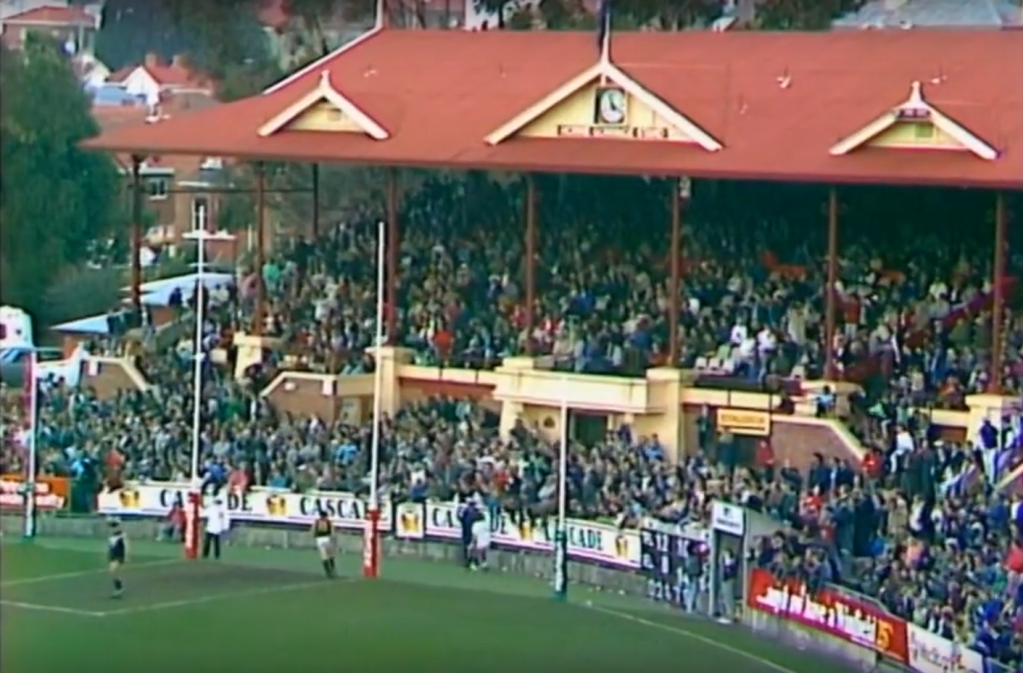
The date was June 24th, 1990 – and the occasion was Tasmania vs Victoria in a State-of-Origin match played at North Hobart Oval. The only reason I found out about this anniversary was through social media posts from the Tasmania Devils AFL team – who were reminding everyone that today marks exactly thirty-five years since that famous day.
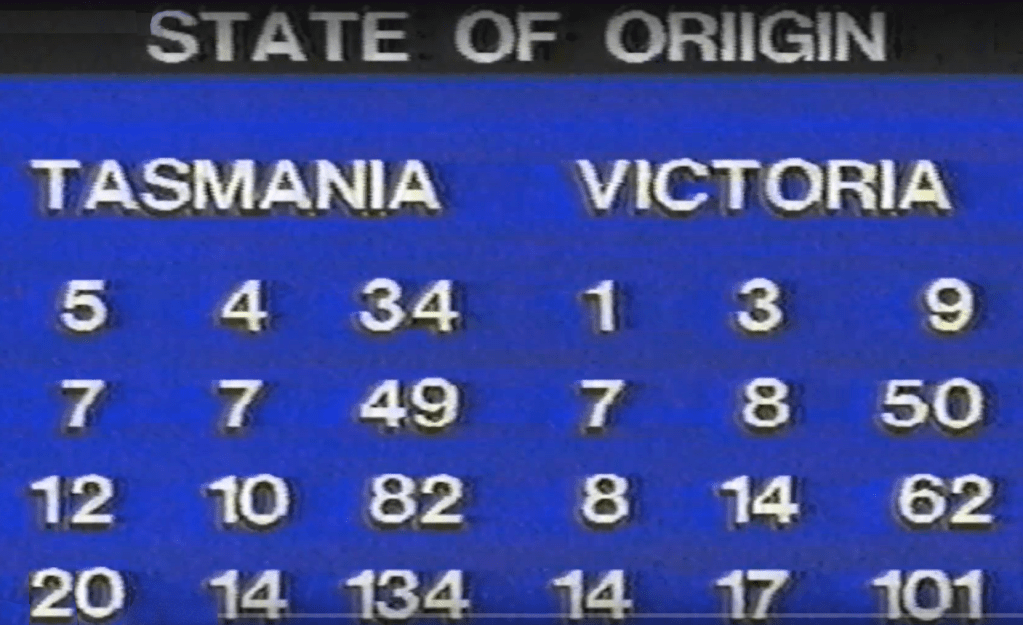
And it was such an emotional moment in Tasmanian history that the local television channel failed to spell ‘origin’ correctly when presenting the final scores!
But as I mentioned in the heading, my seventeen-year-old self was actually there at the game. In fact, I was standing behind the goals at the bowling club end – and I have indicated my approximate location in the screenshot below.

The television coverage is too blurry – being of VHS quality – to pinpoint me exactly, but I would have been hard to spot even if the footage was clear and sharp. This is because I would have blended in amongst those around me with my mullet hairstyle and Japara jacket – both being Tasmanian fashion statements at the time!
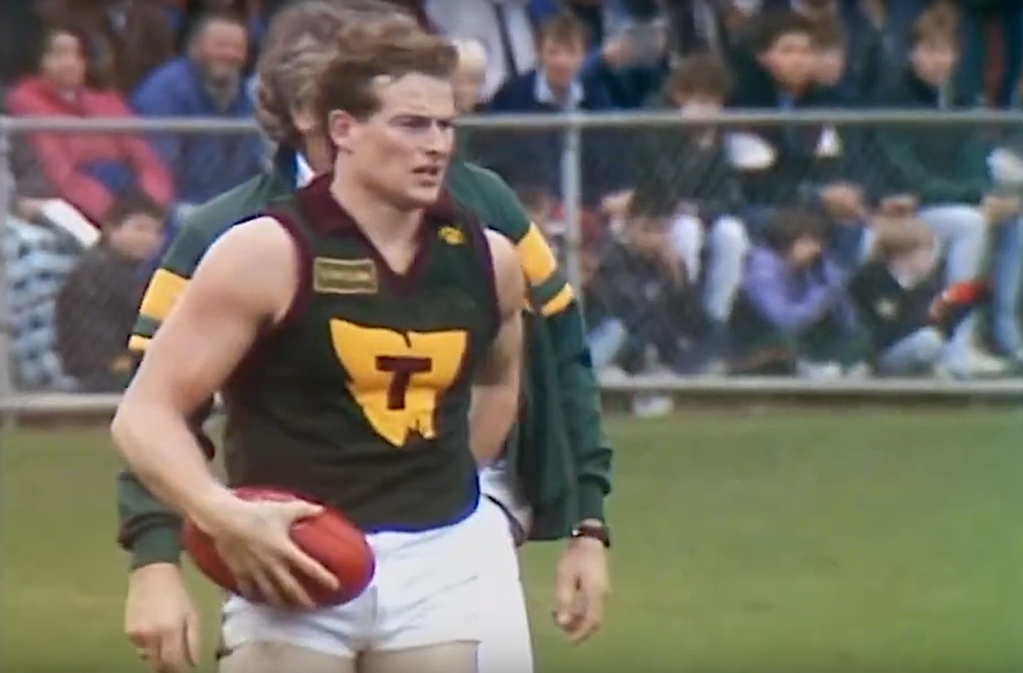
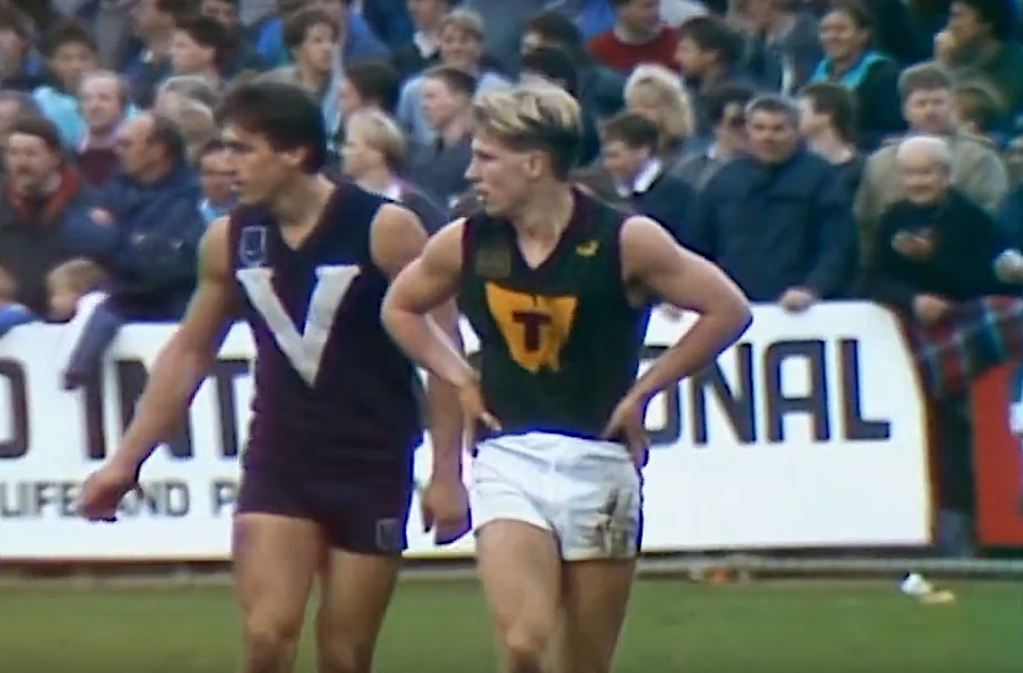

The game showcased a number of local footballers who had moved interstate to play for AFL clubs on the mainland. Some of these players included Doug Barwick, Paul Hudson and Shane Fell* – who are pictured above.
*Fell was not a born-and-raised Tasmanian, but met the eligibility requirements to represent the state – and just so happened to be one of my favourite players at the time.
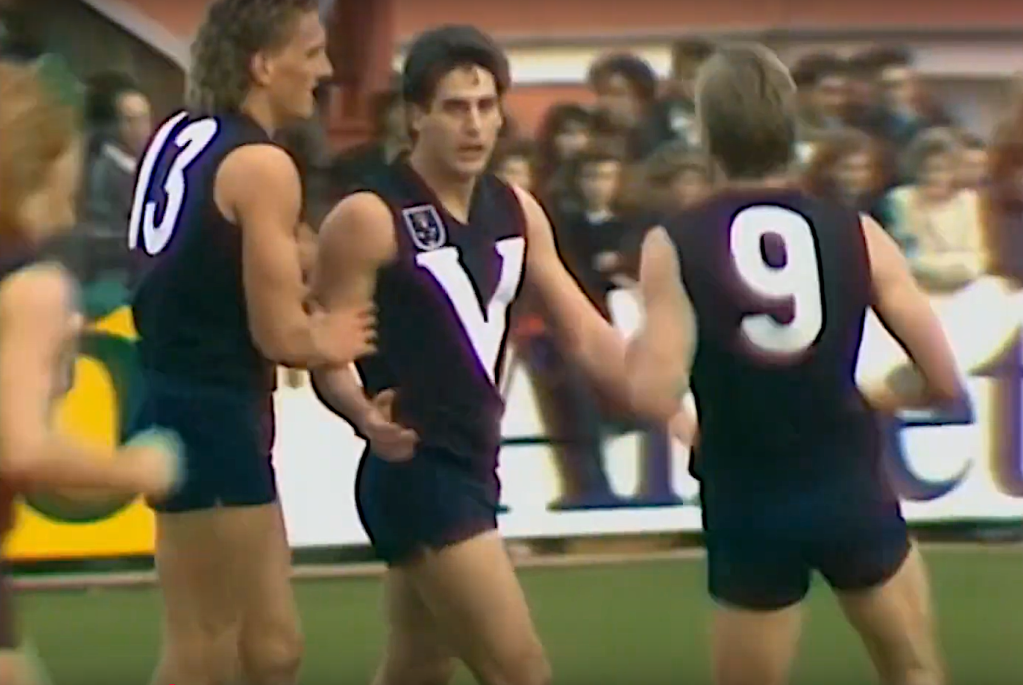
The Victorian squad – whilst containing great players such as Gary Ayres, Chris Langford, John Longmire and Tony Liberatore – was in truth considered to be their B team. I believe their strongest side was playing a match against South Australia that same weekend, and featured superstars like Gary Ablett, Tony Lockett, Dermott Brereton and so forth.
However, the Victorians did consider the game against Tasmania to be serious enough to have the legendary Ted Whitten make the trip to Hobart. Seated next to him is David Parkin – who was no slouch himself – with another heavyweight of the game in Ron Barassi also present.

Below is a shot of both Whitten and Barassi reacting after being heckled by the crowd. On a side note, the kids who have snuck into the frame remind me of ‘Village Of The Damned‘ – creepy!

The ground was absolutely packed – and the atmosphere was incredible – with an ‘official’ attendance of 18,600. But I reckon a few thousand more strolled in when the gates were opened and free entry was allowed at three-quarter time.
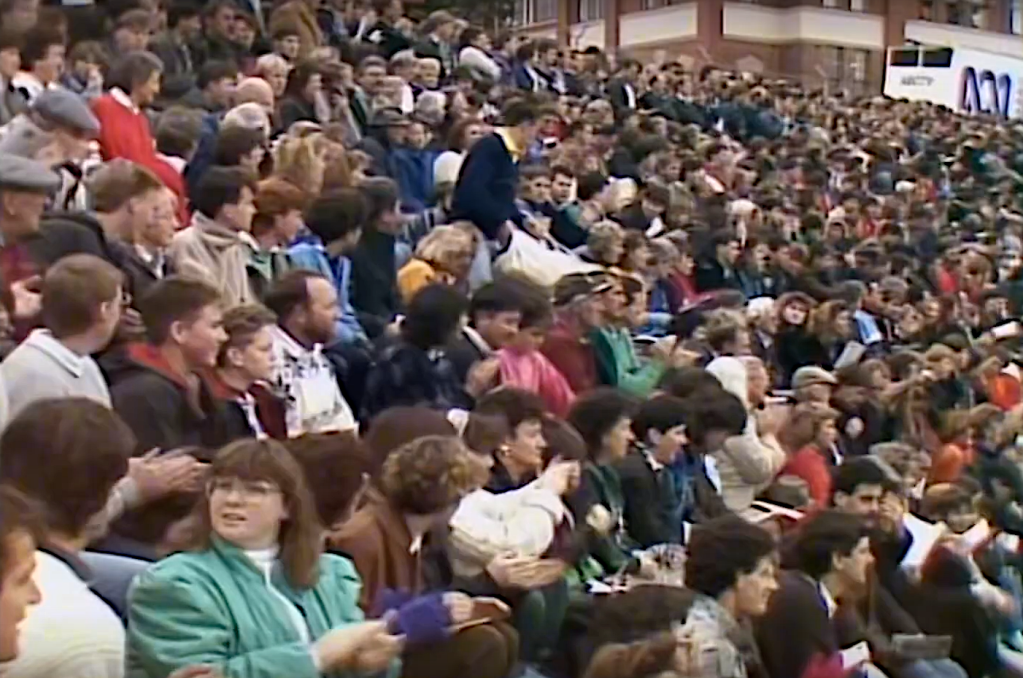
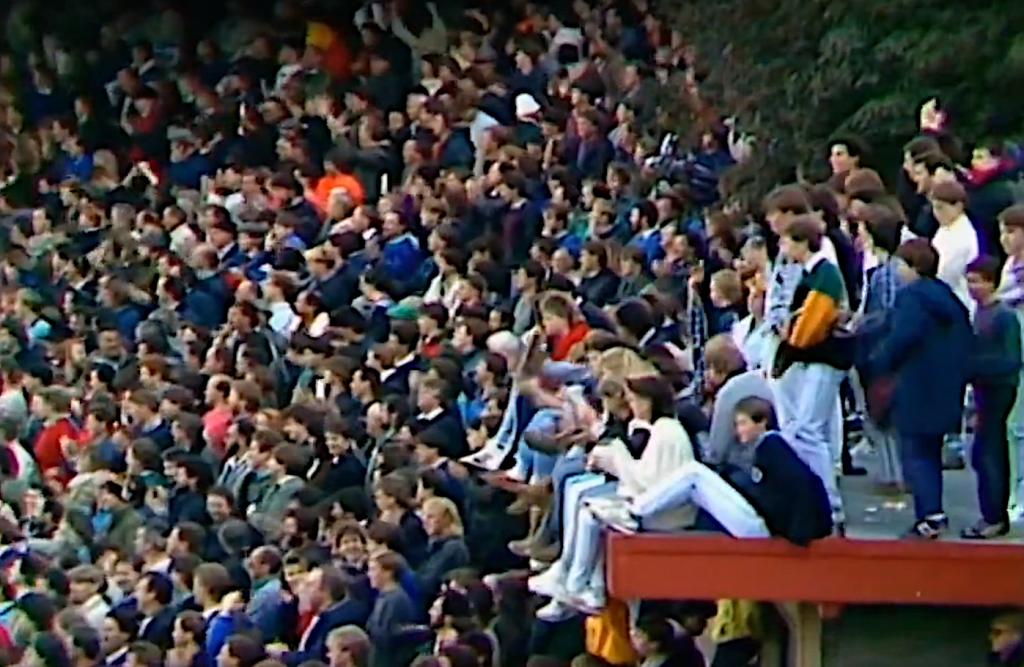

Remember that I mentioned Japara jackets before? Well, I can count as many as five in the last photo, including the guy standing at the back.
The Tasmania Devils AFL club uploaded a highlights video to their YouTube channel, and it’s worth checking out. Watching it again really brought back some memories, and I’m sure it would be the same for others who were at North Hobart Oval on that famous day.
For those reading this article who aren’t from Australia and are unfamiliar with this football code and our sporting culture, it’s still worthwhile having a look at the video – if only for curiosity’s sake.
See link below.
Screenshots courtesy of ABC. Video courtesy of Tasmania Devils AFL YouTube channel.





 Sean Carslake