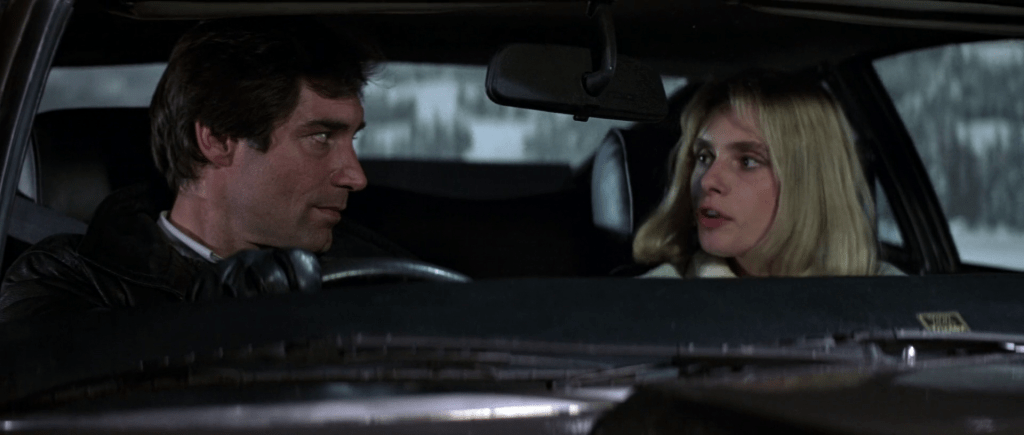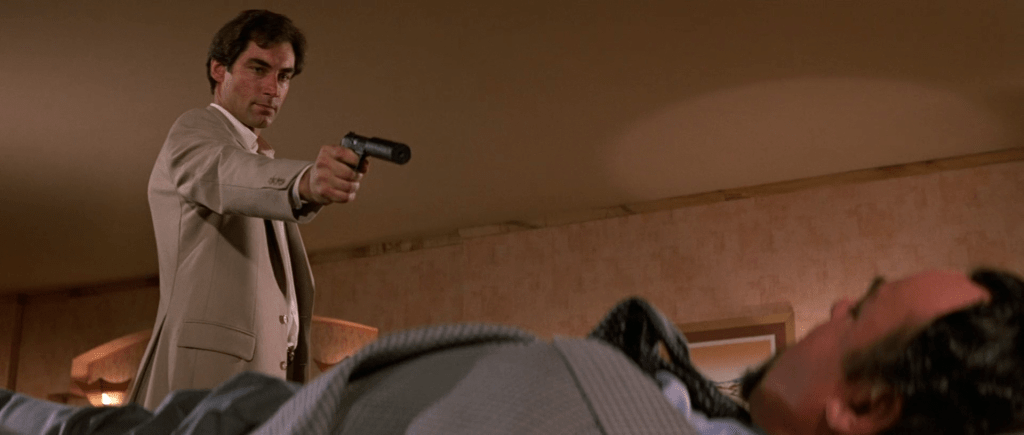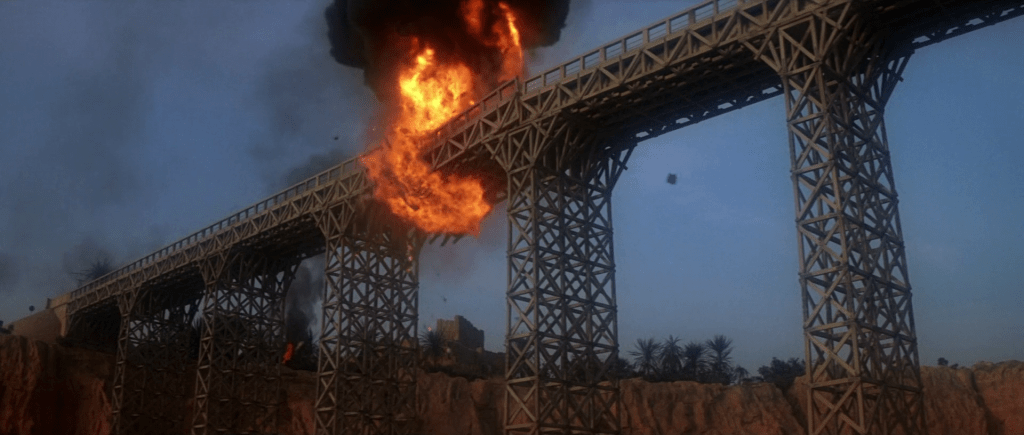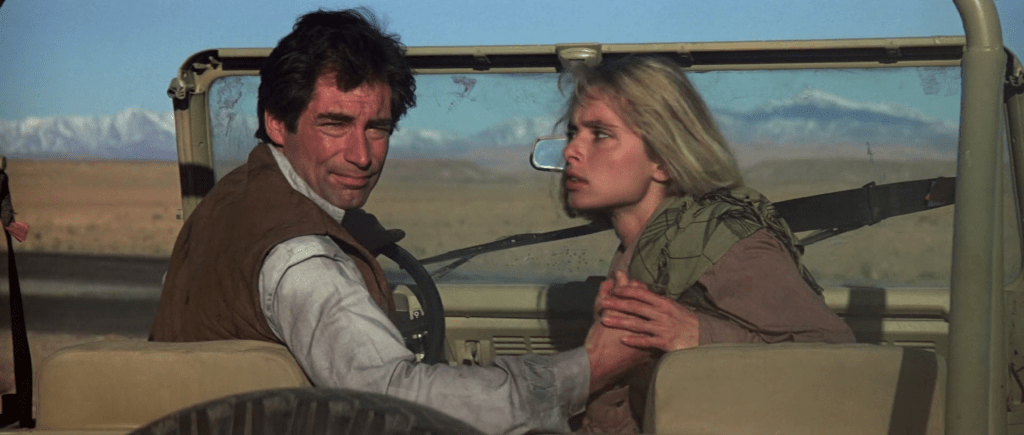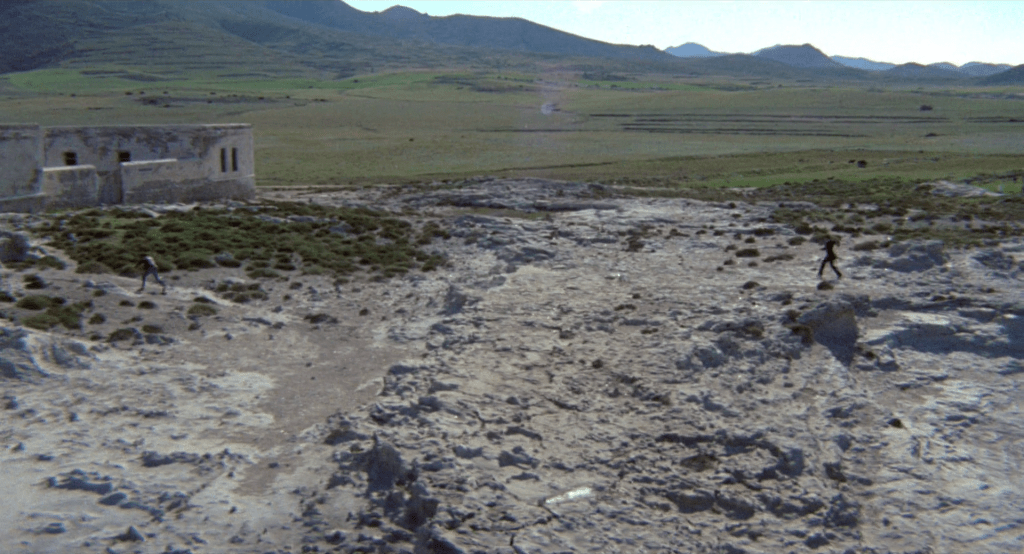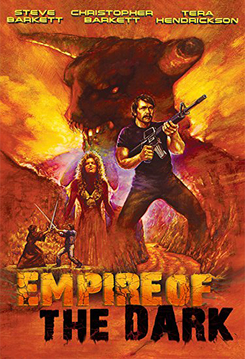
‘Empire of the Dark’ is pure B-Grade genius!

An out-of-shape middle-aged leading man takes on sword-wielding Satanic priests, demons, gun-toting villains and more in this 1991 horror/action thriller!

Written, directed by and starring Steve Barkett (who sadly passed away in 2023), this feature has all the hallmarks of a vanity project – re Neil Breen or John De Hart – but turns out to be a pretty solid flick. One simply needs to see beyond the flaws of this ambitious low-budget film to be able to enjoy the spectacle that it truly is.
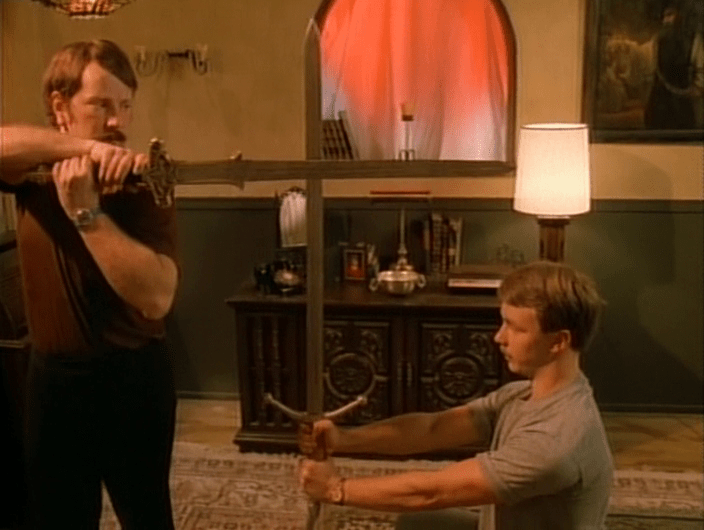
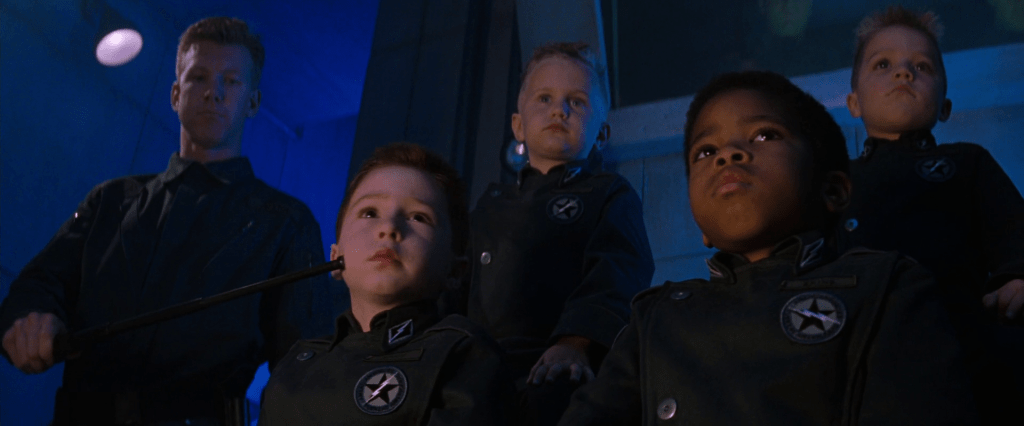
Barkett stars as Richard Flynn, who while working as a cop, enters through a portal into Hell to rescue his ex-girlfriend’s baby son before he is sacrificed by devil worshippers. The film then skips twenty years to when Flynn is now a private eye, and is forced to battle the evil acolytes of Satan once again!
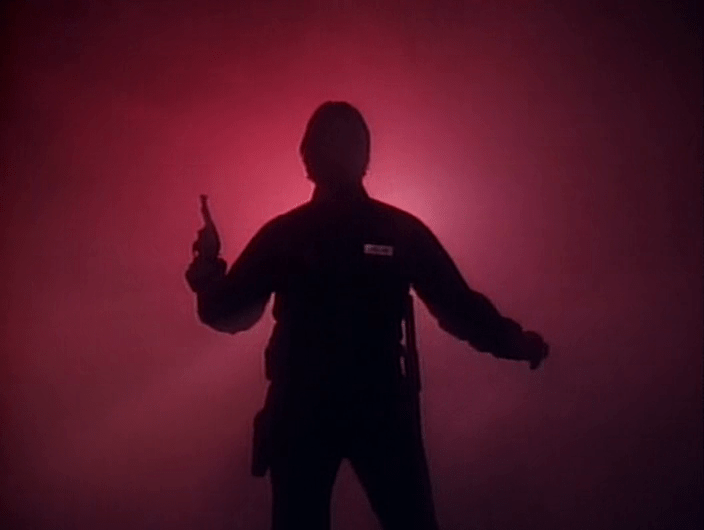
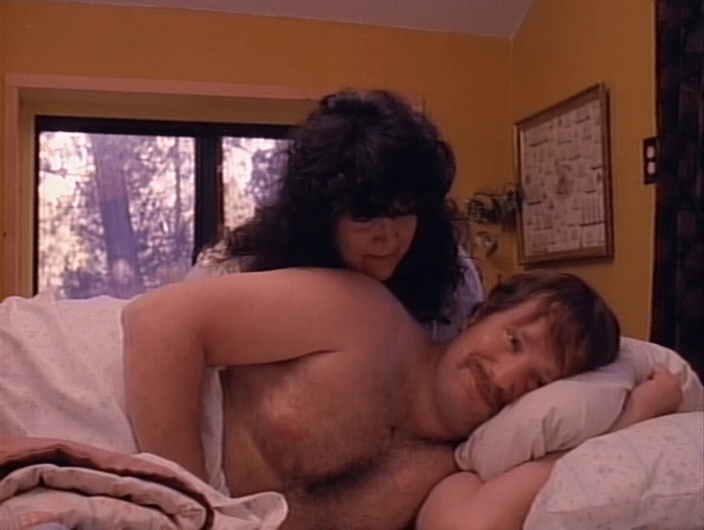
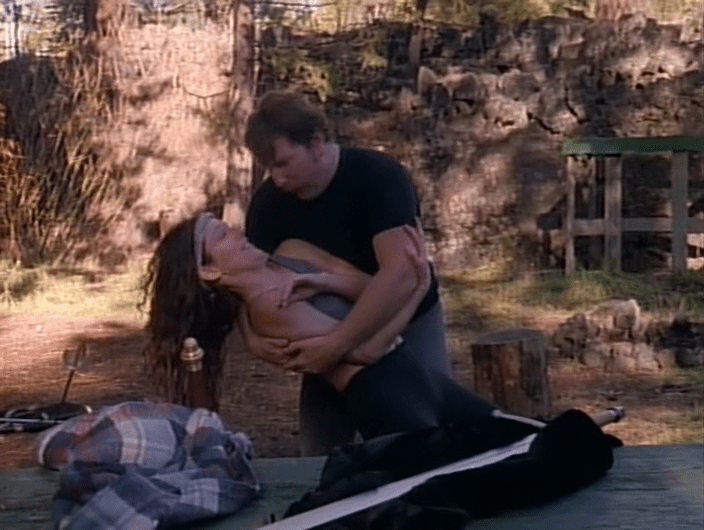
Barkett clearly considers himself to be an action man, and his screenplay and direction suggests as much, as he is constantly killing bad guys and romancing women way out of his league. However, he delivers a lot of tongue-in-cheek comments and one-liners, hinting that he is aware of his physical shortcomings, and decides to run with it anyway. What this does is bring a lot of charm and character to the film, and you end up really liking the guy and cheering him on.
The soundtrack to this movie – from composer John Morgan – is quite good, from the opening theme to the catchy incidental music featured throughout the film. I have watched bigger – and supposedly better – productions whose musical scores were nowhere near as memorable as this effort.

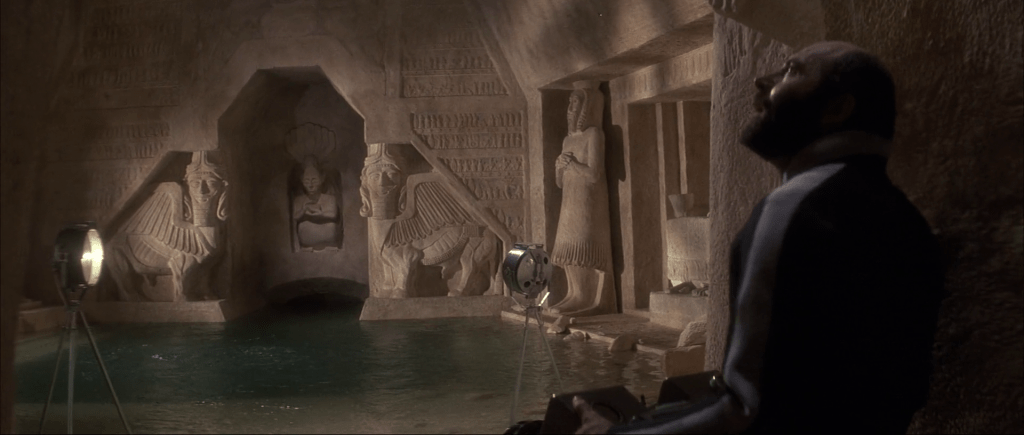
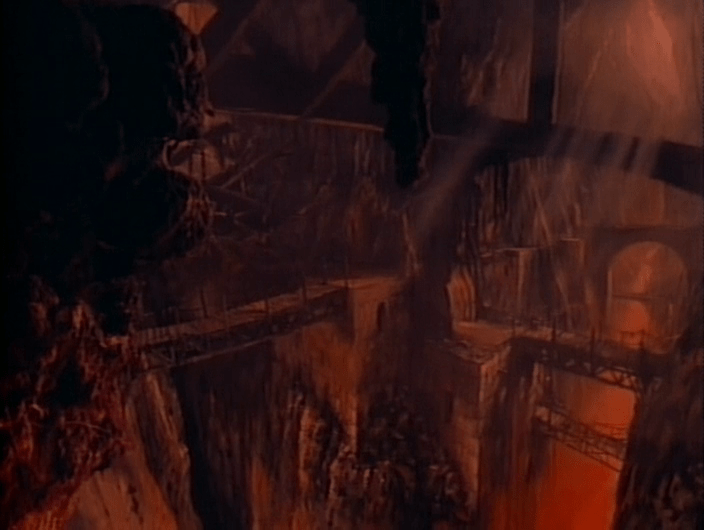
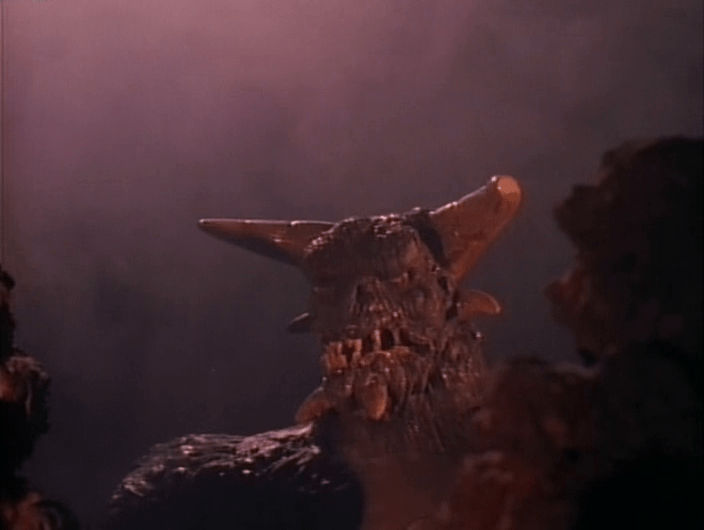
The special effects were decent in places, especially the modelling of the hellish caves and wooden bridges and platforms within the underground labyrinth. However, the stop-start animation that brought the main demon to life was a bit ‘how ya going’, as we say in Australia. Perhaps ‘questionable’ might be a more widely-recognised term, but you can appreciate what the film-makers were trying to do.
As far as action goes, ‘Empire of the Dark’ delivers the goods. There is an endless supply of hooded evil disciples trying to kill our hero, who fights them all off with either a gun or a sword, while less-than-gracefully executing moves that are awkward and sluggish yet somehow appear on screen as poetry in slow-motion. It’s comedy through and through, and Steve Barkett is right on point here; really hamming things up and breaking the fourth wall on at least one occasion.

‘Empire of the Dark’ has a 4.8 rating out of 10 at IMDB, and I think this is just about right. This is not a great movie, especially with the poor acting and ridiculous plot, but nor is it a complete dud. This film is watchable and quite entertaining, and as mentioned earlier it has a certain charm – or affability – that gets it across the line.

It’s a solid 3 out of 5 from me. Yes, it’s a ‘bad’ movie but it’s one you can laugh along with. I also think it’s a shame we didn’t see Steve Barkett in more mainstream movies over the years.

There was an episode of ‘So Bad It’s Good’ on YouTube a few years back, where they reviewed this movie and seemingly enjoyed it as well. It’s worth watching, so I’ve added the link below.

But if you are feeling a little more adventurous, the entire film is also available on YouTube. I’m not sure if the link will work due to age restrictions, but it is provided below – courtesy of Jacohsc Films YouTube Channel.

Screenshots courtesy of the Nautilus Film Company.
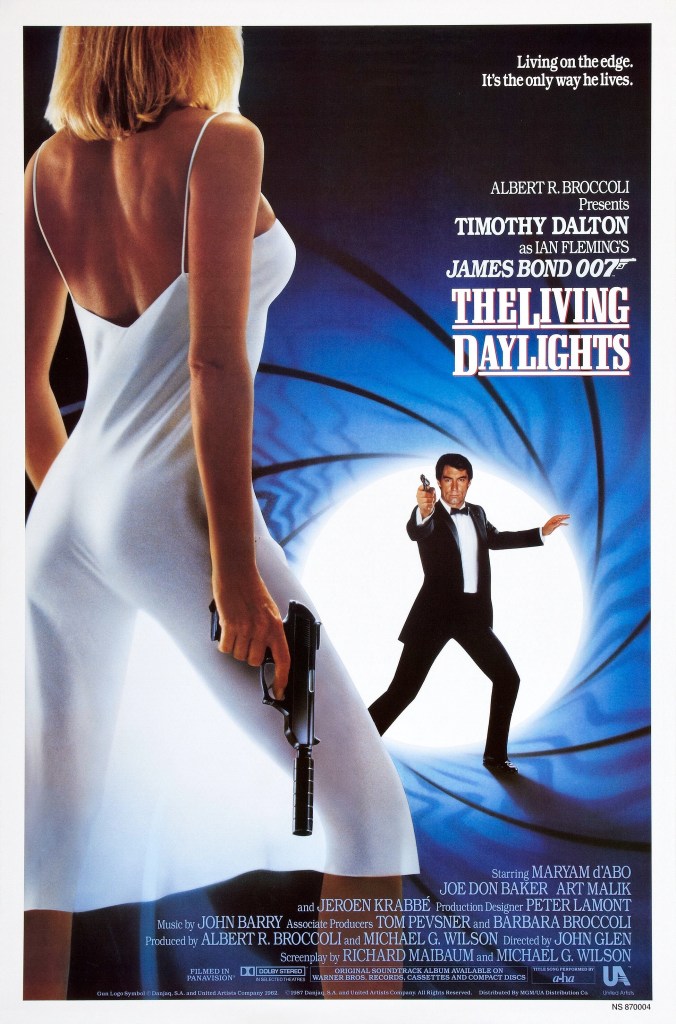
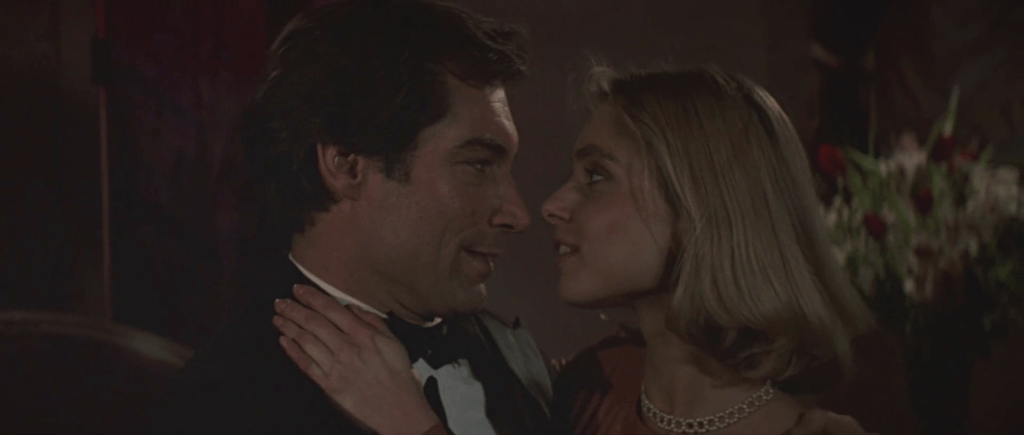
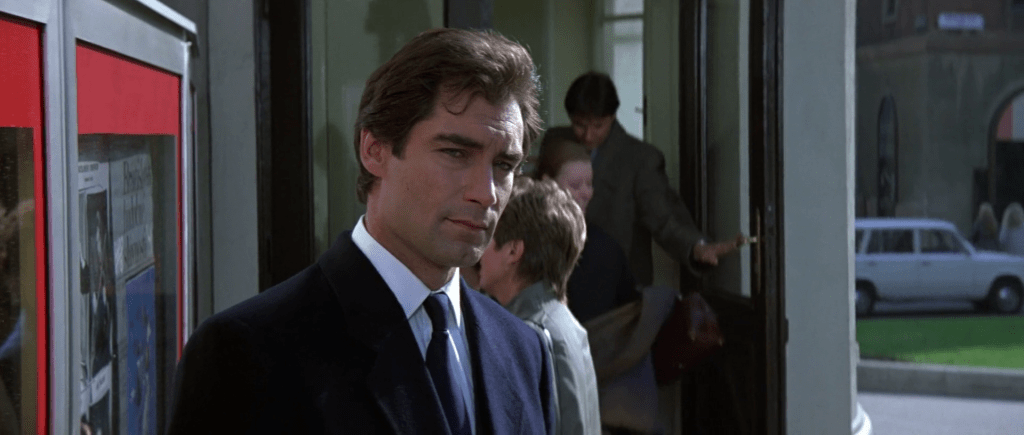
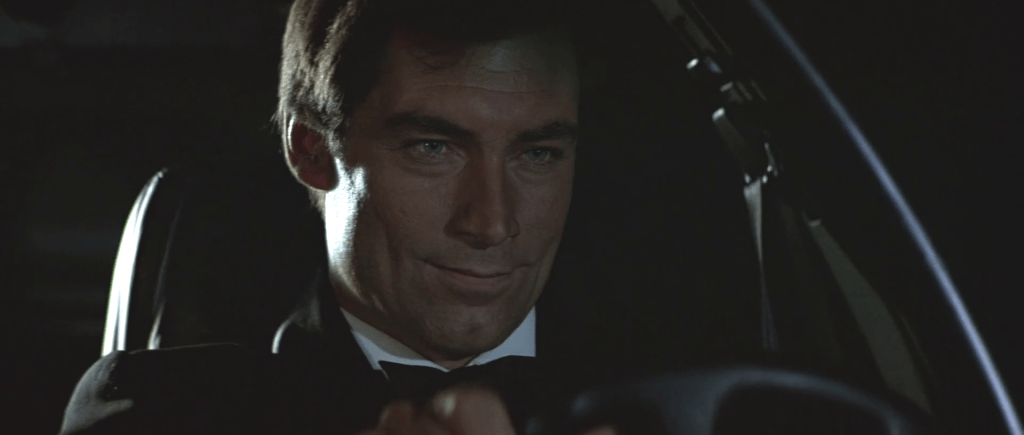
‘The Living Daylights’ – An underrated Bond film.

Following Roger Moore’s final appearance as James Bond in 1985’s ‘A View To A Kill’, the search was on to find the next actor to play agent 007. After an extensive auditioning process, Eon Productions decided on Pierce Brosnan, but he was unable to take the role due to a contractual situation with the television show ‘Remington Steele’ and NBC.

With the producers back to square one, they turned to Timothy Dalton; an actor who had been on their radar since the 1970’s. Eventually they would get their man, and a new incarnation of James Bond was ready to grace our screens.

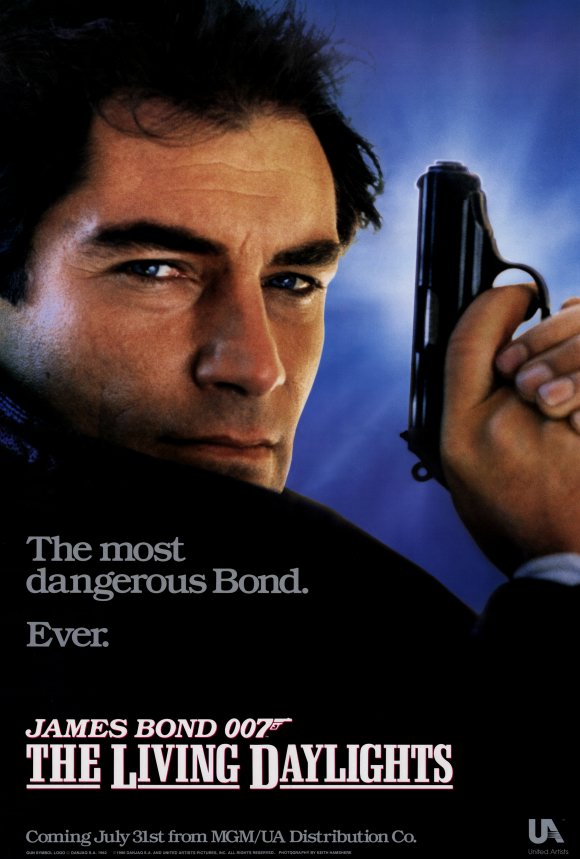
The promotional material for ‘The Living Daylights’ suggested that the Bond franchise was heading into darker territory, moving away from the lighter tones of the Roger Moore era. I particularly like the phrase “The most dangerous Bond. Ever.” and Dalton’s expression on the poster was certainly encouraging for Bond fans hoping for a more serious turn.

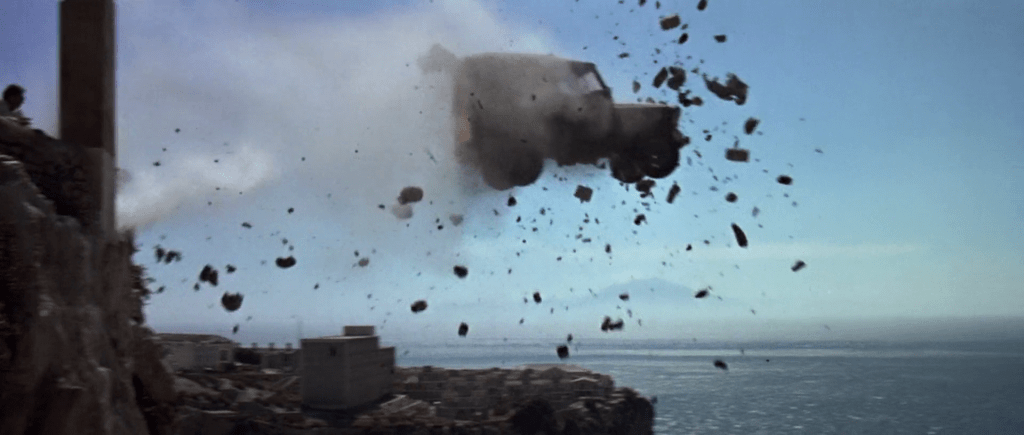
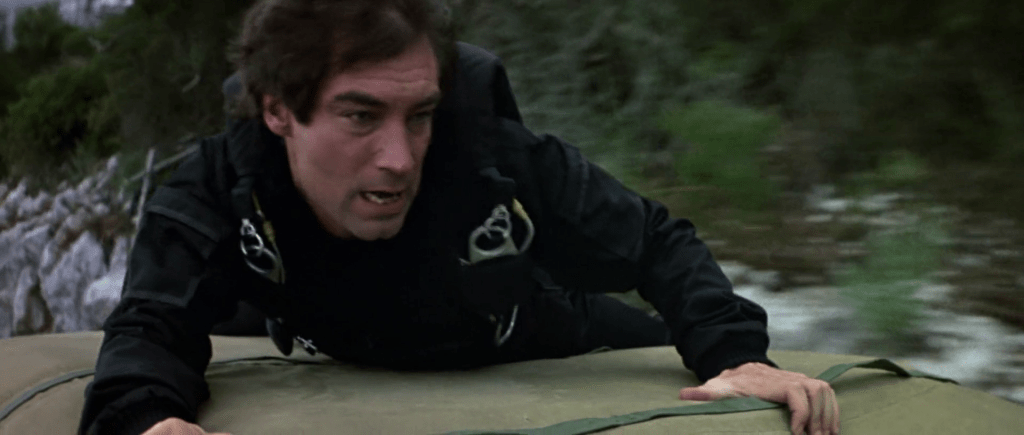
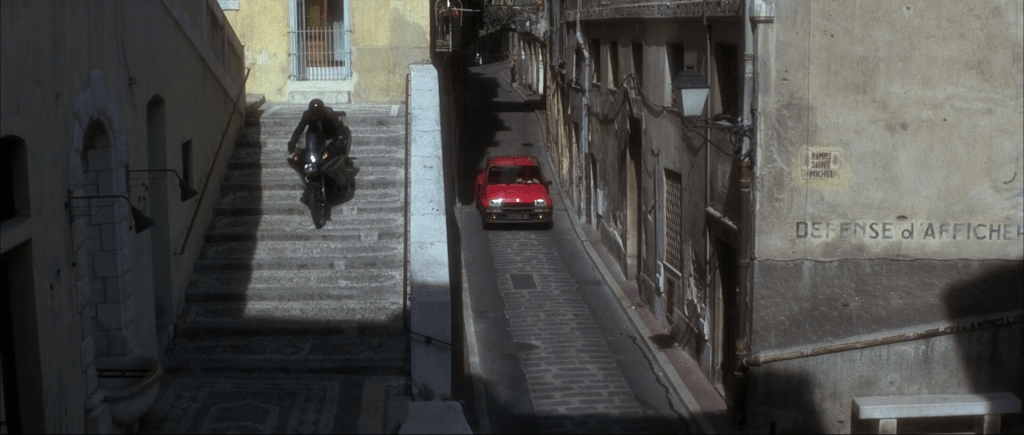
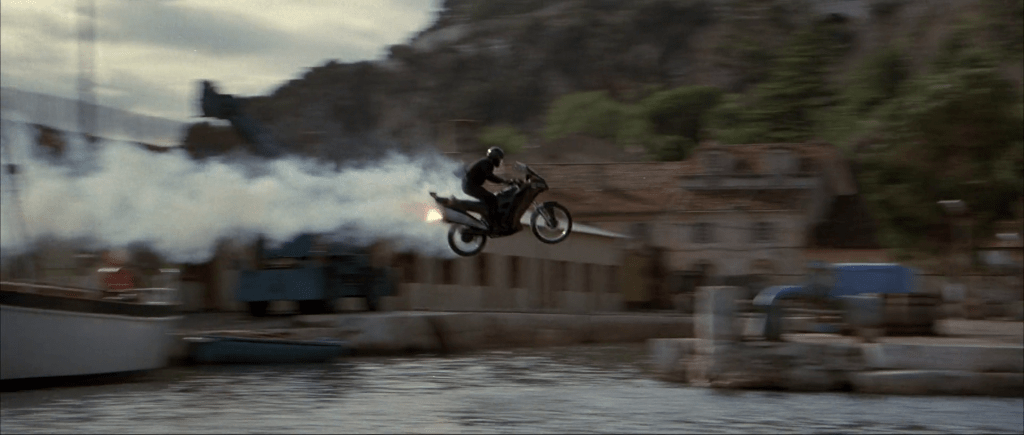
‘The Living Daylights’ starts off with an explosive chase scene in Gibraltar, confirming Dalton’s standing as a great action man and proving that he was up to the task. It was an impressive sequence that set the plot of the movie up nicely, whilst keeping a fast pace and delivering plenty of thrills.

The film’s story revolves around the defection of KGB superior Giorgi Koskov, who makes contact with British Intelligence and personally requests James Bond to oversee his extraction from Bratislava to London.

It all sounds like a lifetime ago, when the Iron Curtain and Eastern Bloc countries were still around (in that form), but this part of the movie is quite entertaining – as well as nostalgic – and the method used to help Koskov escape to the West is most ingenious.

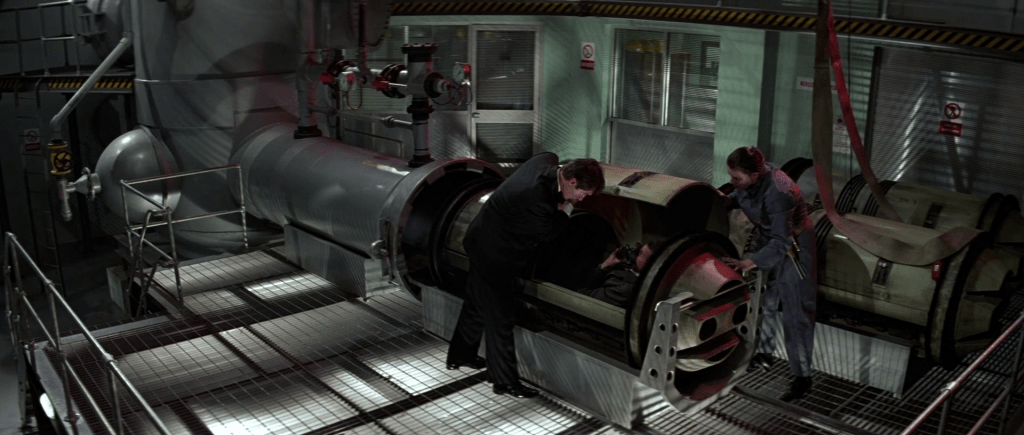
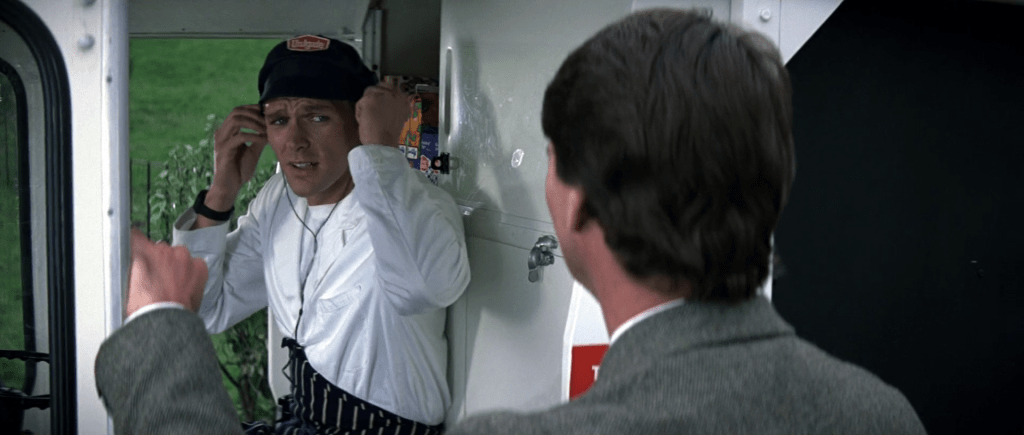
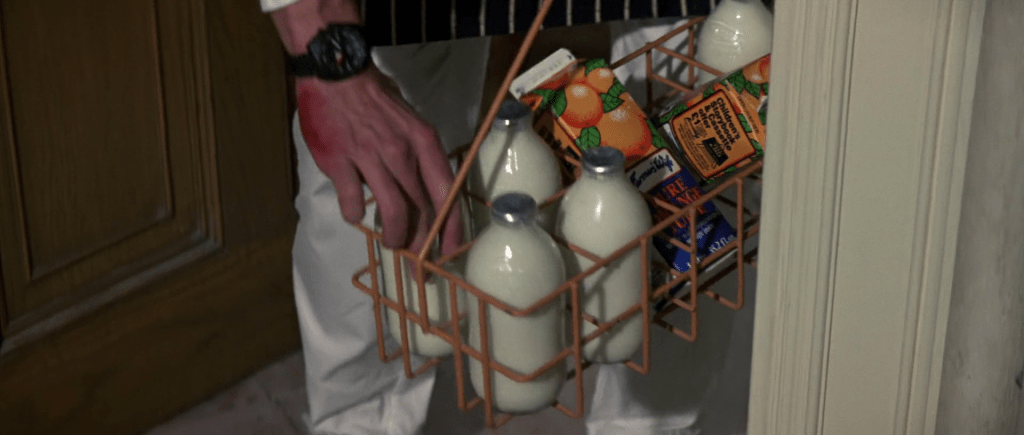
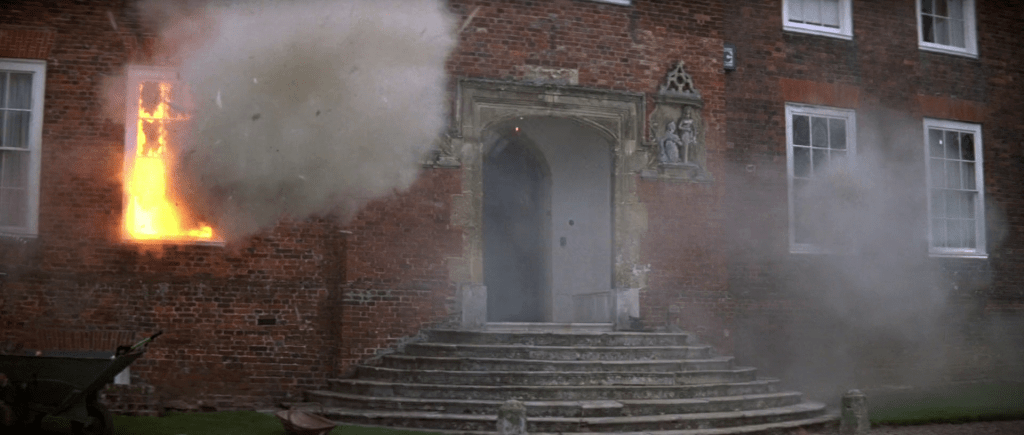
Of course, things never go so easily in the world of espionage, and before the British have a chance to find out everything Koskov knows, he is snatched back by a KGB agent posing as a milkman – and armed with explosive milk bottles!

At this point we are thirty-five minutes in, and so far so good. However, from here onward the pace of the film does slow a little, but the steely performance of Dalton and well-executed action scenes are more than enough to propel things along.

From Czechoslovakia to Vienna and then onto Afghanistan (and also Tangier) for the third and final act, the movie progresses neatly within an ideal running time of just over two hours.

Timothy Dalton is supported by a decent cast in this film with Dutch actor Jeroen Krabbe as Koskov, John Rhys-Davies as General Pushkin, Joe Don Baker as arms dealer Brad Whittaker and Maryam D’Abo as Kara Milovy.
The movie’s soundtrack is also impressive, and would be the final Bond film for composer John Barry. The main theme by Norwegian band a-ha has a great eighties beat, and there are two songs performed by The Pretenders – one of which is the haunting and moody ‘If There Was A Man’, that is played during the end credits.

‘The Living Daylights’ opened to reasonable reviews in June 1987, and did very well at the box office – earning $190 million from a $40 million budget – and easily eclipsing the takings from the previous Bond film ‘A View to a Kill’ released two years earlier.

I always found this to be a gritty and mature entry into the Bond series, but the seriousness of Dalton’s performance did take a little adjusting to – especially after more than a decade of Roger Moore’s humour and tongue-in-cheek antics.

My only criticism of the film is that the plot does become a little complex and the main villains come across as lightweight, even comical at times. That being said, the plans of these bad guys are a lot more grounded and realistic compared to previous Bond foes who usually wanted to take over the entire world.

This is one of my favourite Bond films, and I have grown to appreciate it even more over the years. I think what has helped raise this movie’s wider appeal – as well as cast Dalton’s portrayal of Bond in a new light – would be the success of Daniel Craig and his similar approach to the role in recent years.

Dalton would play James Bond one more time – in 1989’s ‘Licence To Kill’ – and I will share my thoughts on that film at a later date.

A link to the theatrical trailer for ‘The Living Daylights’ is below, courtesy of Rotten Tomatoes Classic Trailers YouTube Channel.

Screenshots and photos courtesy of United Artists and Eon Productions.

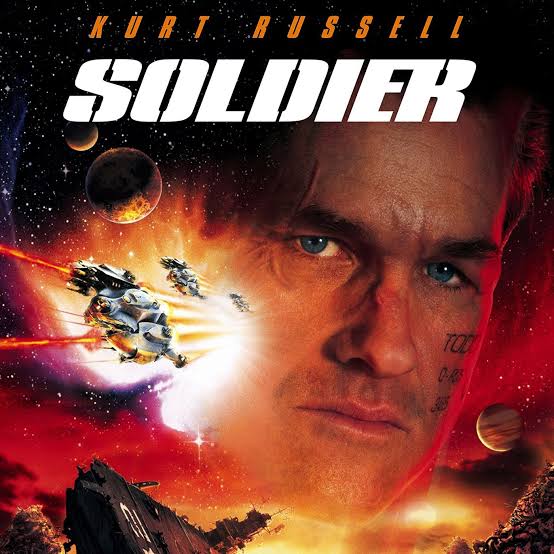
‘Soldier’ – The 1998 Kurt Russell cult-classic.

I will put this out there right away; this film was panned by critics and seriously bombed at the box office when it was released in 1998.

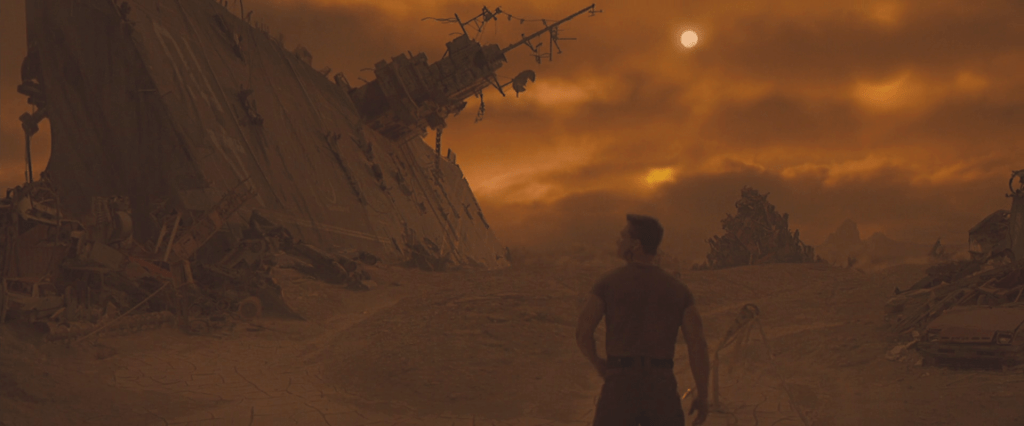
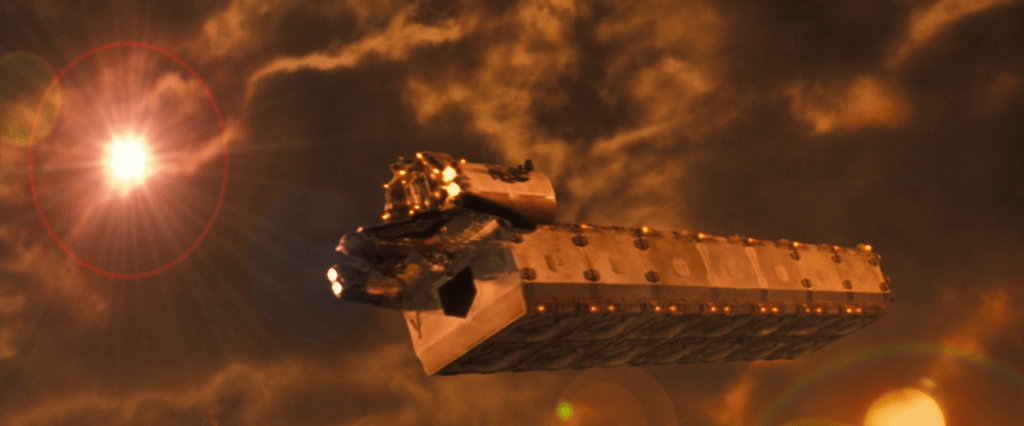
Directed by Paul W.S. Anderson (Mortal Kombat, Event Horizon, Resident Evil), the movie is based around the genetically modified – but ageing – futuristic soldier Sgt Todd 3465 (played by Russell) who is literally dumped like unwanted garbage onto a distant planet inhabited by scavengers and refugees.

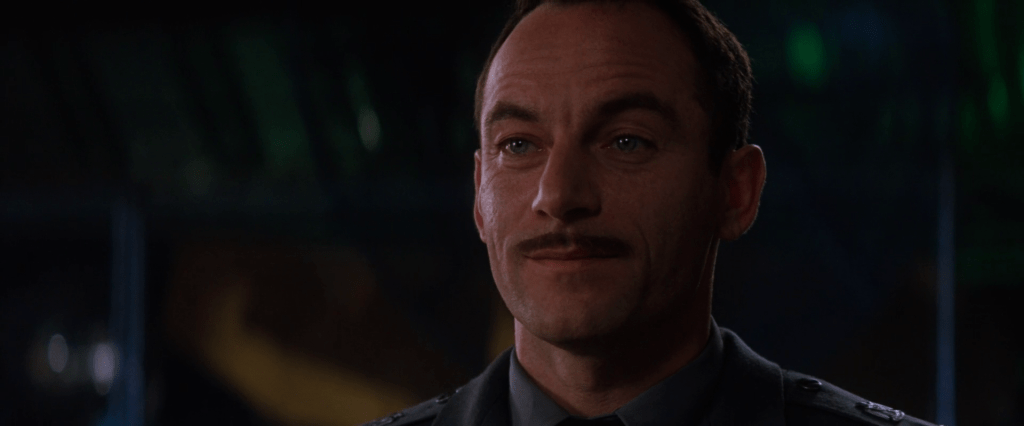
I thought the film was okay when I first watched it around twenty-five years ago. The cast was pretty good – with Gary Busey and Jason Isaacs starring alongside Russell – and the special effects and battle scenes were more-than-passable.

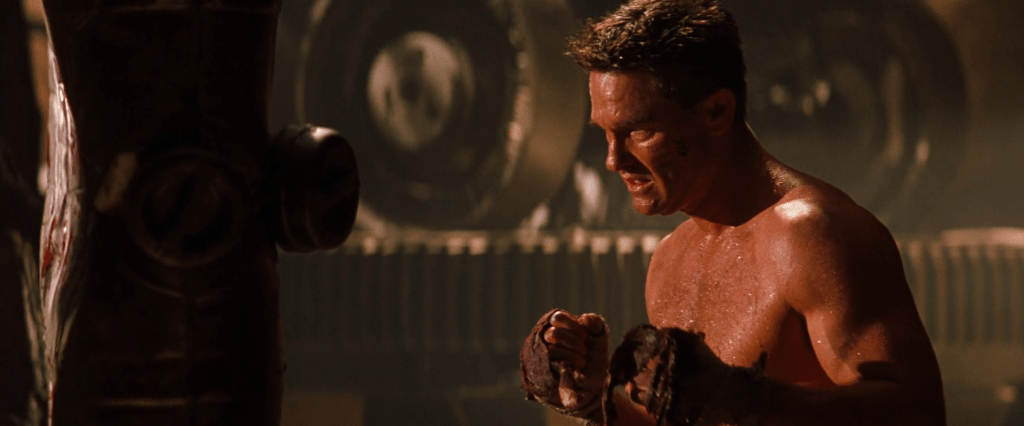
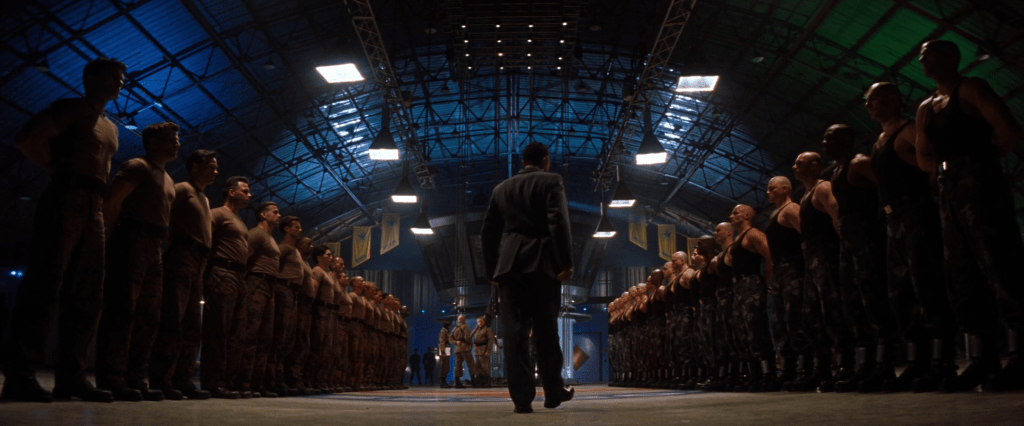
Kurt Russell was in amazing shape for this film, as the requirements of his character dictated. Over his career, he would have been in decent condition for some of his roles – Snake Plissken in ‘Escape From New York’ springs to mind – but his physique in this movie is on another level. Check out the screenshots below.

But perhaps what is most intriguing about ‘Soldier’ are the references to ‘Blade Runner’, posing the question: – Are these two films set in the same cinematic universe?

I know this discussion is old hat for science-fiction aficionados, but I shall continue to present some evidence for those unaware of the possible connection.

The first thing I will point out is that David Peoples – the writer of ‘Soldier’ – also co-wrote the screenplay for ‘Blade Runner’. With that in mind, let’s move on to the film itself and see where the crossovers take place.

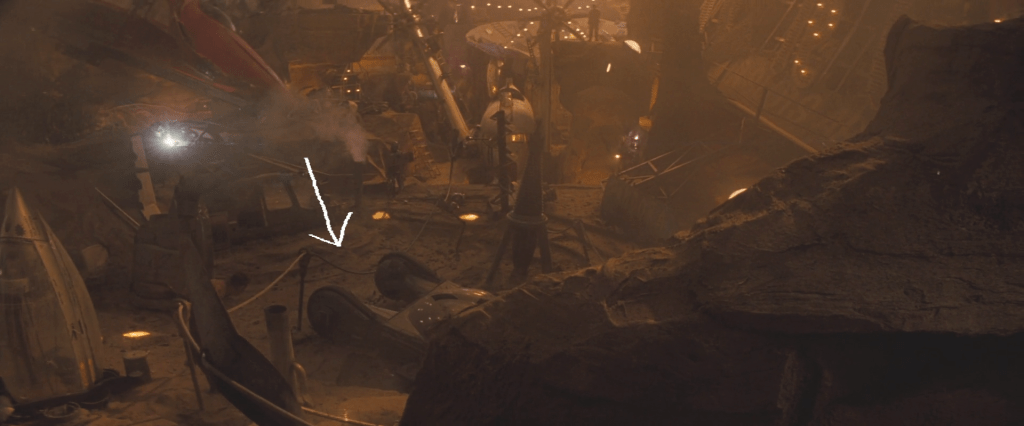
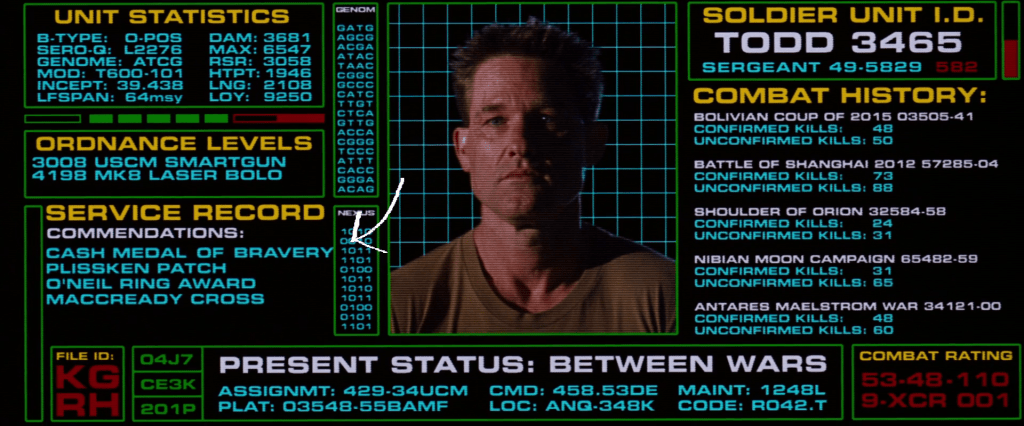
If you follow the arrows in the above capture you will note ‘Nexus’, ‘Tannhauser Gate’ and ‘Shoulder of Orion’ – and for most sci-fi fans, there is no explanation required here.

But for those unaware; the term ‘Nexus’ is used in ‘Blade Runner’ to categorise a series of replicants and the two places named are mentioned in Roy Batty’s famous monologue at the end of the film – which is one of the greatest passages in cinema history.

In this screenshot, you can see what looks like a ‘spinner’ from ‘Blade Runner’ among the rest of the garbage on the planet Arcadia 234.

There is also a conversation that takes place between the two settlers Mace and Sandra (played by Sean Pertwee and Connie Nielsen) who shelter Sgt Todd in their home. Once again, ‘Tannhauser Gate’ is mentioned.

However, if you once again look at Todd’s military record and focus on where the arrow is, you will see four references to characters Kurt Russell has played in other movies. In my opinion, this comedic touch all but removes any seriousness with the connections to ‘Blade Runner’.

For the record, and for those who aren’t movie buffs, I will explain exactly where these tongue-in-cheek commendation names originated from: – Russell played Gabriel Cash in ‘Tango and Cash’, Snake Plissken in ‘Escape from New York’ and ‘Escape from LA’, Jack O’Neil in ‘Stargate’, and R. J MacReady in ‘The Thing’ (but spelled incorrectly in the screenshot).

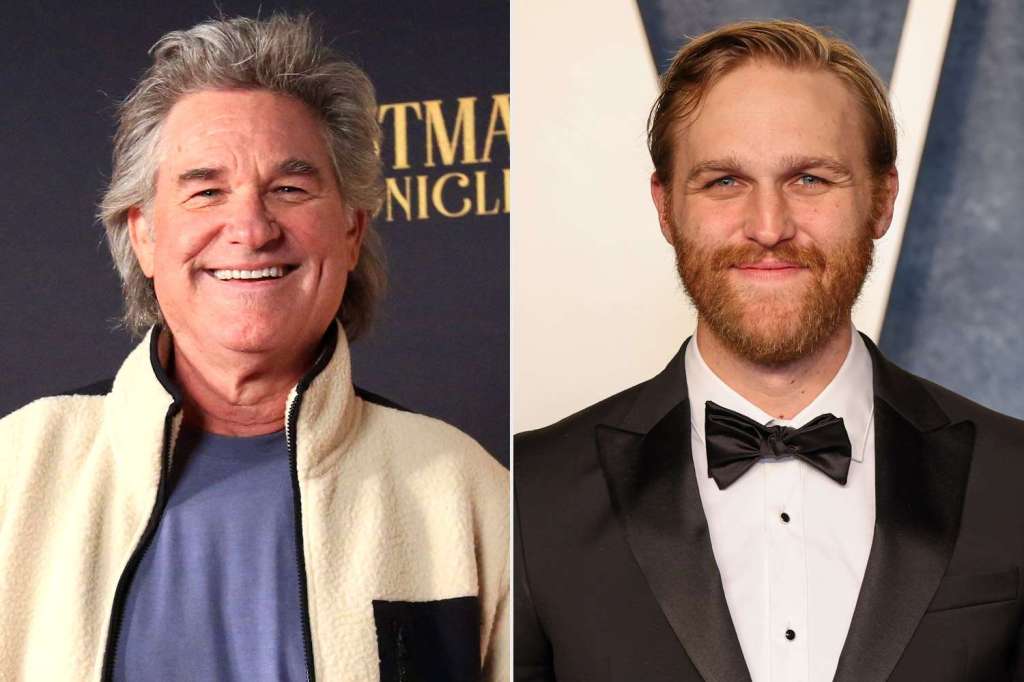
In one last piece of trivia regarding ‘Soldier’ – Kurt Russell’s son Wyatt played the twelve-year-old version of Todd 3465 in the movie.

My understanding is that ‘Soldier’ has become a little more appreciated over the years, which is good to know as it is a fairly solid sci-fi flick – and definitely worth watching.

It’s good value just for Kurt Russell alone, but looking back I have to say that this movie has more of a ‘Pitch Black’ or ‘Riddick’ vibe to it – and not so much ‘Blade Runner’.

As far as the action sequences are concerned, the combat scenes, firefights and explosions are right up there – a lot better than what we see today and less reliant on CGI effects.

I would have given this film a solid pass mark when it first came out, but now I’ve upped the score to a 3.5 out of 5.

See the official trailer below, courtesy of Rotten Tomatoes Classic Trailers YouTube Channel.

Screenshots and photos courtesy of Morgan Creek Productions and People.com

‘Never Say Never Again’ – The unofficial Bond film.

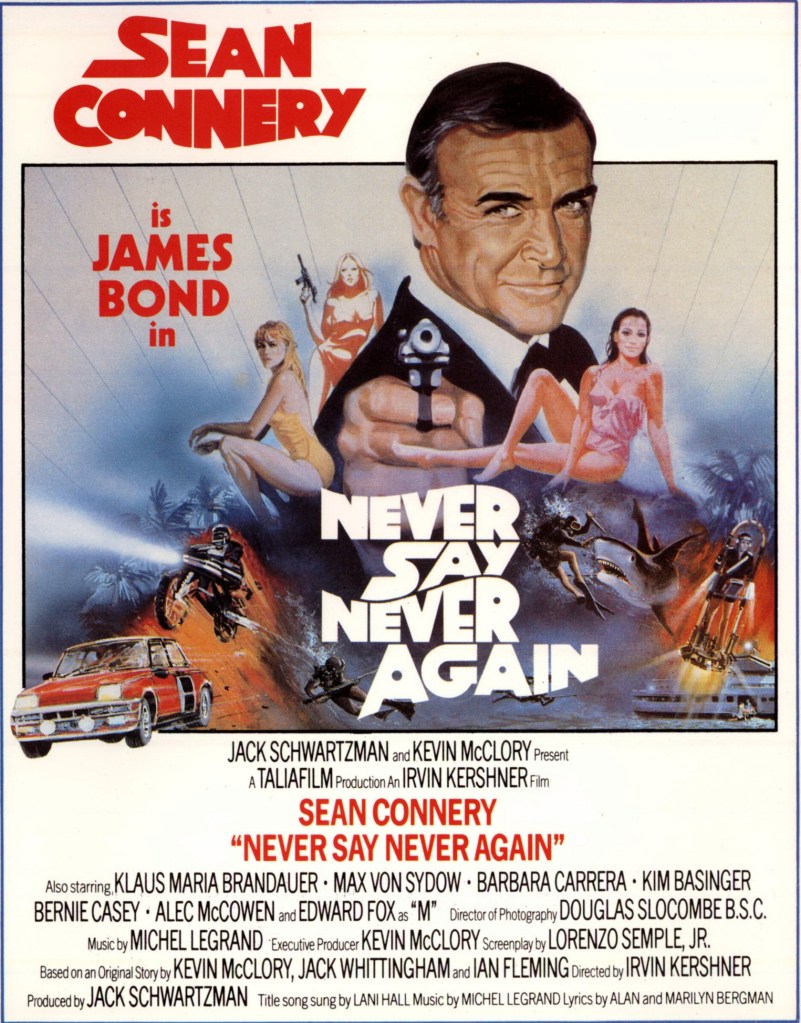
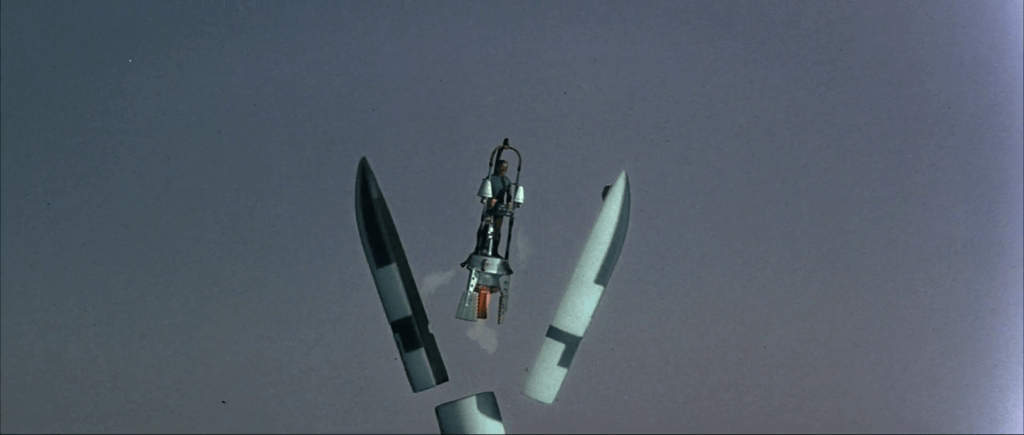
If you combine an ageing Sean Connery coaxed into returning one last time as agent 007, with the director of ‘The Empire Strikes Back’ and a legal loophole over the rights to the Ian Fleming novel ‘Thunderball’ – we end up with the 1983 James Bond movie ‘Never Say Never Again’.

It was an interesting time, as on the ‘official’ side of things Roger Moore had pretty much hung up his boots and American actor James Brolin was set to star in the next Bond film ‘Octopussy’. However, the folks at Eon Productions reacted nervously to Connery’s comeback, and sensing some serious competition quickly pushed Brolin aside and convinced the ever-reliable and established Moore to return to the role.

As it turned out, both ‘Octopussy’ and ‘Never Say Never Again’ were released in 1983, with the Roger Moore film coming out four months earlier and narrowly beating its rival at the box office. However, a number of critics at the time gave slightly higher reviews to the Connery flick, but for me both films are about on par.

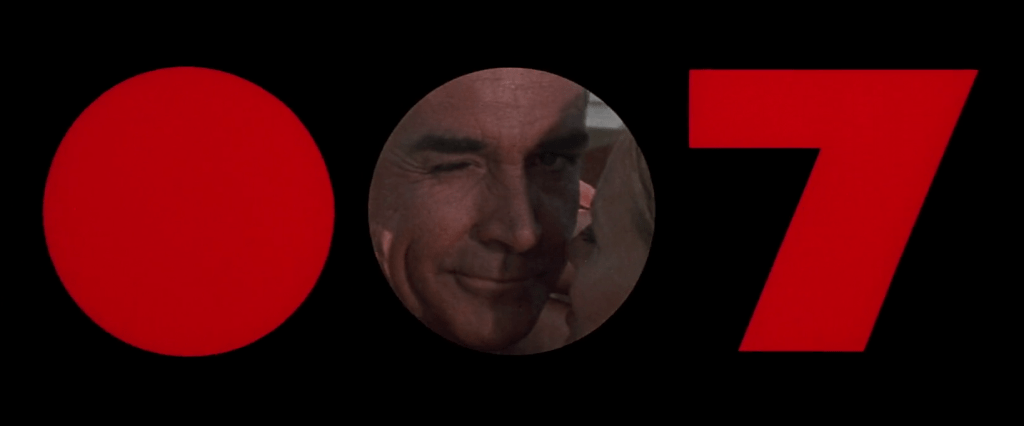
‘Never Say Never Again’ was essentially a remake of the 1965 film ‘Thunderball’, but due to legal reasons could not use the opening gun barrel sequence nor famous guitar theme – however, the producers were allowed to use the number 007 as well as the names of characters created in the original work.

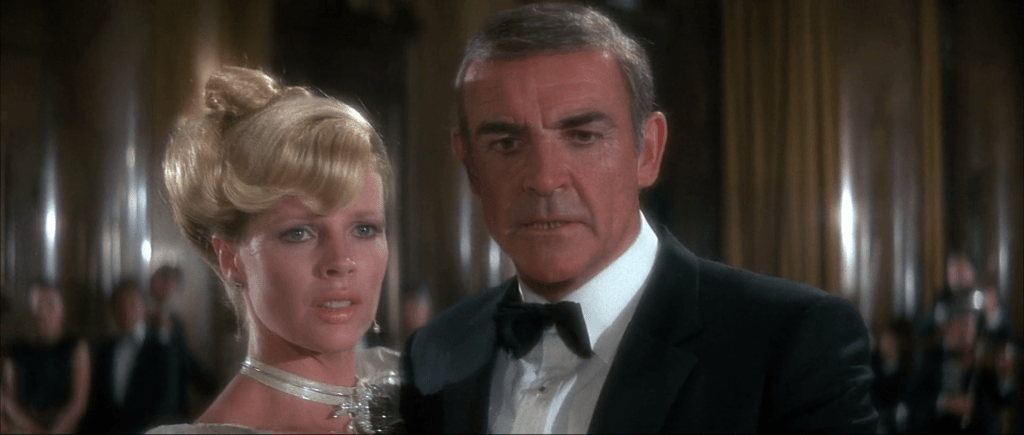
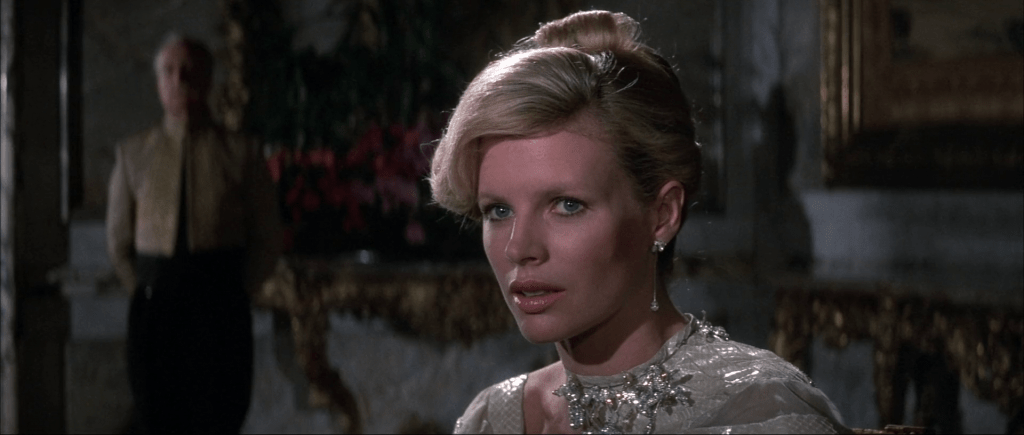
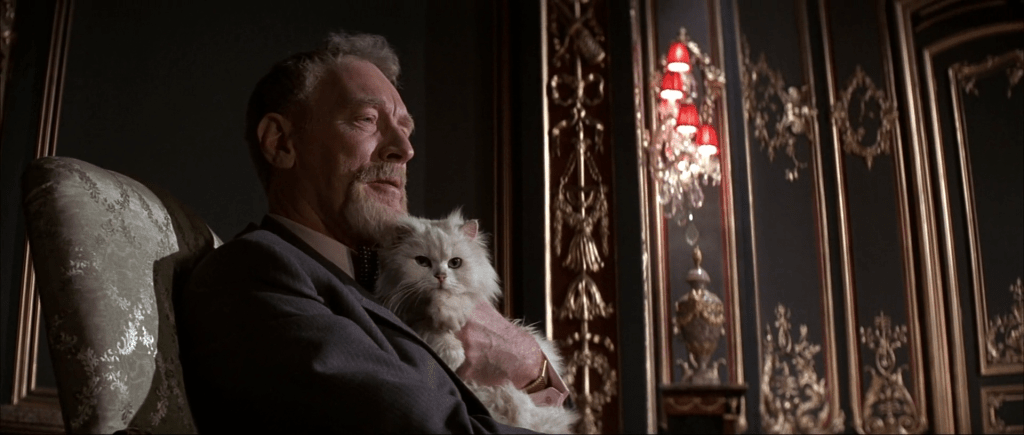
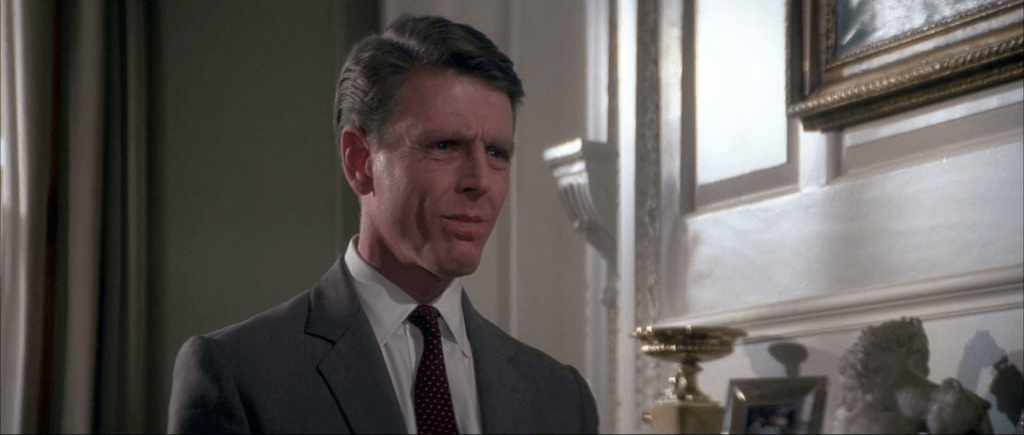
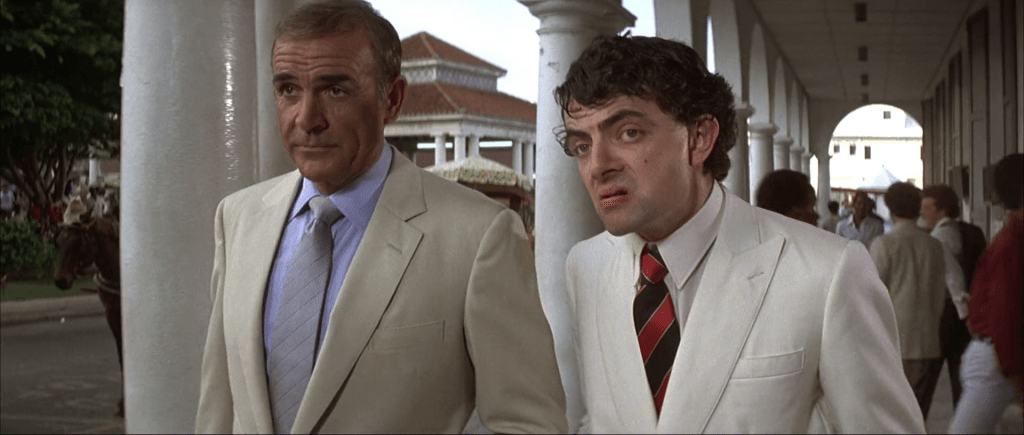
Casting-wise, it beat ‘Octopussy’ hands down – with Kim Basinger, Max Von Sydow, Edward Fox, Barbara Carrera and Rowan Atkinson starring.

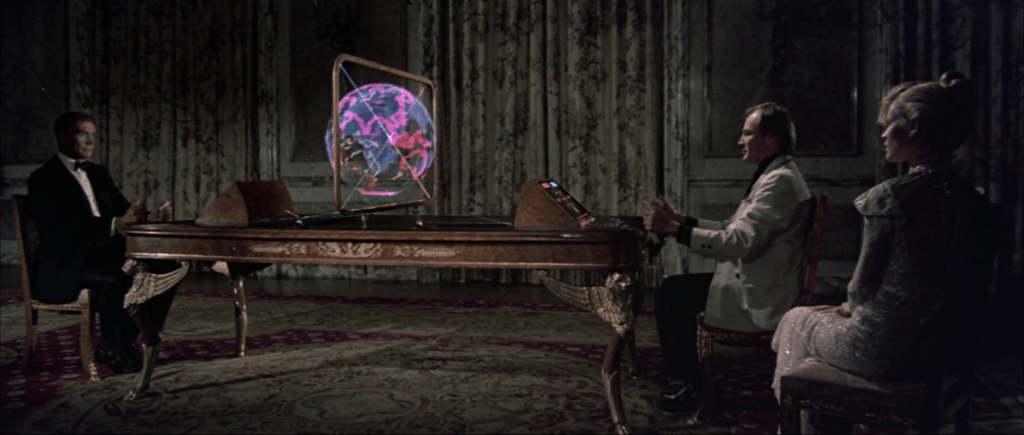
With the master director Irvin Kershner calling the shots, the action scenes were impressive and eye-catching, including a strange video game sequence between Bond and the main villain Largo (played brilliantly by Klaus Maria Brandauer).

Overall, ‘Never Say Never Again’ is a good piece of lightweight entertainment, featuring plenty of thrills and spills – with a mature Connery in decent shape for the role. Incidentally, he was actually three years younger than rival 007 Roger Moore.

I’m not sure if anyone else picked up on this, but I always found the music to ‘Never Say Never Again’ a little odd – even comical at times – although the theme song performed by Lani Hall was certainly Bond-esque, albeit a little high-pitched.

The legal decision that allowed this movie to be made is an interesting story in itself, but one that I won’t go into too much detail here – as it is quite complicated and involves a ten-year statute and exclusive rights to ‘SPECTRE’ and the evil Ernst Stavro Blofeld – which explains their absence in the Roger Moore films, not counting the parody scene in ‘For Your Eyes Only’.

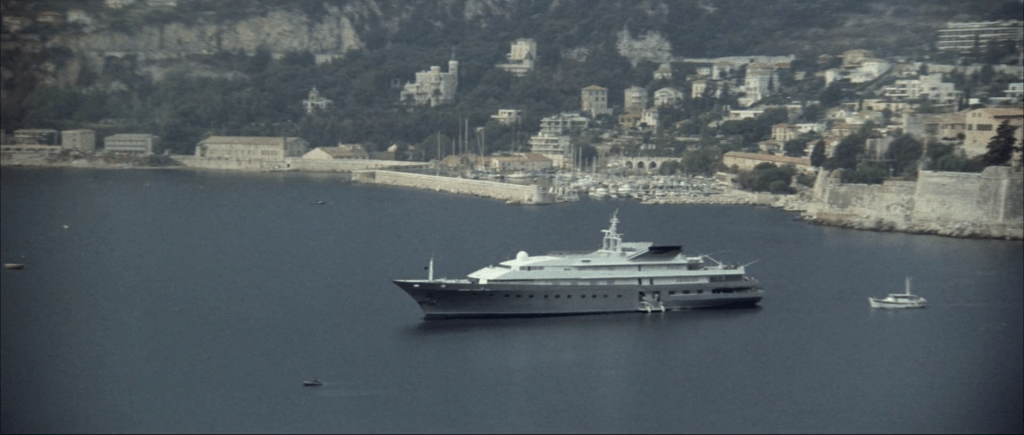
Interestingly, Largo’s yacht – called ‘Flying Saucer’ in the film – was actually the infamous ‘Nabila’ owned by Saudi arms dealer Adnan Khashoggi. The same boat would later be purchased by Donald Trump and renamed ‘Trump Princess’.

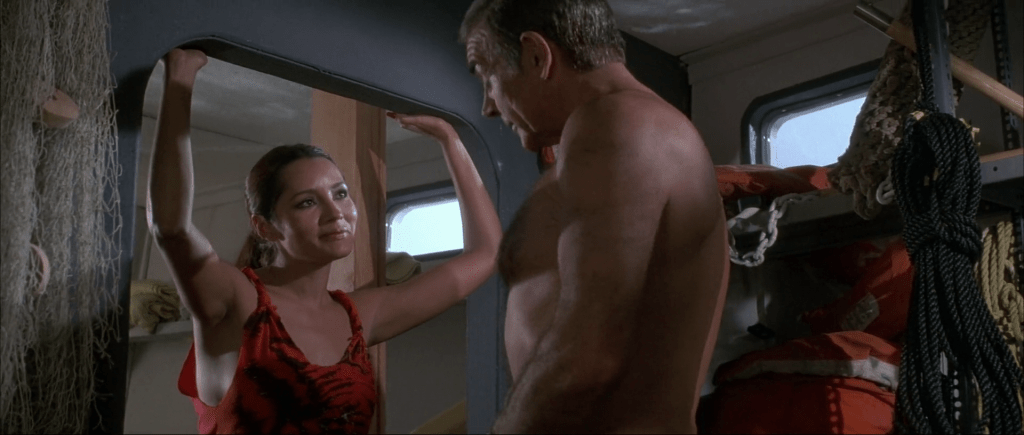
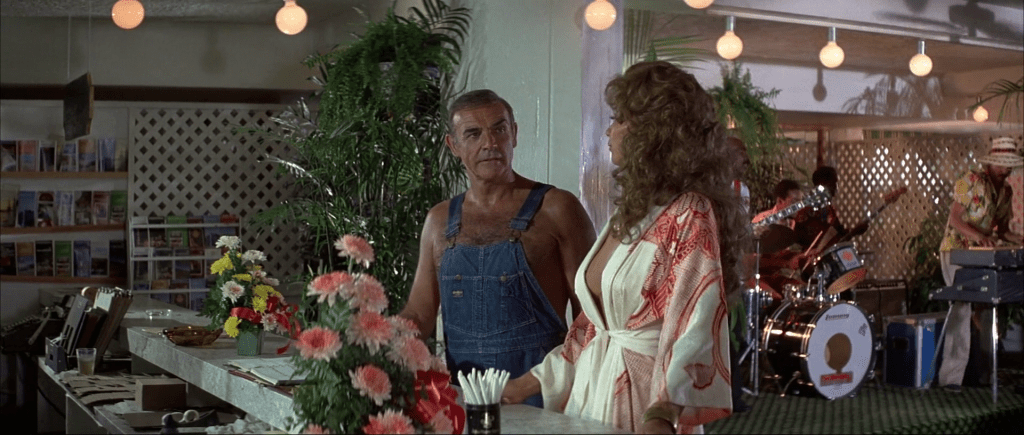
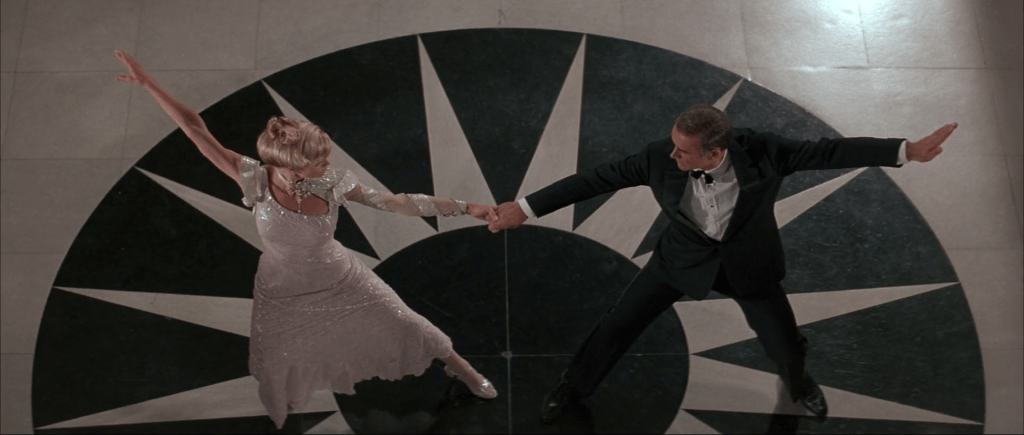
Below is a collection of screenshots from the movie – and yes, 007 is wearing overalls.

This would be the last time Sean Connery played James Bond, whereas Roger Moore – aged 57 at the time – would make his final appearance as 007 in ‘A View to a Kill’ in 1985.

Connery’s film career would go on to reach new heights throughout the late eighties with ‘Highlander’, ‘Indiana Jones and the Last Crusade’ and his Oscar-winning performance in ‘The Untouchables’. He would continue to find success over the next decade with hits such as ‘The Hunt for Red October’, ‘The Rock’ and ‘Entrapment’ – to name but a few.

Screenshots and images courtesy of Warner Bros and Taliafilm.

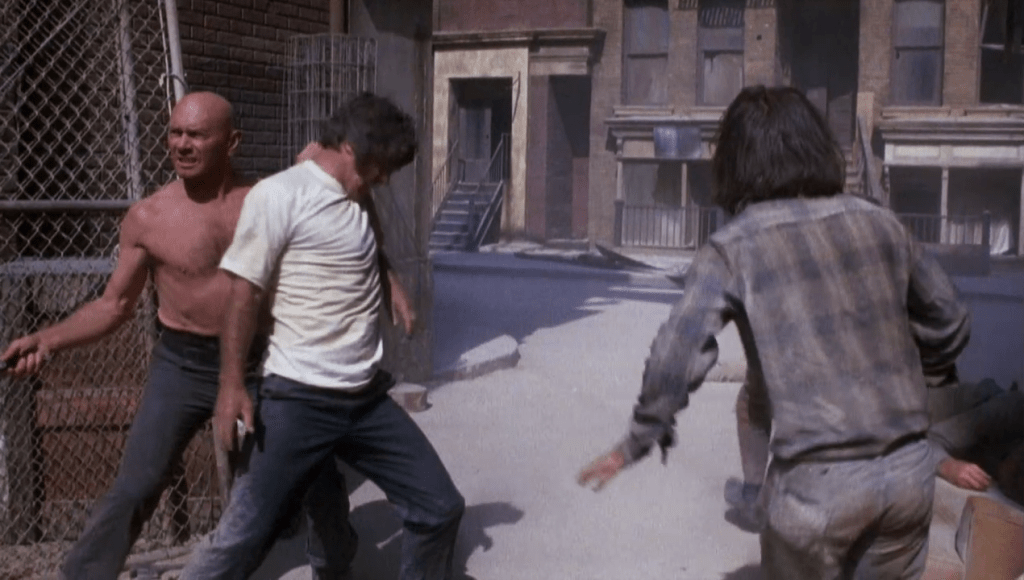
‘The Ultimate Warrior’ – a 1975 post-apocalyptic classic!

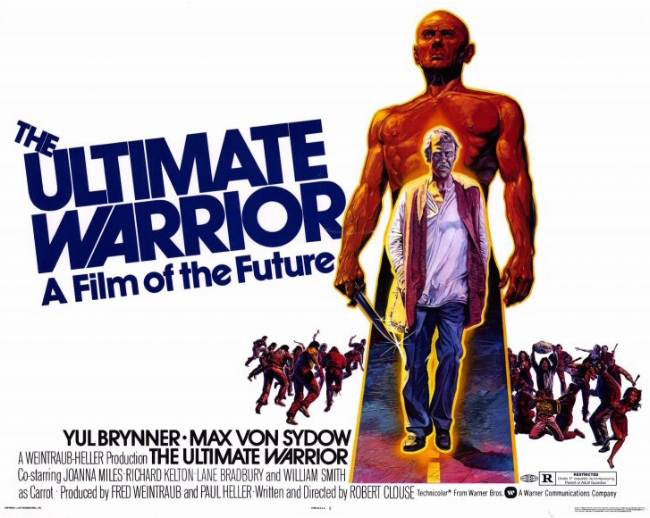
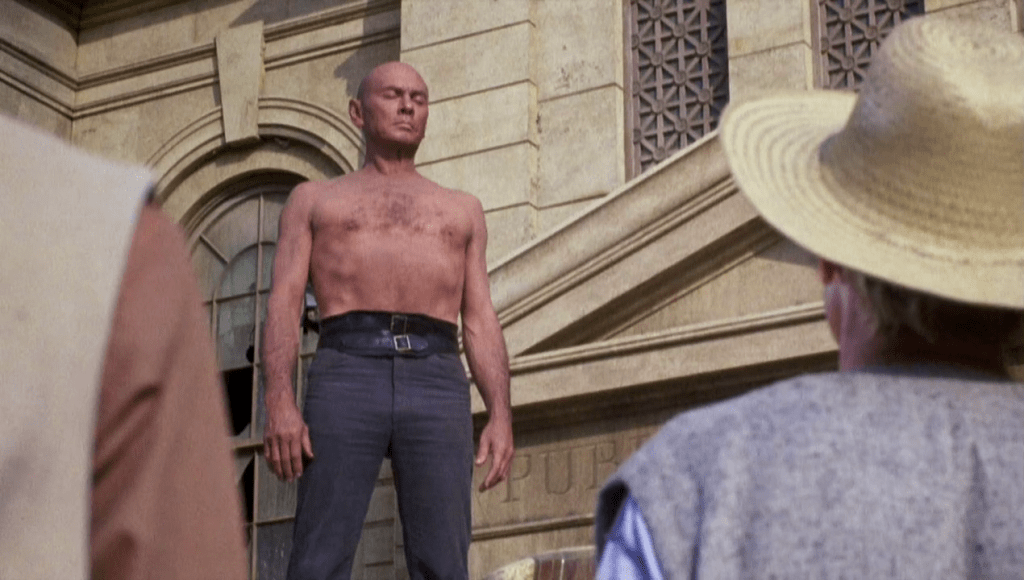
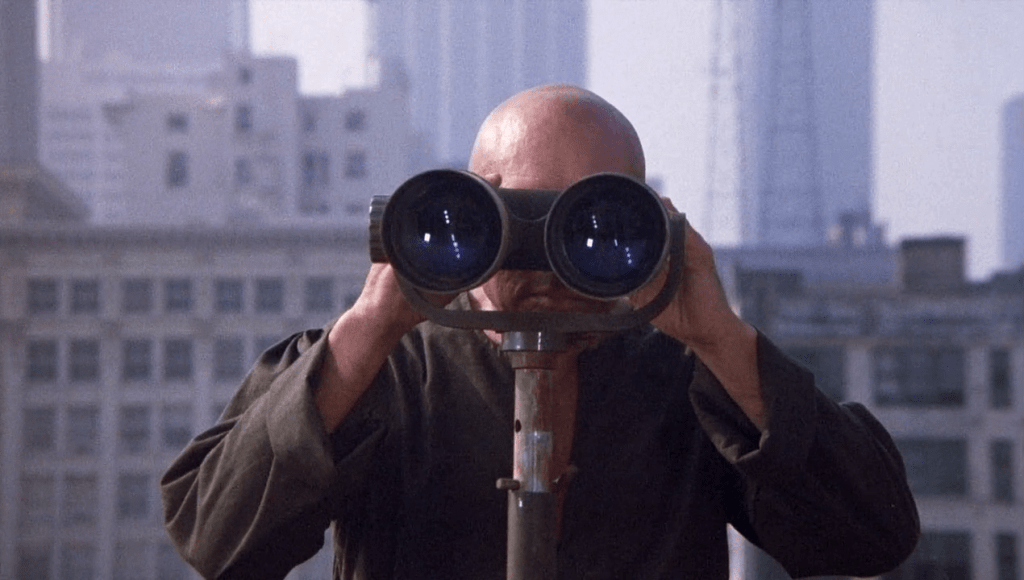
Starring the legendary Yul Brynner and Max Von Sydow, ‘The Ultimate Warrior’ is set in a futuristic New York City after a series of epidemics have decimated the world’s population.

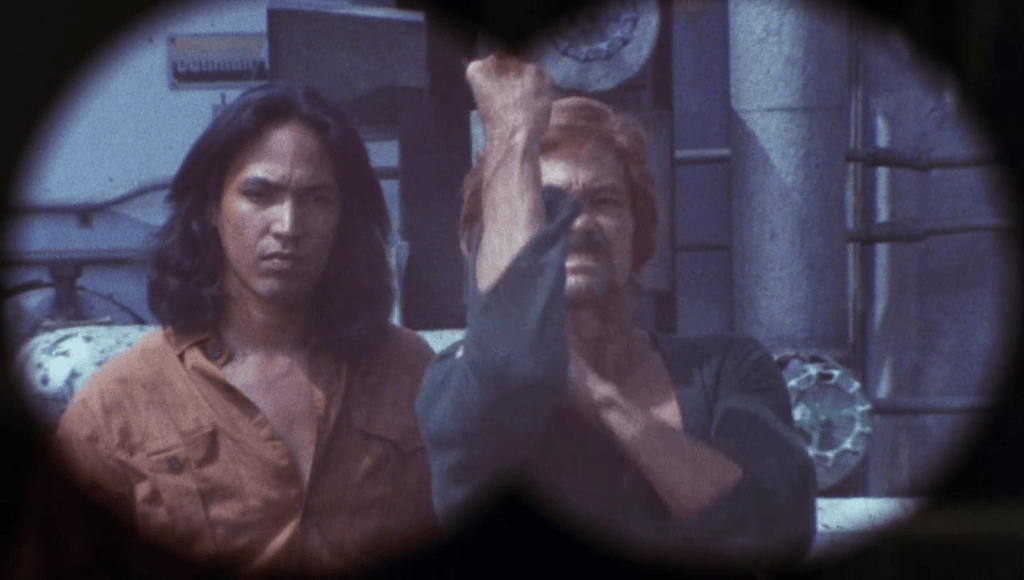
The story revolves around a mysterious warrior named Carson (Brynner) who is offered a place to live inside a safe compound by their leader Baron (Von Sydow) in return for him escorting some of the occupants to a safe haven outside of the city.

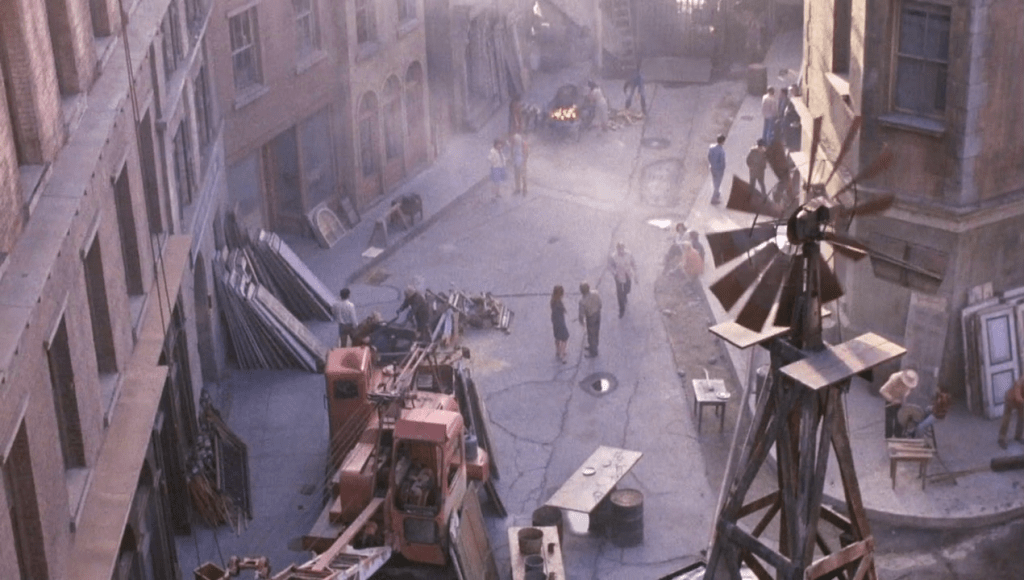
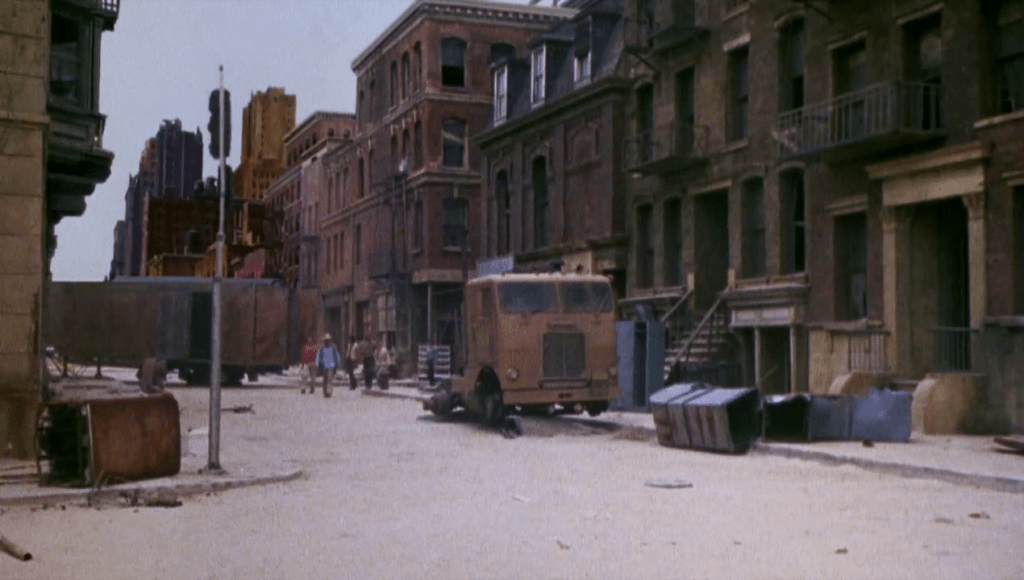
The movie is straight-forward enough and follows the typical plot and formula of other similar films of that era. It’s not one of the better known sci-fi efforts from this decade, but certainly stands up in terms of set design and cinematography.

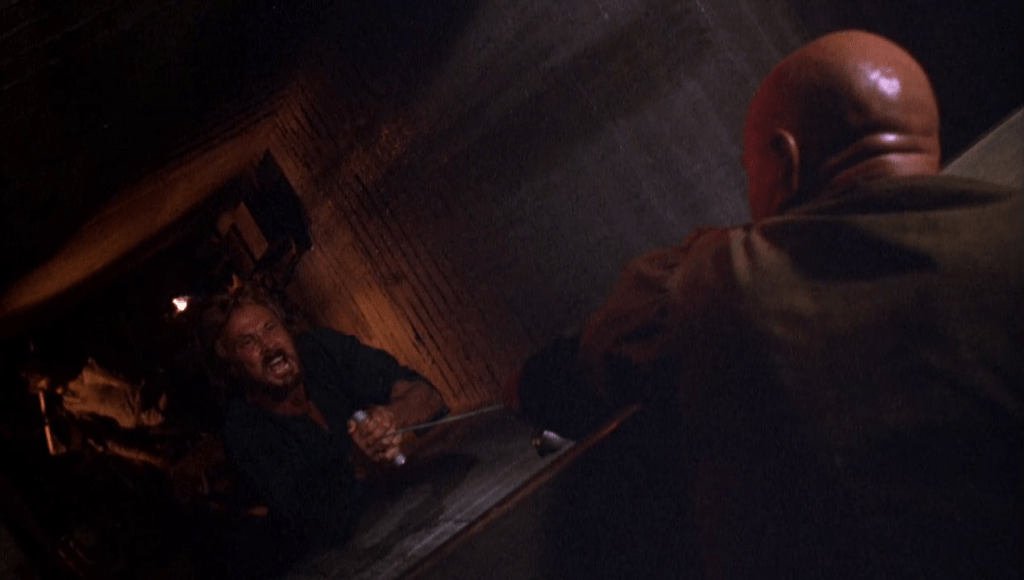
There are lots of action scenes – particularly fighting – as the title suggests, with an ageing Brynner holding his own. I should also point out that the main antagonist in the film, ‘Carrot’ is played by William Smith – the gravelly-voiced bad guy starring in a number of movies and TV shows over the years.

This film may have slipped under the radar of most sci-fi fans, as it would have been overshadowed by some of the more famous movies released during the same period. However, it did make $9 million at the box office from a budget of around $800,000 – which is a pretty good return and perhaps an indication of Brynner’s star power.

If you enjoyed films such as ‘Soylent Green’ and ‘Escape from New York’ – with some knife fighting and red paint splashed about – then ‘The Ultimate Warrior’ is well worth checking out.

Screenshots courtesy of Warner Bros and Columbia Pictures.

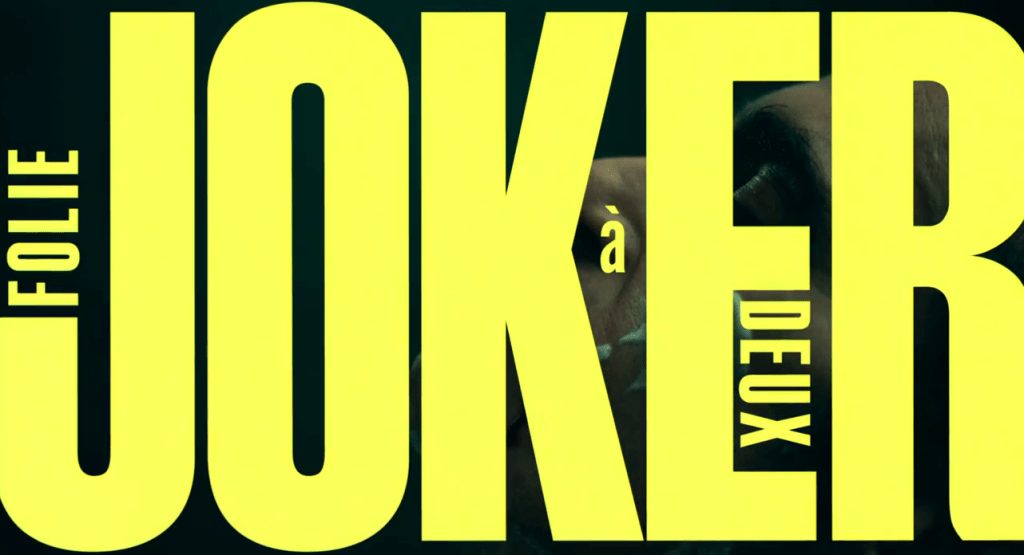
I finally watched ‘Joker: Folie à Deux’

Having heard that this sequel took a sharp turn away from the brilliant 2019 film, I decided to stay away from the cinema and wait until it was available to stream before watching it.

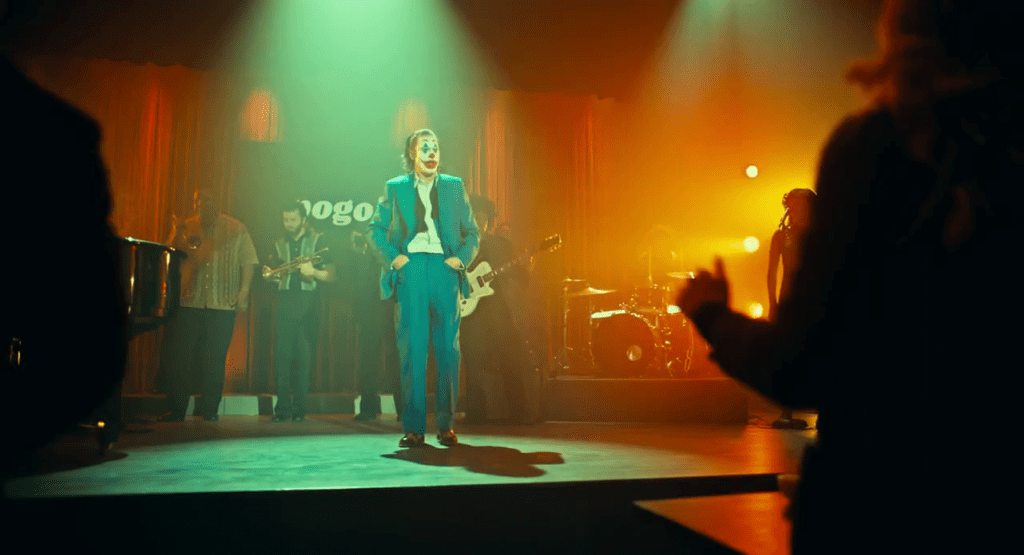
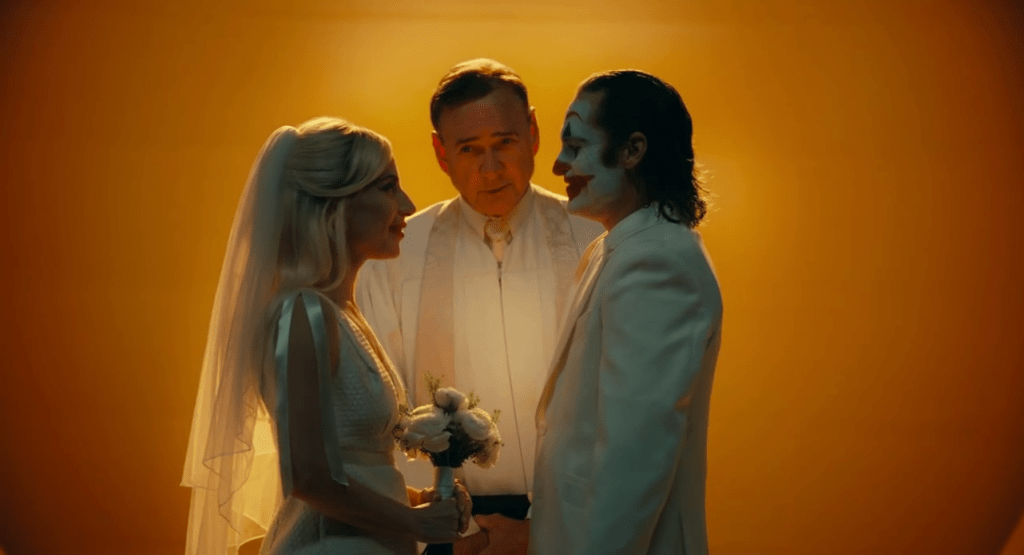
Now that I have seen ‘Joker II’, to say that it deviates from the winning formula of the first film is an understatement. It wasn’t the disaster that some are claiming it to be; the mood and style were still there, the song and dance routines gave the audience a clever insight into the mental state of the main characters, and it was well designed and directed.

However, this is not what the average fan wanted to see.

Without spoiling anything for those who still want to see this movie, all I will say is that for the first twenty minutes it looked like we were in for a film similar to the first one – but then the musical numbers kicked in. Quite simply, there were way too many!

There were good moments in the film that were more in line with the original ‘Joker’, but these were few and far between – with the standout for me being the courtroom scene between Arthur and Gary Puddles – and needless to say, all the performances in the movie were solid.

But the flaws easily outweighed the positives, and I was very disappointed in this movie.

I loved the first film and must have watched it four or five times – in fact, I could put it on right now and be glued to the screen from start to end. Watching the sequel had the opposite effect on me, and I could not digest it all in one sitting – it took me four sessions to complete over a couple of days. This is important to note, as one of the reasons why the first film did so well at the box office was through people returning to the cinema to watch it a second time.

For the record, I gave this film two stars (out of five) on Rotten Tomatoes.

All screenshots courtesy of Warner Bros

‘The Final Programme’ – Mind-bending 1970’s Sci-Fi.

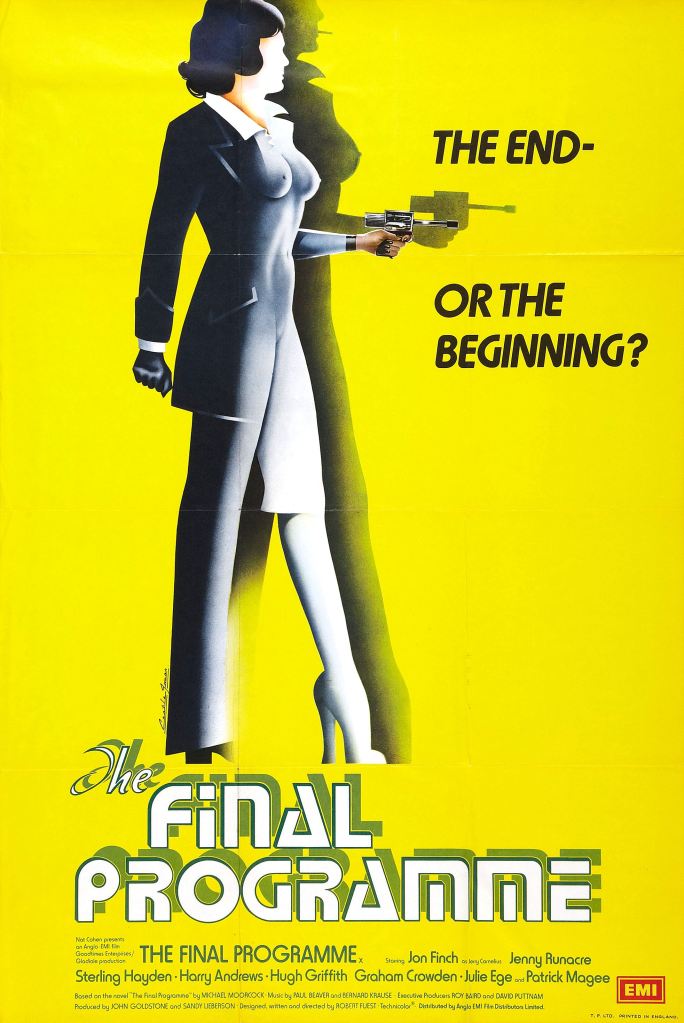
‘The Final Programme’ is a 1973 British science fiction film based on the 1968 novel of the same name by Michael Moorcock. It follows the story of scientist/playboy Jerry Cornelius at a time when the world is about to end, and the race is on to prevent the apocalypse by creating a new Messiah in a laboratory using a super computer.

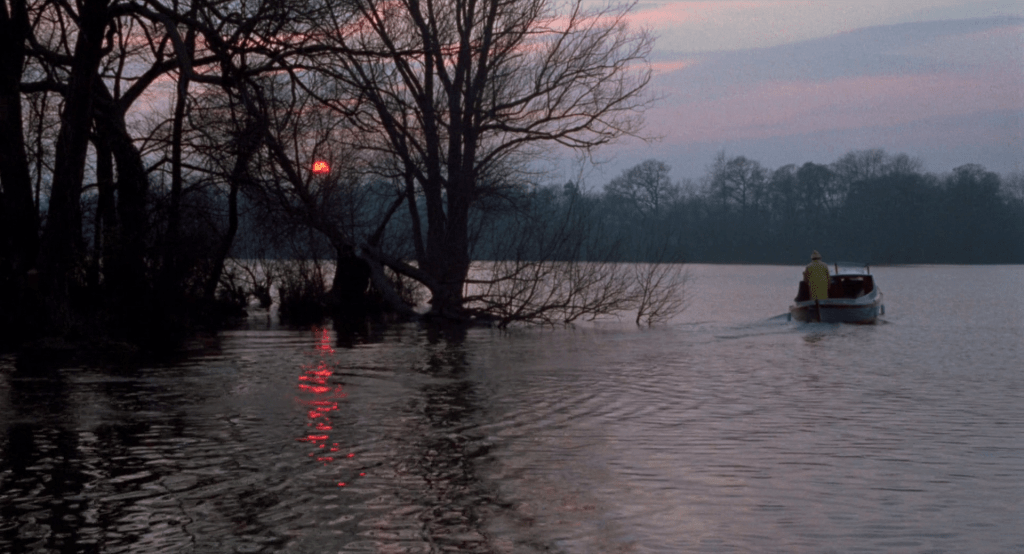
While the movie is crazy and nonsensical at times, the cinematography – location shoots and studio sets – is of a very high quality and the imagery throughout the film is quite unique.

The movie stars Jon Finch as the main character Jerry Cornelius and was directed by Robert Fuest. You may recognise a few other actors in the film such as Sterling Hayden, Sarah Douglas (who would later star as Ursa in ‘Superman II’), Patrick Magee (who portrayed the writer in ‘A Clockwork Orange’) and Derrick O’Connor (who played the South African henchman Pieter Vorstedt in ‘Lethal Weapon II’).

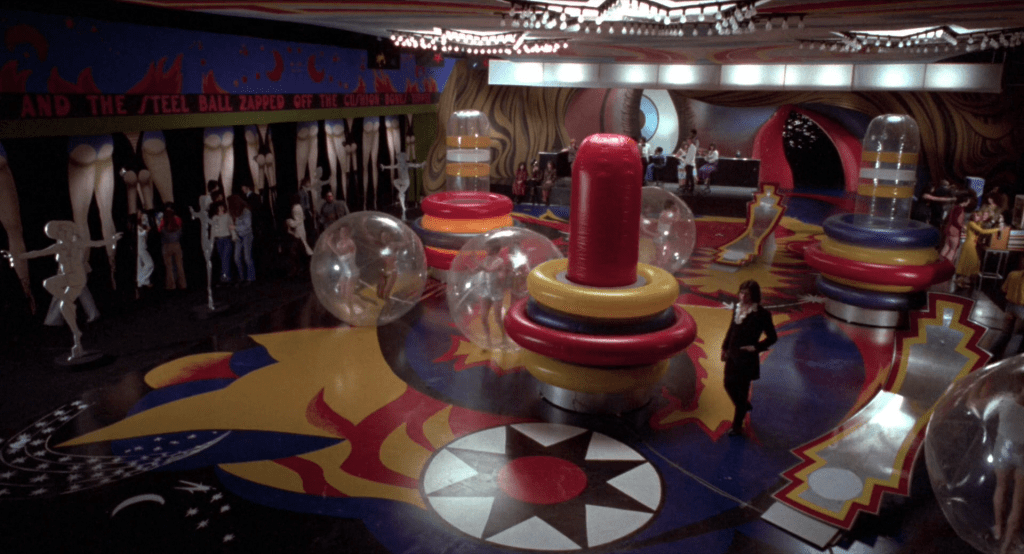
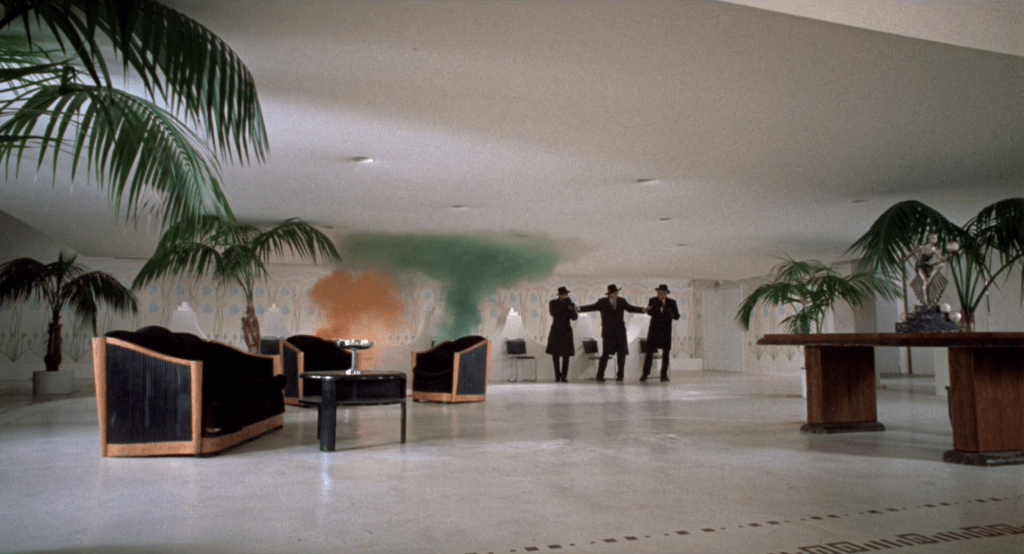
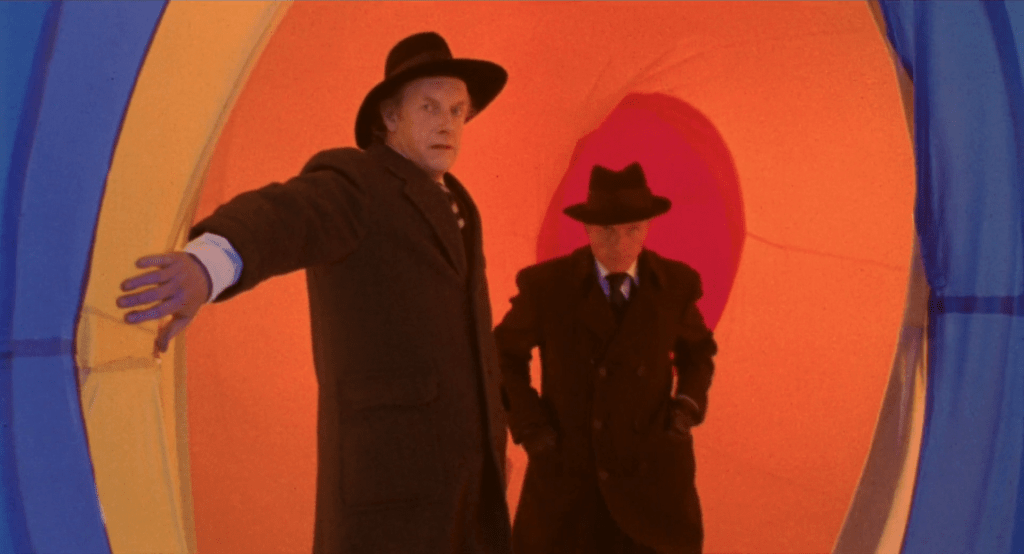
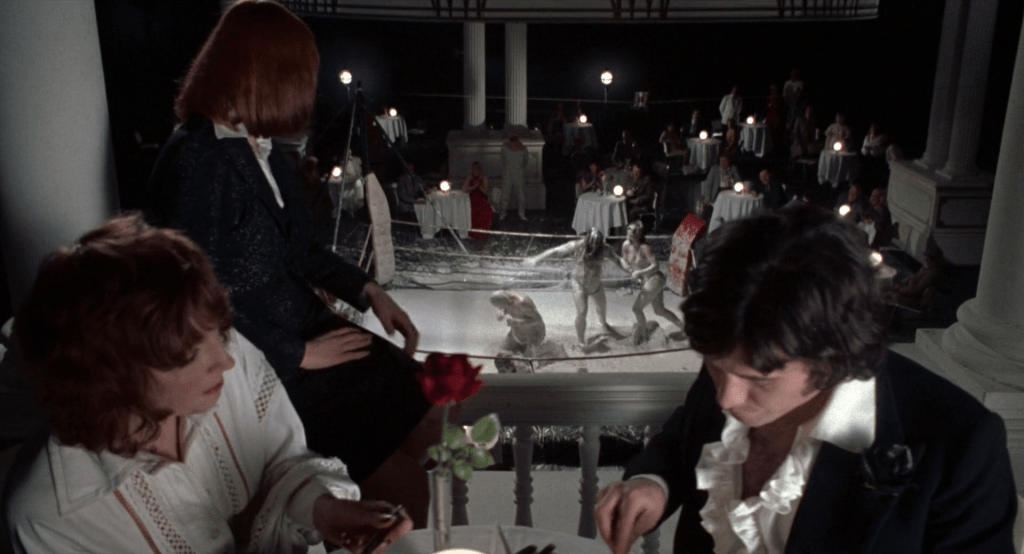
Without spoiling the film, I will simply show a few screenshots highlighting the weird yet impressive locations and camera work. Note the incredible sets for both the bizarre pinball parlour and the snazzy interior of the Cornelius mansion.

The third act of the film takes place in Turkey and then in a secret lab in Lapland. Again, the visuals are outstanding, even if the plot is a little wacky!

This movie is not everyone’s cup of tea, but if you appreciate quirky early seventies British fantasy/science fiction then you will take a lot of enjoyment from this film.

Screenshots courtesy of Goodtimes Enterprises.