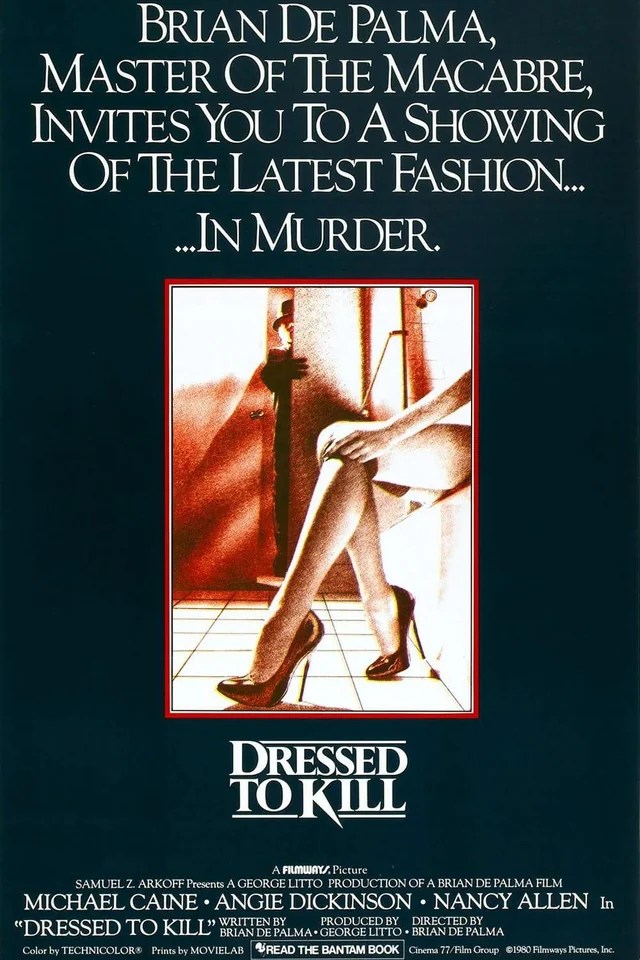
‘Dressed To Kill’ was released in July of 1980, and was a rather risky undertaking for the established writer/director Brian De Palma. The film was originally given an X-rating from the Motion Picture Association upon first reviews due to its gratuitous nudity and violence, which was later downgraded to an R-Rating after a few scenes were edited and/or cut out completely. The response from De Palma and his editors would pay dividends as the movie would be a box office success – perhaps due to its notoriety – and make over thirty million dollars from a budget of six million.
Following ‘Dressed To Kill’, Brian De Palma would go on to direct a number of classic movies such as ‘Scarface’, ‘The Untouchables’, ‘Carlito’s Way’ and the first installment of the ‘Mission:Impossible’ series; but his career would nosedive around the turn of the century with fizzers such as ‘Snake Eyes’ and ‘Mission To Mars.’
But before I go any further, I should point out that De Palma also directed the highly-acclaimed horror/supernatural films ‘Carrie’ and ‘The Fury’ as an up-and-coming filmmaker in the nineteen-seventies – which is why he is described as a ‘Master of the Macabre’ on the movie poster for ‘Dressed To Kill.’
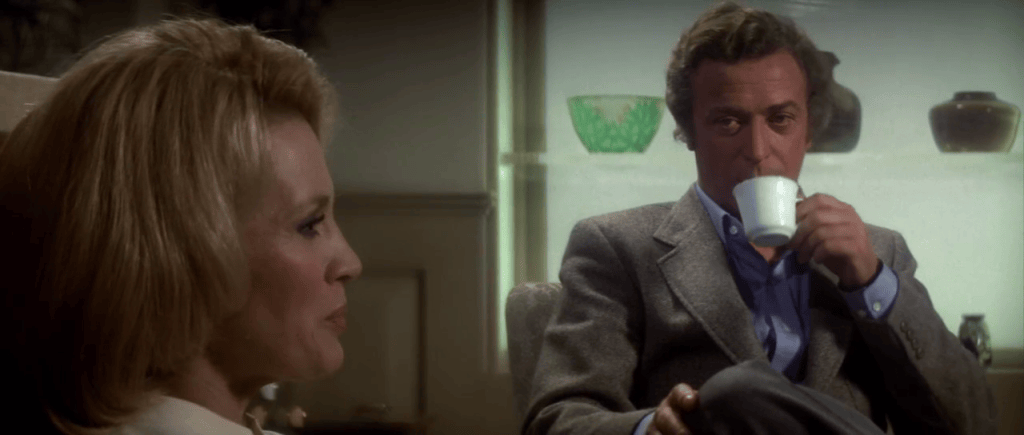
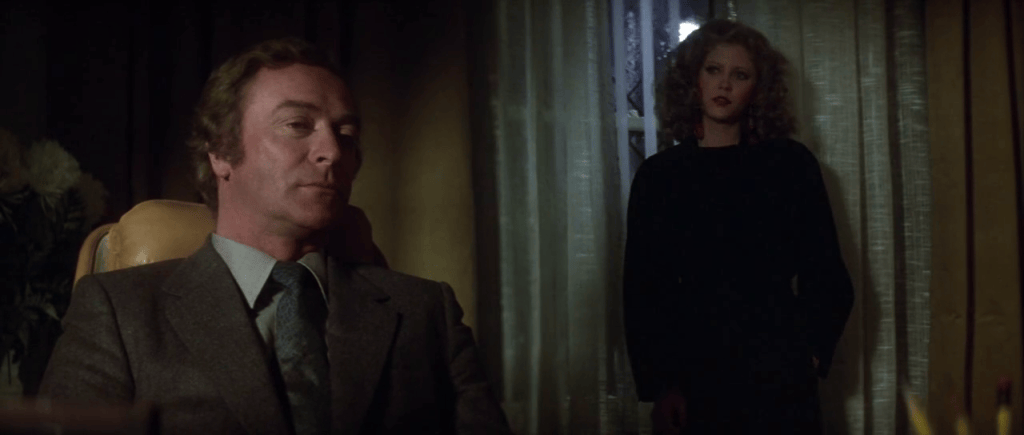
The film features a very solid cast with Michael Caine, Angie Dickinson and Nancy Allen in the leading roles; but there is a slight caveat here: – for Caine was at arguably the lowest point of his career during the early to mid nineteen-eighties, and Dickinson was perhaps a little too old for such a sultry performance, for she was aged almost fifty when the movie was shot. Nancy Allen – who was married to De Palma at the time – was not as well-known as her more famous co-stars, and would not reach the top of her game until playing the tough female cop Lewis in 1987’s ‘Robocop.’
I’m not going to give a detailed blow-by-blow account of ‘Dressed To Kill’ as far as the story is concerned, but instead focus more on the aesthetics and specific scenes within the film that I think are worth pointing out. There’s a lot going on here; as what we are presented with is a movie that is heavily-inspired by Hitchcock whilst giving us shades of noir and strong doses of De Palma’s own unique style. This can be a little hit-and-miss at times – as I will point out later – but it is certainly never boring.
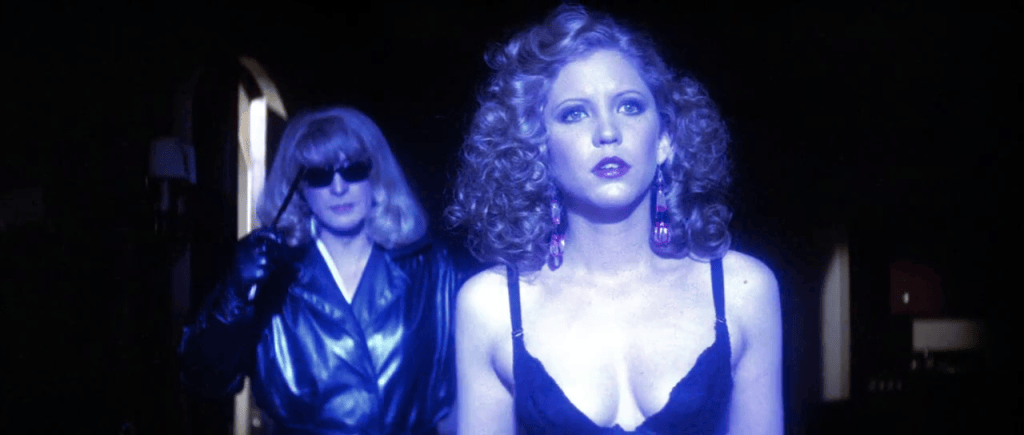
The premise of the film is straight-forward enough, with Caine playing psychiatrist Dr Robert Elliott who is helping a sexually-frustrated housewife Kate Miller (Dickinson) through therapy sessions. When Miller is later murdered by a razor blade-wielding maniac in an elevator, the crime is witnessed in-part by high-class call girl Liz Blake (Nancy Allen) and together with Miller’s grieving son Peter (Keith Gordon) the unlikely pair set about solving the crime, with limited assistance from Detective Marino from the NYPD (played by Dennis Franz.)
But despite the intriguing plot, it was the steamy and sensual elements of ‘Dressed To Kill’ that served as its major drawcard back in the day, and the film kicks off with literally exactly that in the opening scene where Dickinson’s character Kate Miller is experiencing an erotic dream sequence in the shower – and I think the screenshots below say it all…

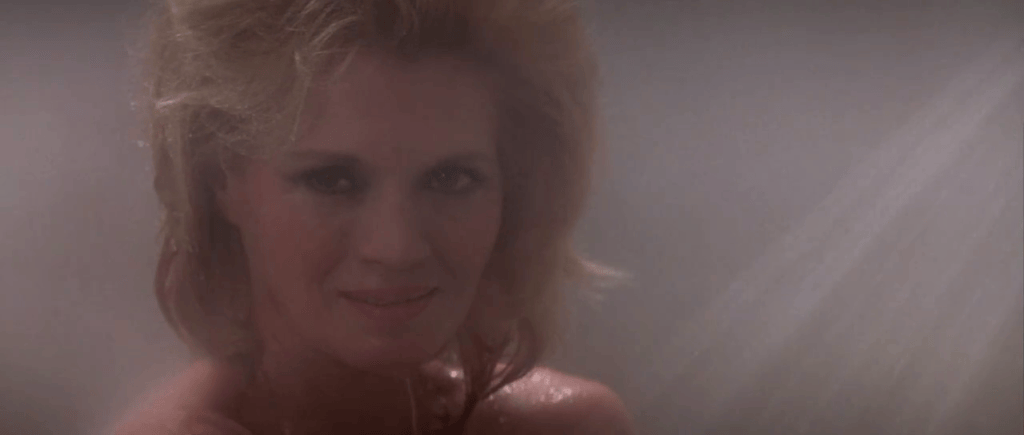
If one can set aside the over-played nudity and sexual imagery, you will find that there is actually a decent film here – with some clever direction and cinematography; stylish camera angles and first-person shots that make ‘Dressed To Kill’ a movie that is visually engaging and quite entertaining; even without the naked eye-candy and risque themes.
For instance, there is an early scene in the film where Kate Miller (Dickinson) plays a teasing game of cat-and-mouse with a stranger at an art gallery. While there is an argument to be made here that this drags out a little longer than needed, the constant changing of angles from a first-person view, to close-ups of an increasingly-desperate Miller trying to find the mystery man (who has actually taken one of her gloves), onto wider shots capturing the broader spaces and corridors to reveal other patrons – as well as the elusive gentleman slipping around corners – makes this entire sequence work incredibly well, and really draws the audience in.
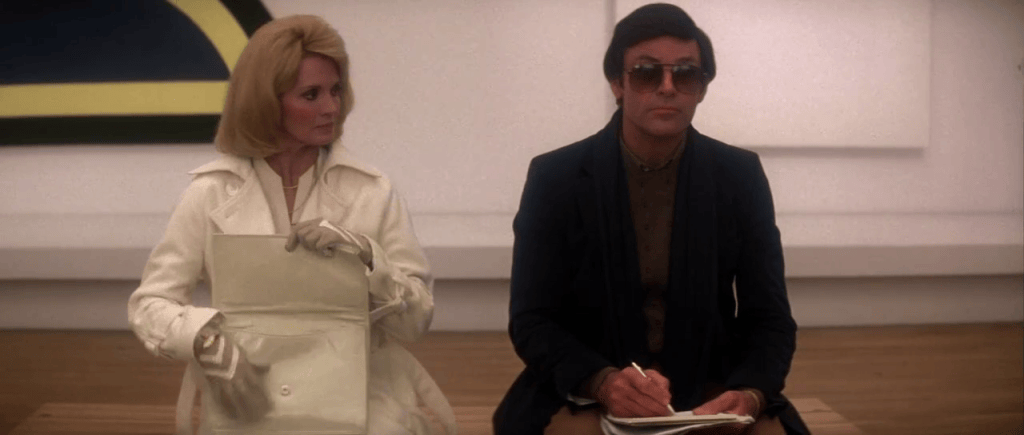
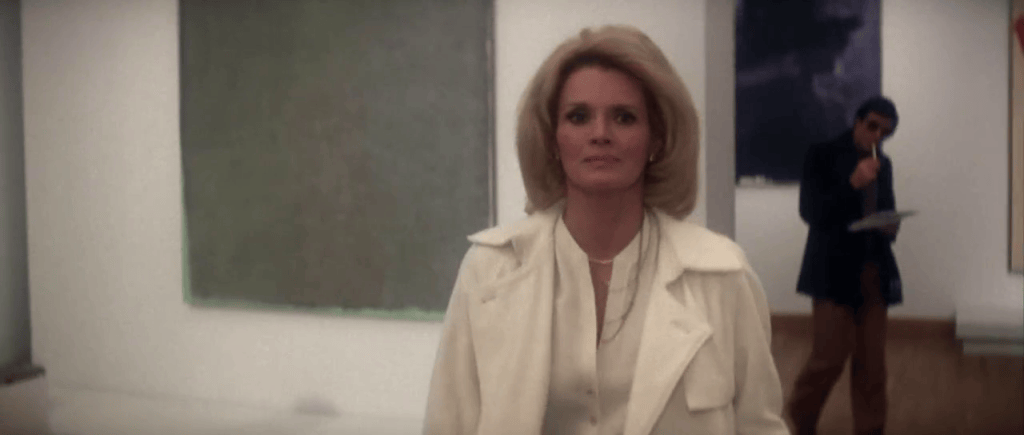
Eventually, Kate Miller catches up with the stranger outside the gallery, having spotted her missing glove being waved out of the window of a parked taxi. Kate is then lured into the waiting cab, and the pair get right down to business – despite having never spoken a word to each other – before spending the rest of the day in the sack at the man’s apartment. Yikes!
We are then treated to not one but two bizarre memory recall scenes; firstly when poor Kate wakes up in a darkened room after her sordid sexual encounter and can’t find her underpants anywhere – and then has a light-bulb moment when realising they were torn off during the taxi ride. It happens to the best of us, right?
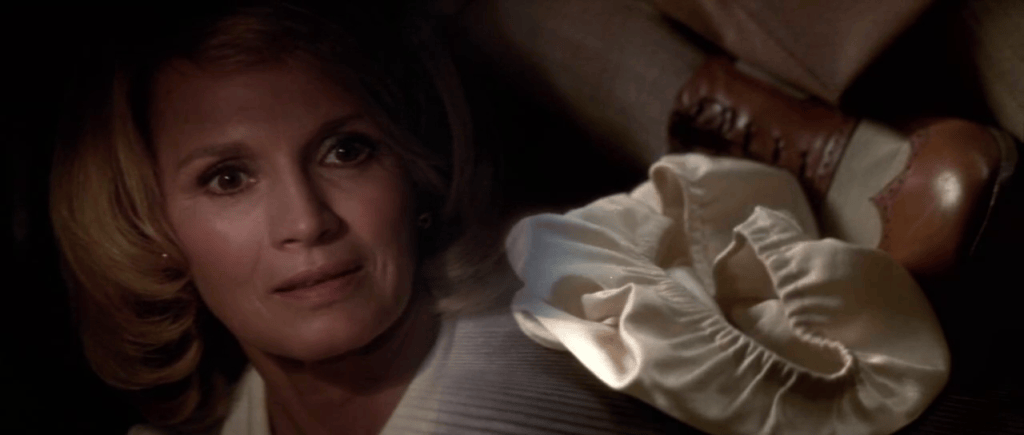
The second flashback involves Kate noticing that her wedding ring was missing – and then recalls that she left it on the table at the stranger’s apartment.
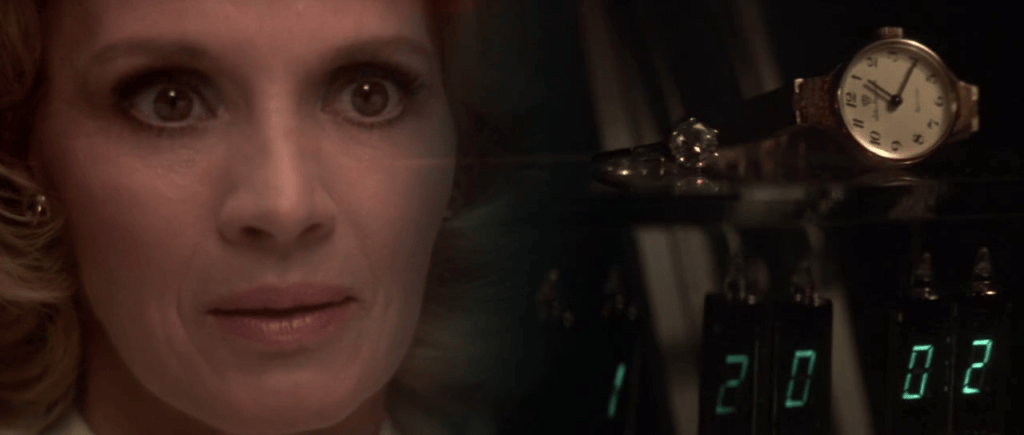
These shots come across as a little cheap and cheesy – especially when compared to the stylish and tension-building sequences at the art gallery that took place only minutes earlier. I might be being a little harsh here, but they could have got away with one of these flashbacks – but to present two near-identical shots in quick succession doesn’t quite work for me.
At this point it feels like the movie is trying to do too much and be too many things, but it is still quite enjoyable. However, I burst out laughing during both of these scenes – mostly because of the exact-same blank look on Angie Dickinson’s face whilst her lost items suddenly materialise on screen; more so when seeing the missing undies from the taxi. Pure cinematic gold!
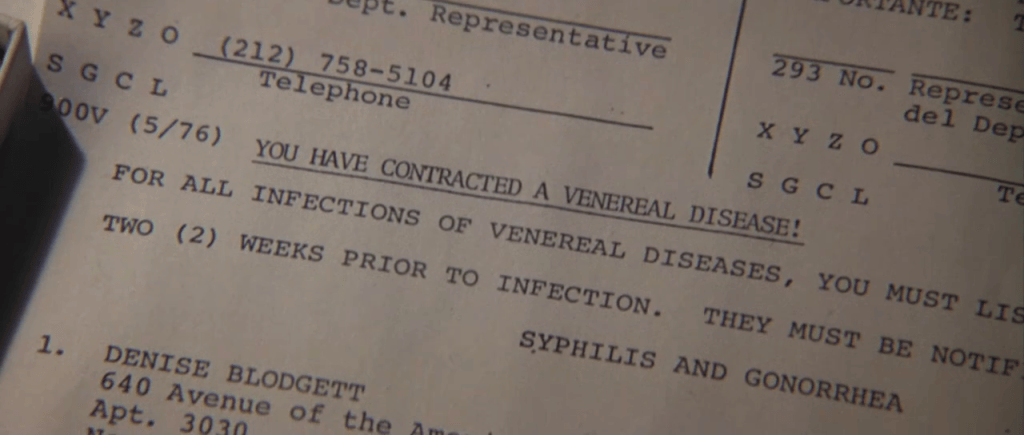
But here is an example of what I meant by ‘hit-and-miss’ – for within minutes of the two flashback scenes we are given a zoomed-in shot of some paperwork that is straight-forward yet highly effective film-making. The scene itself is little more than the foolish Kate opening a drawer at the stranger’s apartment and finding his medical records (see screenshot below) – yet the bluntness of the visuals hit hard because I instantly felt sorry for the woman – despite her questionable moral choices leading up to this moment.
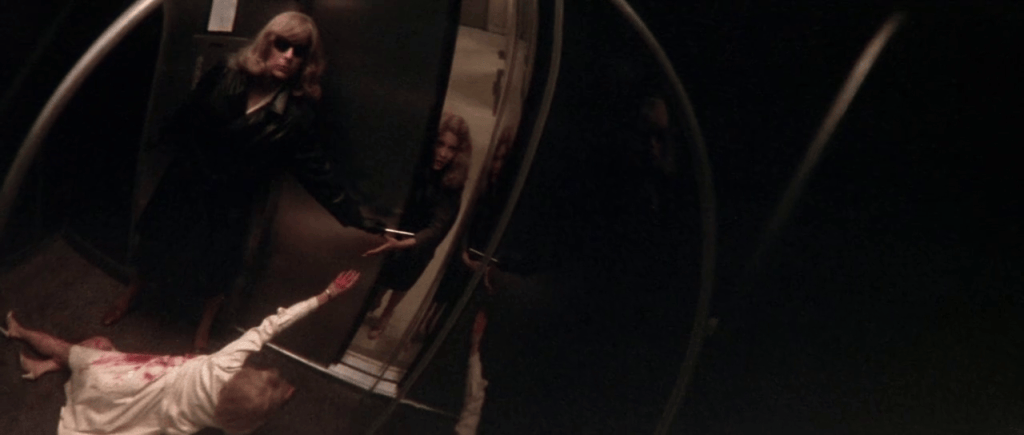
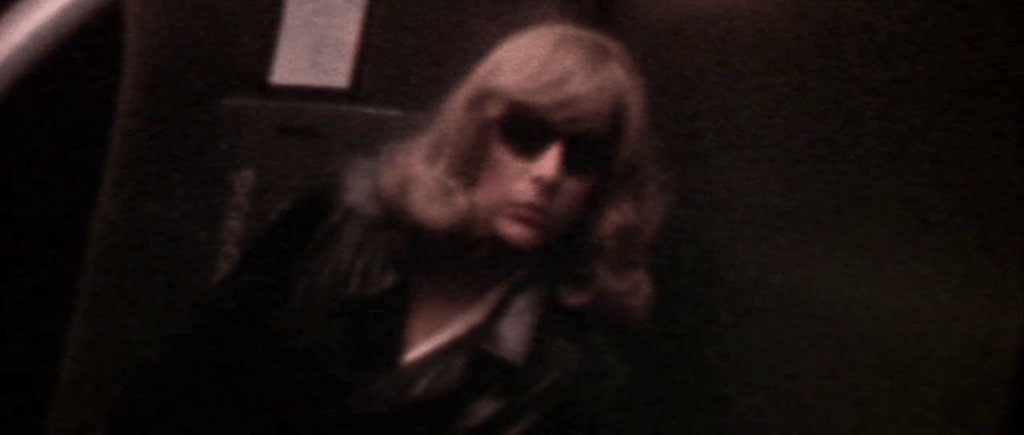
‘Dressed To Kill’ then takes things up a notch, for when the confused and distraught Kate Miller is forced to return to the man’s apartment to retrieve her wedding ring, she is violently attacked in the elevator by a woman wielding a razor blade.
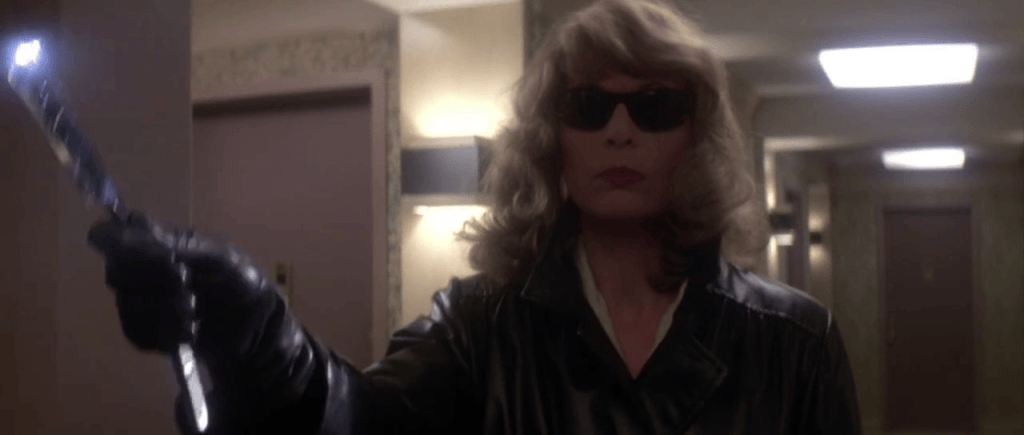
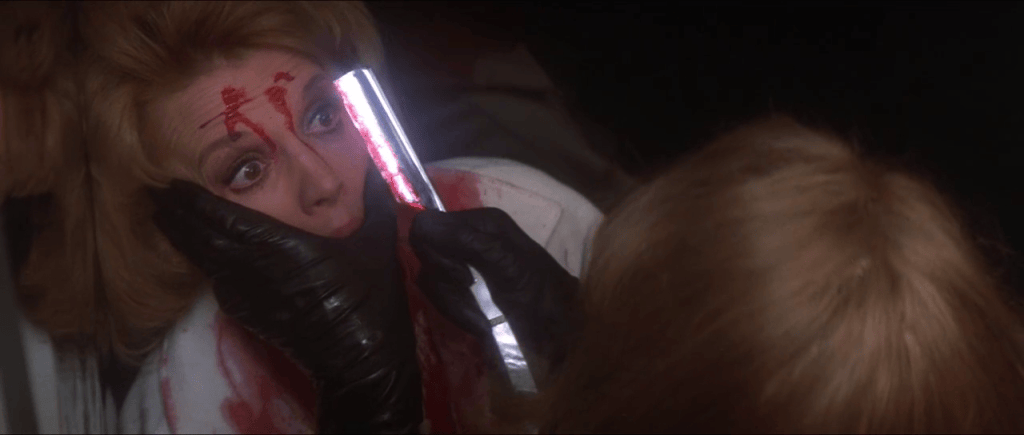
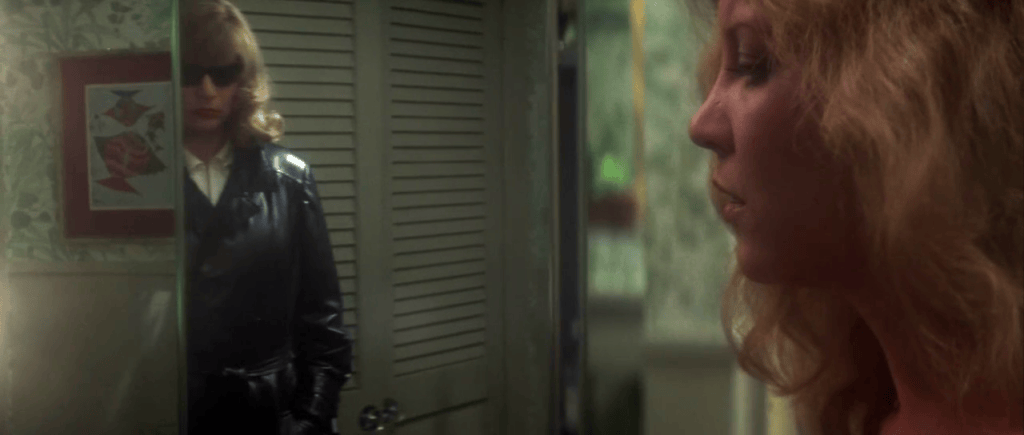
This is when Nancy Allen’s character Liz makes her first appearance, for she interrupts the killer when finding Kate barely alive in the elevator and pleading for help – and the close-up shots work very well here.
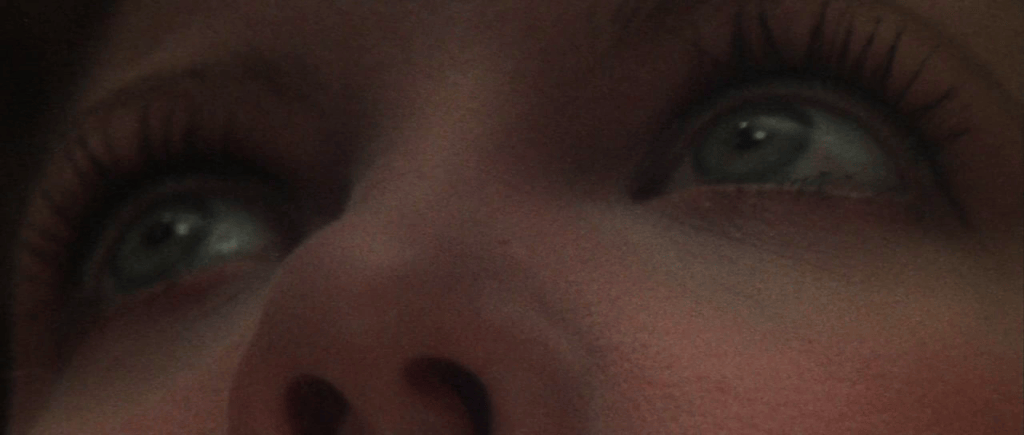
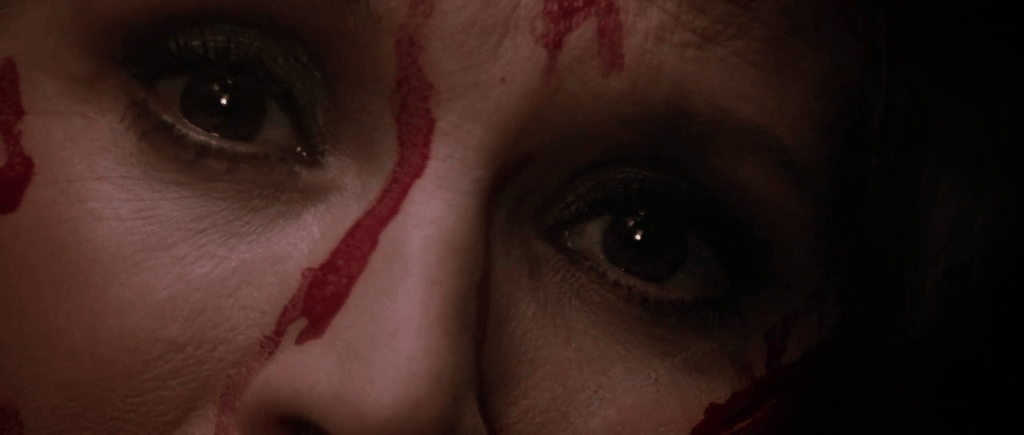
Liz then tries to reach out to the victim, but looks up at a convex mirror inside the lift and sees the killer hiding around the corner ready to strike with the razor. I thought this was a great scene!
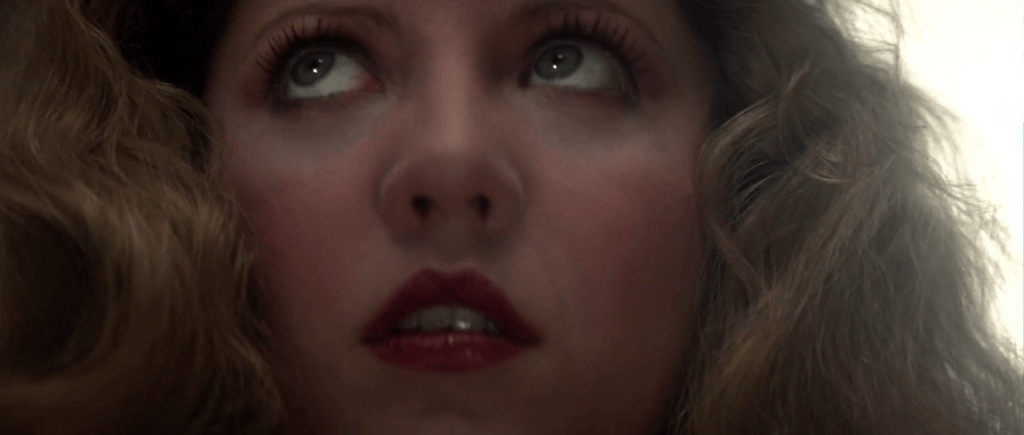
The remainder of the film concentrates on Liz – who is now the killer’s next target – and Kate’s son Peter, who join forces in an effort to identify the villain before she (or he) strikes again. From this point ‘Dressed To Kill’ ticks all the boxes for a standard nineteen-eighties thriller, with a twist that most of us probably would have seen coming.
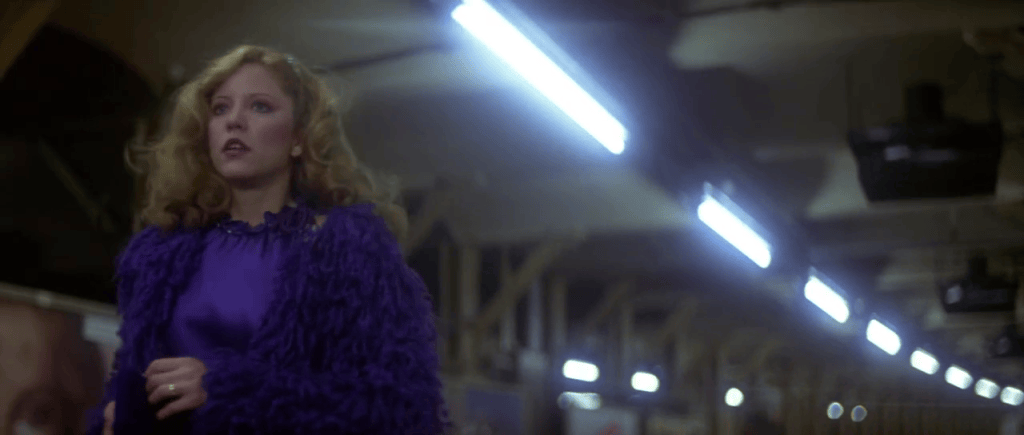
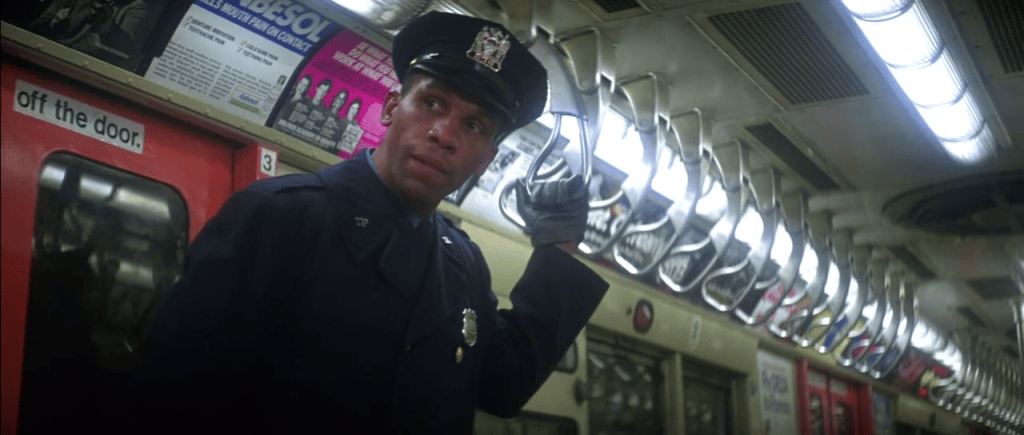
There were some great scenes in the second half of the film, and I thought the subway sequence was a stand-out with some interesting visuals and just the right amount of tension as the killer stalks Liz around the platforms and then onto a train; with a gang of thugs and a useless police officer thrown in for good measure.
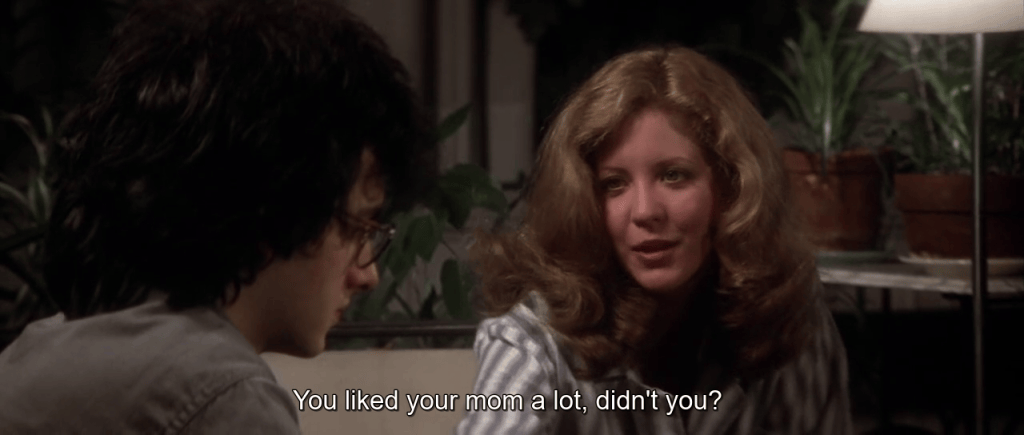
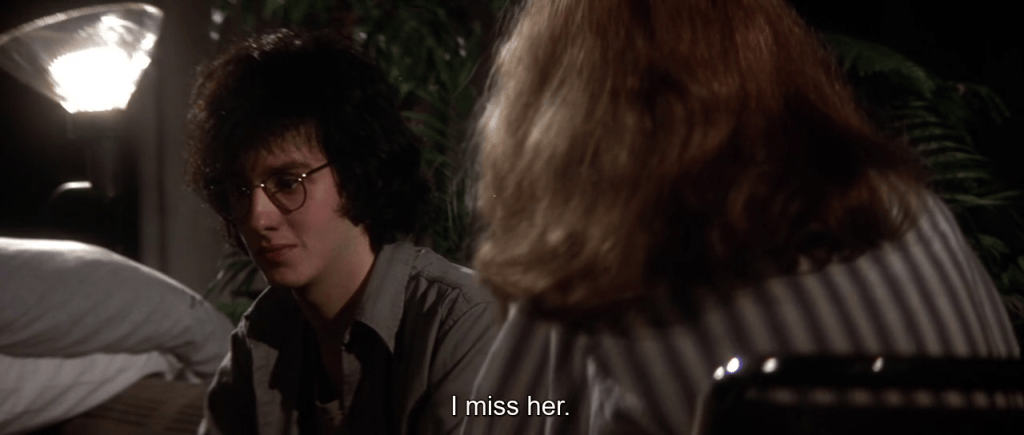
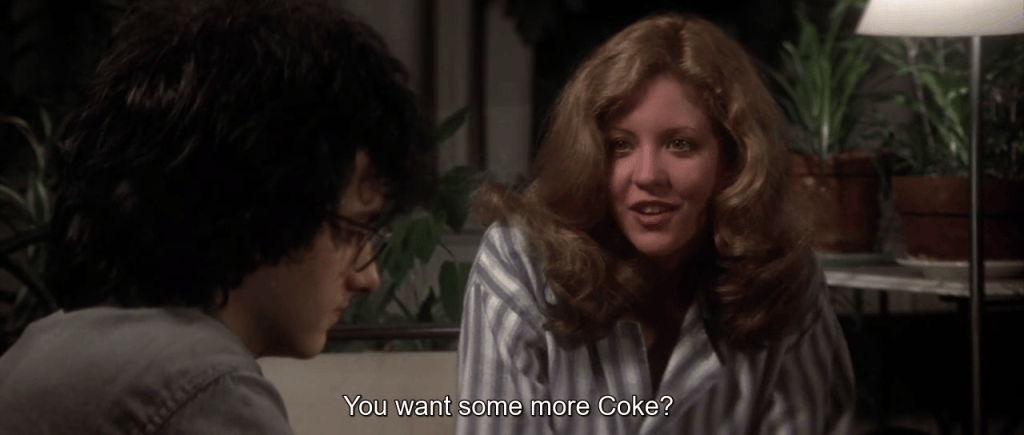
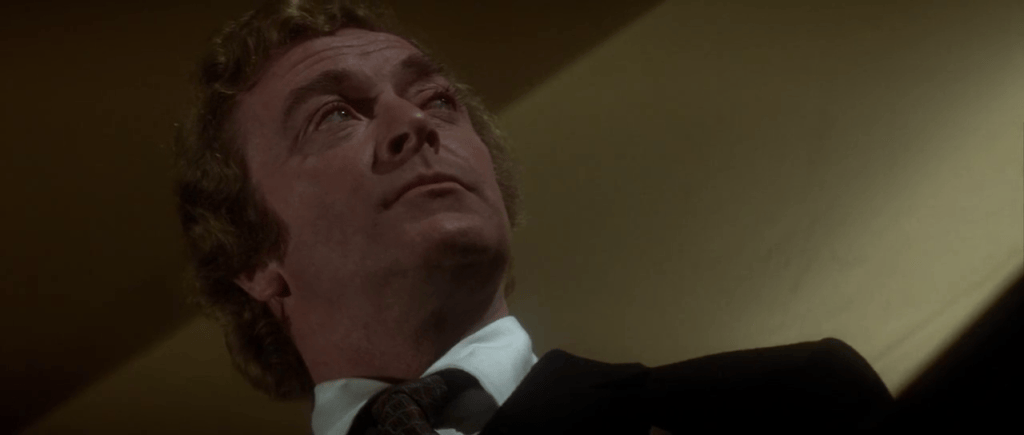
But whilst the film consistently looks good, my major gripe is that it is let down by some poor dialogue – and as a result, even the great Michael Caine comes across as wooden in a lot of his scenes. Honestly, that’s how bad some of it is!
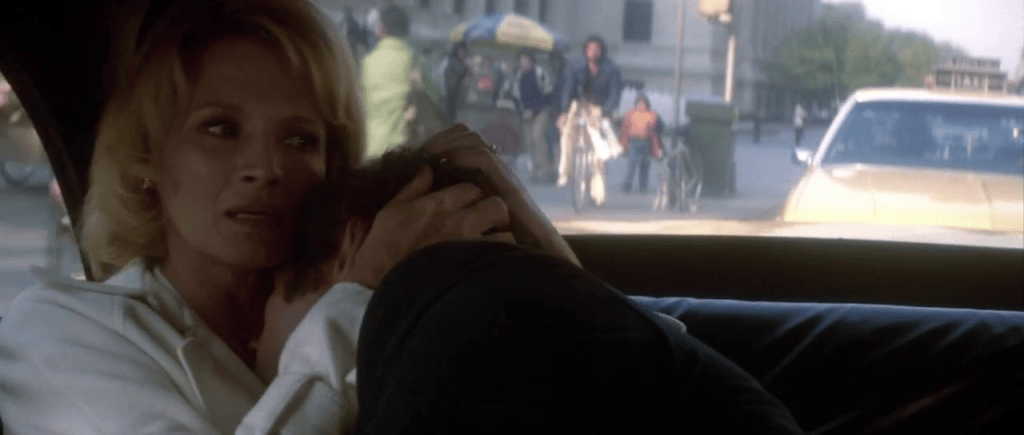
Look at the conversation below for example – taking place only a day or two after the poor lad’s mother is murdered. It’s not the worst writing I’ve seen – but it’s right up there!
And then there is this classic exchange – taking place near the climax of the film.
This one had me in stitches!
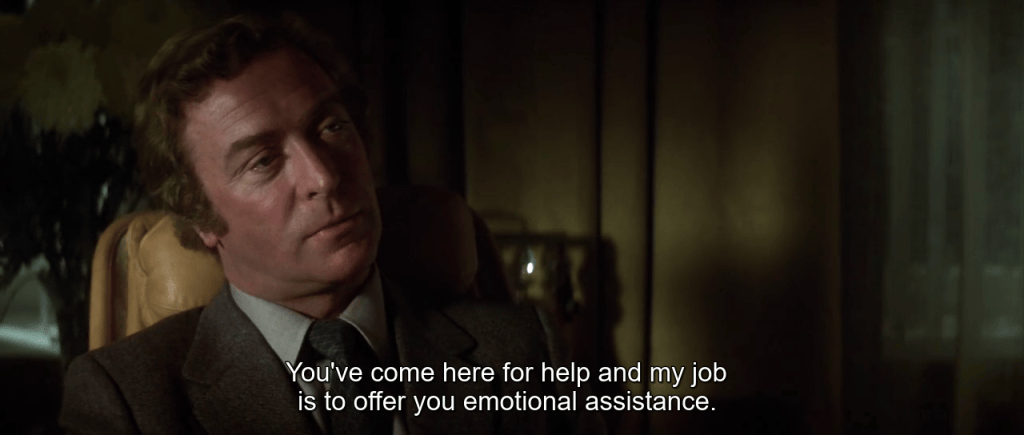
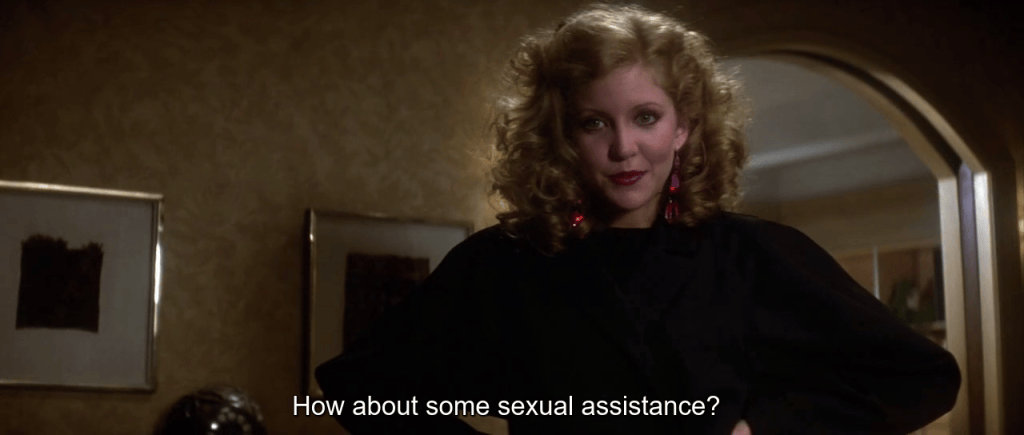
See what I mean?
But bad dialogue and ham acting aside, I actually enjoyed this film – more so as a visual treat than anything else. The plot and character motivations are serviceable, and when combined with some really interesting and stimulating direction and cinematography, ‘Dressed To Kill’ ends up being a better-than-average entry into the thriller genre.
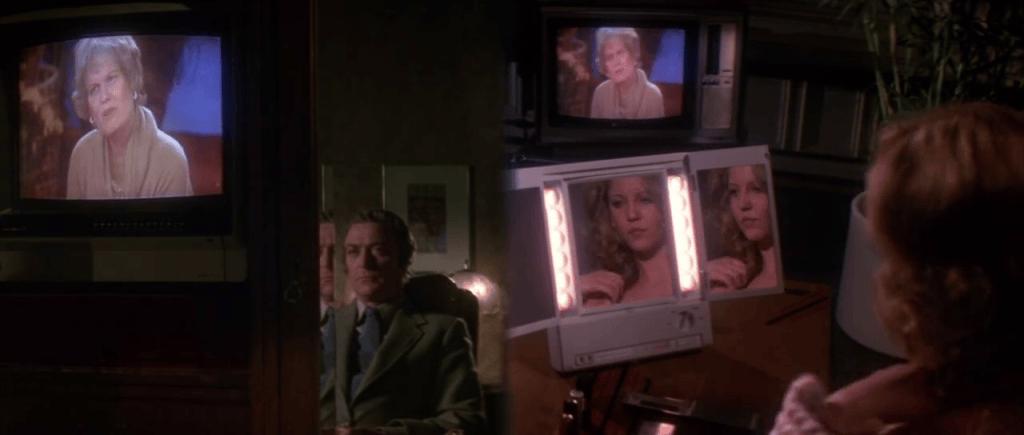
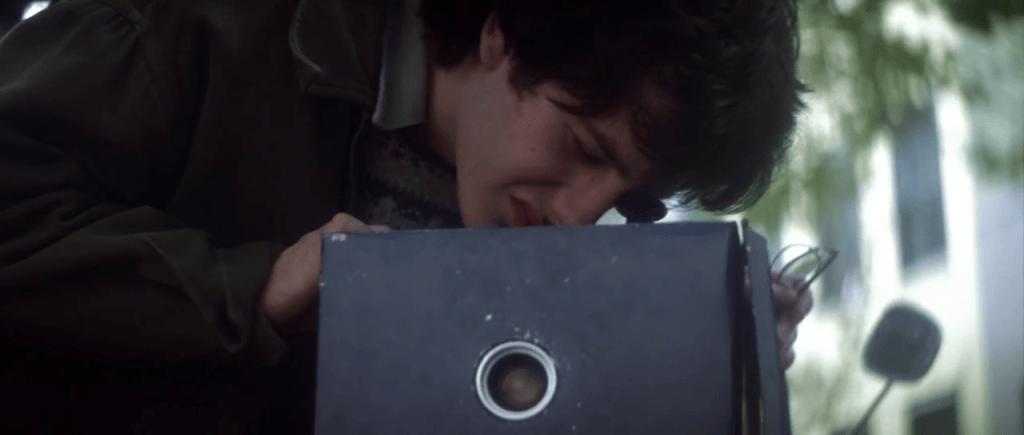
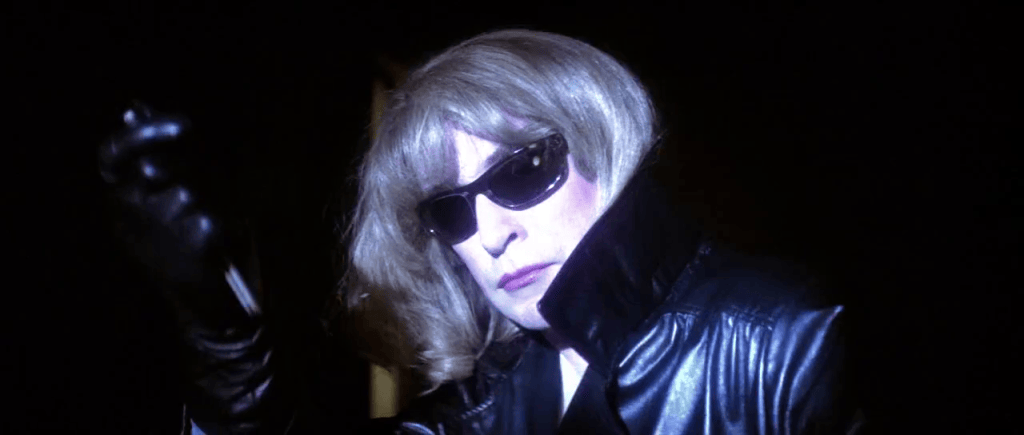
Before I give my final score, I should point out that there are a couple of versions of this film out there – as a result of the original censorship rating back in 1980. The cut that I watched was the ‘Unrated Version’ that only differs from the R-Rated edition by showing more nudity in the opening shower scene and splashing more blood about during the razor blade frenzy in the elevator.
In any case, ‘Dressed To Kill’ is a most enjoyable watch – and is a roller coaster ride of impressive highs and burst-out-laughing lows! I wouldn’t go as far as saying this is a ‘so bad it’s good’ movie, but there certainly are unintentional comedic elements at play here, and this is perhaps why it is considered a cult classic these days. On the whole – and leaning heavily into the film’s entertainment factor – I would recommend this to anyone looking for a bit of lightweight, cheesy nineteen-eighties fun.
‘Dressed To Kill’ gets a well-deserved seven out of ten from me!
Screenshots and poster courtesy of Cinema 77/Film Group and Filmways Pictures.

